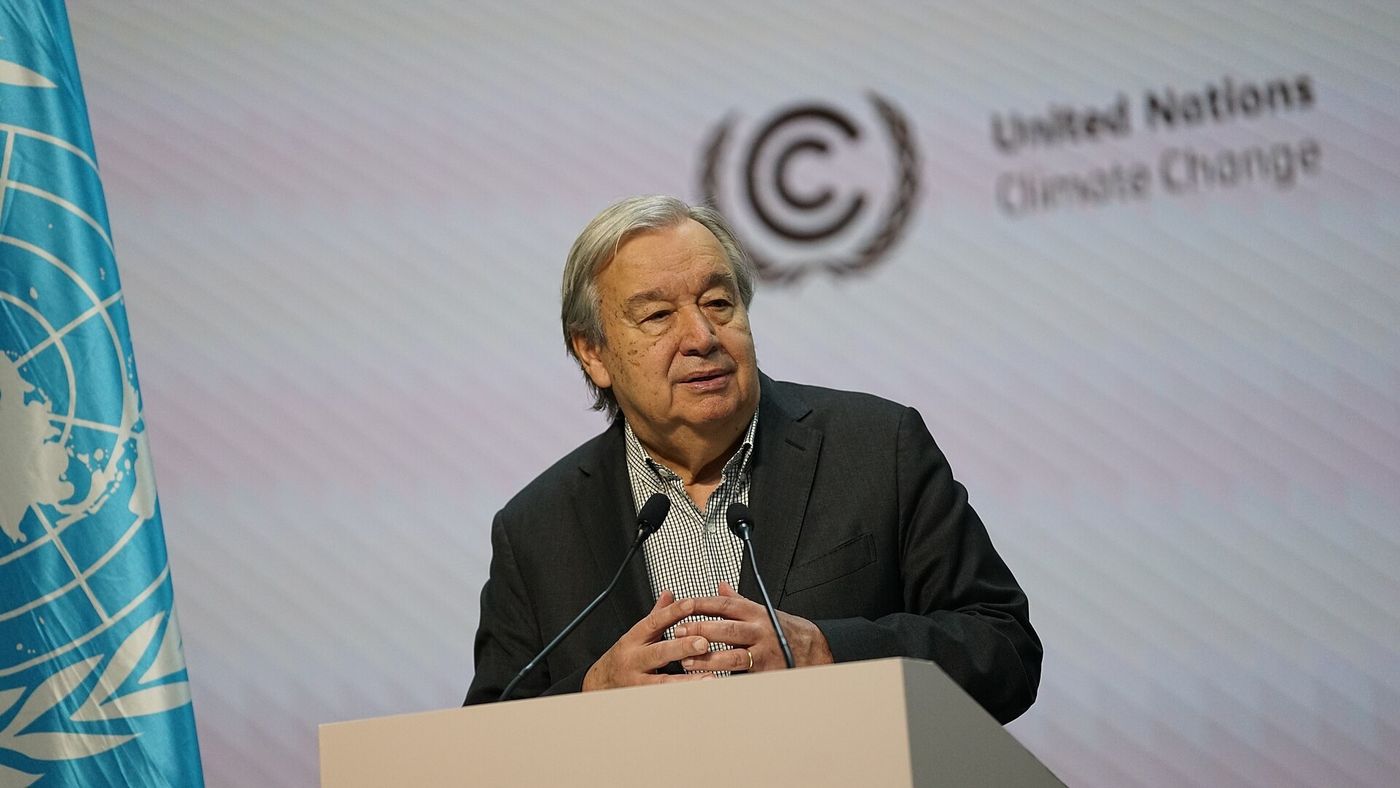
The COP31 climate summit opens in Antalya, Türkiye, on Monday, Nov. 9, and its most important admission has already been made. António Guterres, who leaves the post of UN secretary-general at the end of the year, told the Associated Press that scientists warned him last year that he could no longer call the Paris Agreement’s 1.5C goal achievable. “Scientists told me you cannot say that because that’s no longer true,” he said in the AP interview.
So the 12 days of talks, which run until Nov. 20, start from an unusual place. The headline promise of the last decade is gone. Meanwhile, Chris Bowen, the Australian minister who will chair the negotiations, told the Guardian that the meeting needs “a tangible outcome focused on implementation that people can see is real.” This analysis compares those two statements. It sorts what Antalya can still change in people’s lives from what it cannot.
The concession hanging over the COP31 climate summit
For nine years, Guterres insisted that limiting warming to 1.5C above pre-industrial levels was still possible. However, before a major speech in 2025, scientists told him too much carbon dioxide was already in the air. He called it “an enormous shock” and “one of the most difficult days of my life,” according to the AP report carried by the Los Angeles Times. In his view, “it’s not the world that’s failed, it’s the political leadership that’s failed.”
The UN Environment Programme now says the planet is on track to breach the 1.5C threshold within the next few years, ABC News reported. As a result, the UN has shifted its language toward overshoot. “Overshoot is not surrender,” Guterres said in a statement. He argued that warming can still be kept “as small and as short as possible.”
Guterres used the phrase “moment of truth” three times in a 20-minute interview. He also offered a concrete idea. “Fossil fuel companies are making huge profits, and obviously those windfall profits should be taxed,” he said, adding that the money should support the countries hit hardest. That proposal matters because it points at the summit’s real battleground, which is money.
Two presidencies, two kinds of result
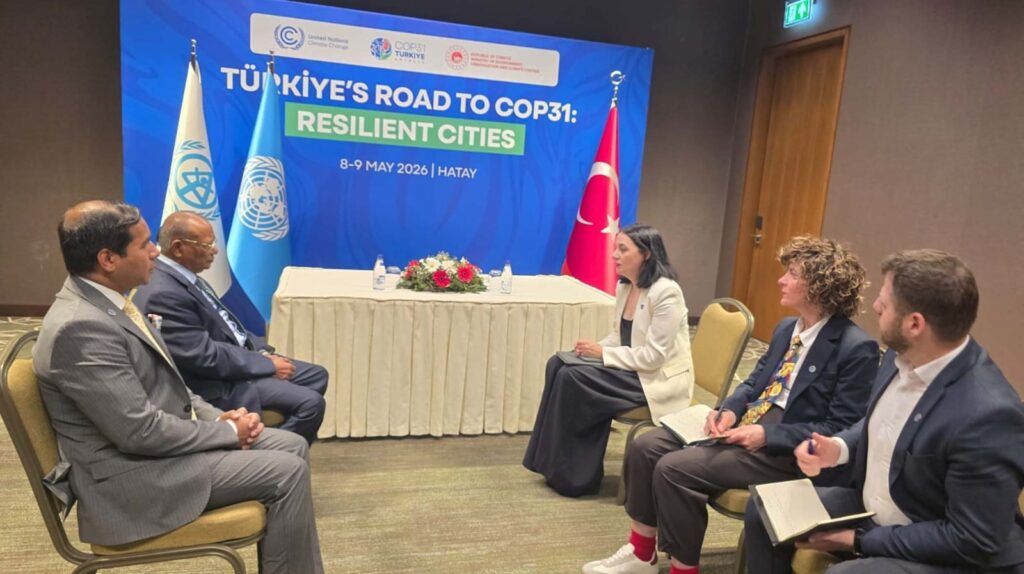
This is the first UN climate summit with a split leadership. Türkiye hosts the event, and COP31 President Murat Kurum runs the voluntary Action Agenda. Australia, by contrast, presides over the formal negotiations between nearly 200 governments. The arrangement came from a compromise over the two countries’ competing bids.
The split produces two very different kinds of outcome. Australia’s track produces binding decisions, but only by consensus. Sally Box, Australia’s deputy president of negotiations, told Devex that her team will steer roughly 60 mandated decisions and more than 100 agenda items. She promised “a transparent, no surprises approach.” Carbon Brief’s text tracker counts 104 substantive items before the opening.
Türkiye’s track works the other way. Its pledges are voluntary, so they can move fast, yet nobody is forced to sign. According to the Council on Foreign Relations, Kurum’s agenda covers ten themes, including electrification, zero waste and methane, and climate-resilient cities. Youth and education are also on the list.
The finance gap the COP31 climate summit has to close
Finance is where ordinary people in poorer countries would actually notice a result. At COP29 in Baku, governments agreed that developed countries should mobilize at least $300 billion a year for developing nations by 2035, Australia’s climate department notes. That goal was paired with a wider call for $1.3 trillion.
The latest delivery figure sits far below that line. According to the OECD, developed countries provided and mobilized a record $136.7 billion in 2024. In other words, the 2035 target is more than twice the best year on record. Moreover, the OECD’s details are less flattering than the headline. Adaptation was only a quarter of the total. Support for low-income countries reached just $9.6 billion, still below its 2022 peak.
Bowen made a similar point from the Pacific side. Only 0.2% of the world’s available climate finance, he told the Guardian, goes to small island states for adaptation. Developing countries also want reassurance on last year’s COP30 call to at least triple adaptation finance. Meanwhile, major donors are cutting aid budgets, Carbon Brief reports.
Adaptation and a just transition: smaller rules, real effects
Not every visible result needs a new dollar figure. For example, the “global goal on adaptation” now has 59 indicators agreed at COP30. Negotiators must still decide how to track them before COP32 in Addis Ababa. That sounds technical. Still, clear indicators decide whether a flood defense in Bangladesh or a seawall in Tuvalu counts as progress.
The same logic applies to the just transition mechanism agreed in Belém. Civil society groups see getting it running as a key expected outcome of COP31. If it launches with real support, coal regions could get practical help rather than speeches. The stakes feel concrete after this year’s disasters, including the deadly Nepal glacier collapse. It was the kind of disaster Guterres warned about on his 2023 Himalayan trip.
Electrification is the target people could see at home
Türkiye’s clearest bid for a visible result is its “35 by 35” pledge. It would raise electricity’s share of total energy use to 35% by 2035, up from about 23% today, CFR says. ABC News puts the 2024 figure at just over 20%. Either way, the change would show up in electric cars, heat pumps and kitchens.
Asia is already moving in this direction. In September, the IEA and South Korea launched a regional 35% electrification goal for 2035. However, the global version faces opposition from some countries, the Guardian reports. That is why the formal track matters. Carbon Brief says the Australian presidency intends to seek a “cover text” that may capture wider targets, such as electrification.
What the COP31 climate summit cannot fix
Some things lie outside Antalya’s reach. First, no decision this month can restore 1.5C as a live target, because the emissions are already in the atmosphere. CFR notes that current policies point to roughly 2.8C of warming by 2100, or about 2.6C if the latest pledges are fully met.
Second, the summit cannot bring Washington back. For the second year in a row, there is no official US federal delegation. President Donald Trump withdrew from the Paris Agreement on the first day of his second term. He also ordered a withdrawal from the UNFCCC, which becomes official next year, ABC News reported. A White House spokesperson told the Guardian that the administration wants no part of “extremist climate policies.”
Still, Americans are in the room. A group of more than 100 governors, mayors and state officials is attending, organized by America Is All In, Climate Mayors and the U.S. Climate Alliance. About 20 Democratic members of Congress also made the trip. They can sign voluntary pledges. Nevertheless, they cannot commit federal money to the finance goal.
Third, the summit cannot calm the weather it meets. The talks open as the world grapples with what the Guardian calls the strongest El Niño on record, supercharged by fossil fuels. That pattern matches the WMO forecast of a very strong El Niño from September.
A scorecard for judging the COP31 climate summit on Nov. 20
Taken together, the evidence suggests a simple test. Instead of asking whether 1.5C survives, readers can check a short list when the talks close.
| Issue | Can Antalya deliver it? | What would count as visible progress |
|---|---|---|
| Climate finance | Partly | A credible path from $136.7 billion toward $300 billion a year |
| Adaptation | Yes, in rules | Usable indicators and a firm line on tripling adaptation money |
| Electrification | Voluntary only | Broad support for 35 by 35, ideally echoed in the cover text |
| Just transition | Yes | A working mechanism with real support behind it |
| 1.5C as a live goal | No | Plans that keep any overshoot small and short |
| US federal return | No | Subnational pledges only |
Guterres has said his post “has no real power” but does have a voice. His final COP gives that voice one more test. If the summit leaves with money people can trace, adaptation rules that work and an electrification goal that sticks, Bowen’s “progress people can see” will be more than a slogan. If not, the missing 1.5C goal will not be its only failure.