Why does Mark Rober show failed experiments? The engineer and YouTuber says he deliberately leaves setbacks in his videos so young viewers see that a working invention often takes several attempts. In a September 22, 2026, first-person interview with Business Insider, he described failure as part of learning, rather than a reason to stop building.
Rober’s point is especially useful to a viewer who sees a spectacular finished contraption and assumes its creator got everything right immediately. The trial runs are part of the engineering, and showing them changes the story from a magic trick into a process someone else can try.
Why does Mark Rober include failures in his videos?
In the interview, Rober said his experiments fail during production and that he includes those moments on purpose. He wants children to recognize that an experienced engineer can make an unsuccessful attempt, learn from it and try a new approach. He compared that habit with playing a video game: losing a round gives you information for the next attempt.
This is Rober’s stated teaching approach, not a claim that every individual video documents every failed test. His CrunchLabs team describes its aim as helping children think like engineers through hands-on projects. The company identifies Rober as its leader and a former NASA engineer.
What can viewers take from his approach?
For a young maker, the useful lesson is concrete: build a small version, test what happens, change one thing, and test again. A result that misses the target still tells you something about the design. That is our practical interpretation of Rober’s comments, not a promise that every project will work on its next try.
Rober’s original Backyard Squirrel Maze video is an example of the playful engineering projects that made him widely known. The video was released years before the September 2026 interview; it is included for context, not presented as a new upload or evidence of a particular failed test.
How does this fit Rober’s wider work?
His videos turn a science question into a build-and-test story. CrunchLabs extends that idea into projects children can construct themselves. The audience gets both an entertaining result and a more realistic view of the attempts behind it.
The focus here is Rober’s own explanation of his creative process. For another example of a major YouTuber taking a project beyond a video, see our report on MrBeast’s Ghana village project.
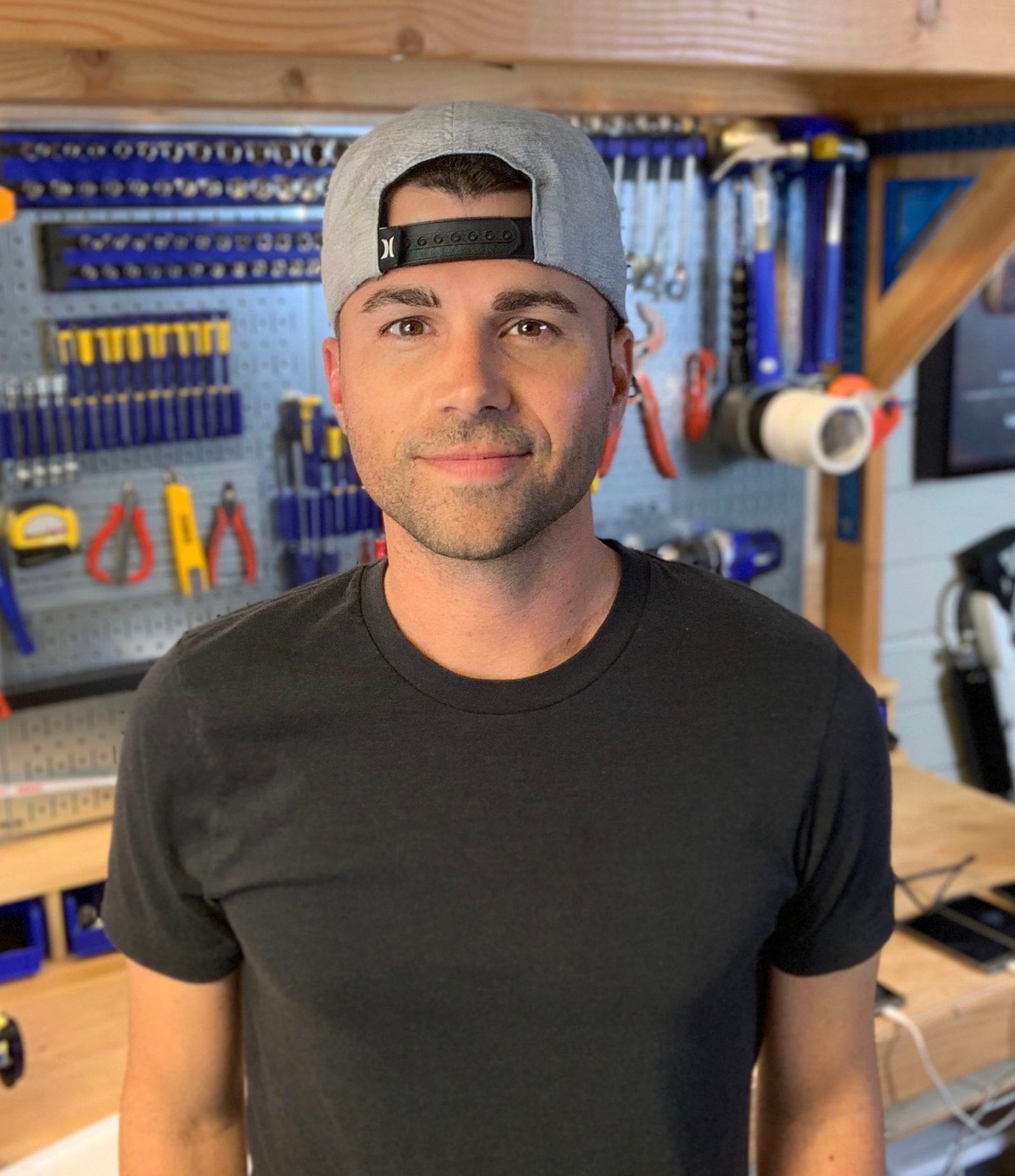
Image: Mark Rober, photographed October 2019; Countingmagic / Wikimedia Commons, CC BY-SA 4.0. This archival portrait does not depict the September 2026 interview.