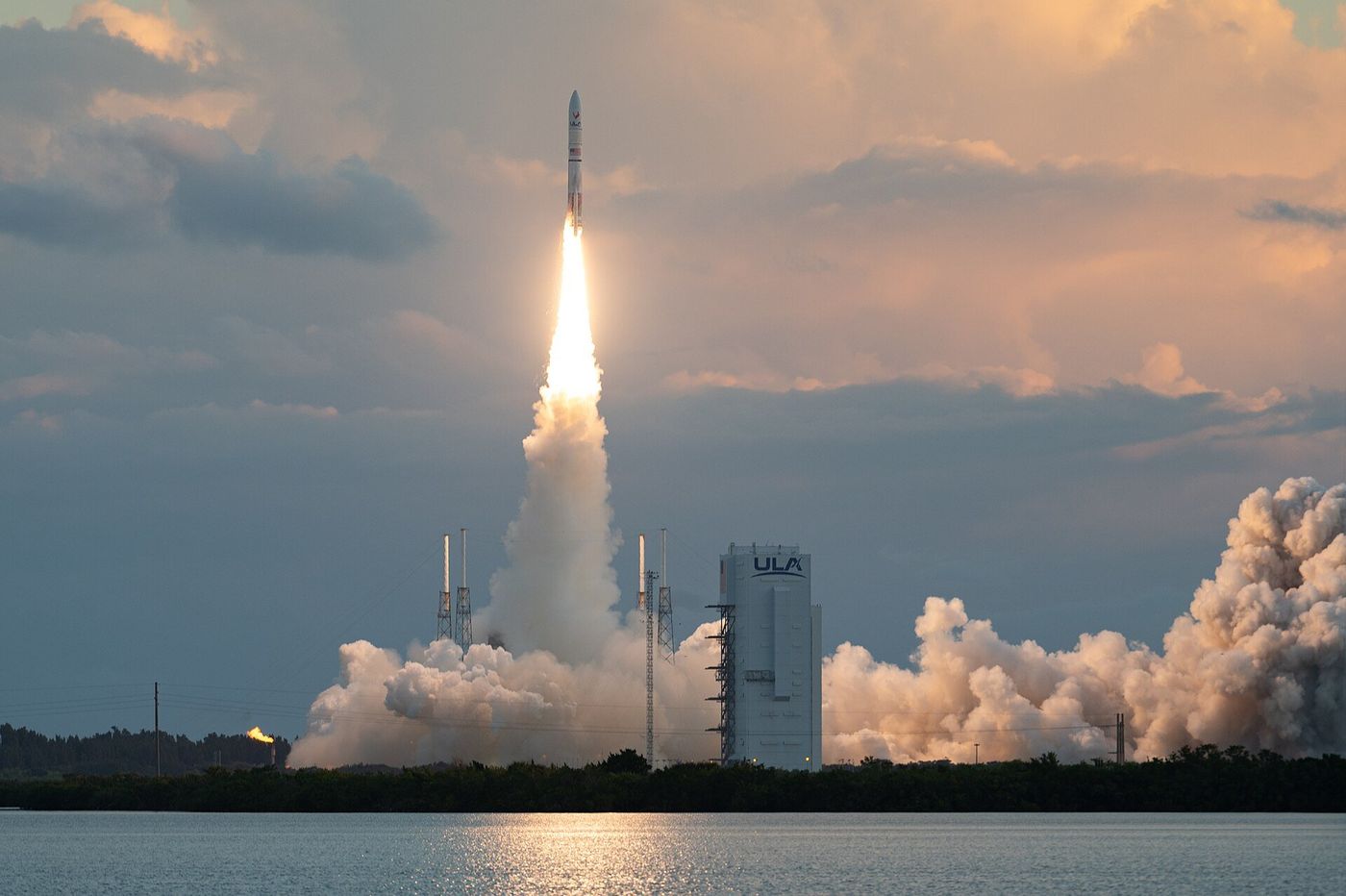
Forty broadband satellites fell back to Earth on Sunday, but the bigger loss for Amazon Leo was the rocket that carried them. United Launch Alliance’s Vulcan failed about 10 minutes after liftoff from Cape Canaveral on November 15. It was the first of 38 Vulcan flights Amazon has bought, and it is now expected to be grounded for an indefinite period. Count every launch Amazon still holds, and one thing stands out: without Vulcan and Blue Origin’s New Glenn, the rest of the manifest cannot even carry the network to its halfway mark.
Ten minutes, then a spin
Vulcan lifted off from Space Launch Complex 41 at 12:40 p.m. EST (11:40 p.m. Dhaka time). It flew with six strap-on solid boosters, and those appeared to work normally. That matters, because nozzle problems on the boosters had marred two of the rocket’s four earlier flights and kept it on the ground for nine months.
The trouble came later. According to Ars Technica’s account, the two BE-4 main engines kept firing at least 30 seconds past their planned shutdown. Then the telemetry animation showed the rocket starting to spin. Multiple sources told Ars the problem sat in the booster stage. However, Spaceflight Now reported that ULA’s own update placed the anomaly during the Centaur upper stage’s burn. Reuters said it appeared to happen after stage separation. In short, nobody has published a cause yet.
ULA called it the first outright mission failure since the company was formed in 2006. Amazon’s statement was measured: “There is risk with any launch, and that’s especially true for inaugural missions like LV-01.”
Counting every launch Amazon Leo has left
The table below lists every rocket on the Amazon Leo manifest, using launch counts published by Amazon, Ars Technica and Spaceflight Now. The satellite capacity column is our calculation, based on the payload each rocket has carried or is configured to carry.
| Rocket | Amazon launches left | Satellites per launch | Status after Nov 15 | Possible satellites |
|---|---|---|---|---|
| Atlas V | 0 (all 8 Leo flights flown) | 27-29 | Used up | 0 |
| Ariane 6 (Ariane 64) | 21 of 24 | 36 | Flying; LE-04 set for Nov 23 | 756 |
| Falcon 9 | 10 | 24 | Flying; no new bookings taken | 240 |
| Vulcan | 37 of 38 | 40+ | Grounded pending investigation | 1,480+ |
| New Glenn | 24 | 48+ | Pad out of action since May explosion | 1,152+ |
The total in orbit is easy to check. Amazon’s mission log lists 14 successful missions since April 2025. Together they carried 396 satellites, the same figure Ars reported. Amazon also says it recently built its 1,000th satellite, so roughly 600 finished spacecraft are already waiting on the ground.
Now do the subtraction. The two rockets that are flying, Ariane 6 and Falcon 9, could lift about 996 more satellites if every booked mission goes ahead. That would bring the network to roughly 1,392. The halfway point of the 3,232-satellite first generation is 1,616. Even in a perfect run, Amazon would end up about 224 satellites short.
Why the halfway line still carries weight for Amazon Leo
Amazon was meant to reach that halfway point by July 30, 2026. It did not. In June, the FCC’s Space Bureau waived the interim milestone instead of terminating the unfinished part of the license. As a result, Amazon kept its license, but the waiver came with a price.
As Via Satellite explained, satellites launched after July 30 lose the spectrum priority Amazon won in earlier FCC processing rounds. That loss lasts until March 30, 2028, or until half the constellation is operating, whichever comes first. Amazon can cut the period from 20 months to 15 if it proves it has built half its satellites and secured launches for them.
In practice, that means Vulcan’s grounding is not only a schedule problem. For example, an early exit from the penalty depends on proving that those launches are lined up. Thirty-seven of them now sit on a rocket nobody can fly until investigators finish. Meanwhile, the final deadline has not moved: all first-generation satellites must be in orbit by July 30, 2029. That leaves about 2,836 satellites to launch in roughly 32 months.
Why the BE-4 question matters twice
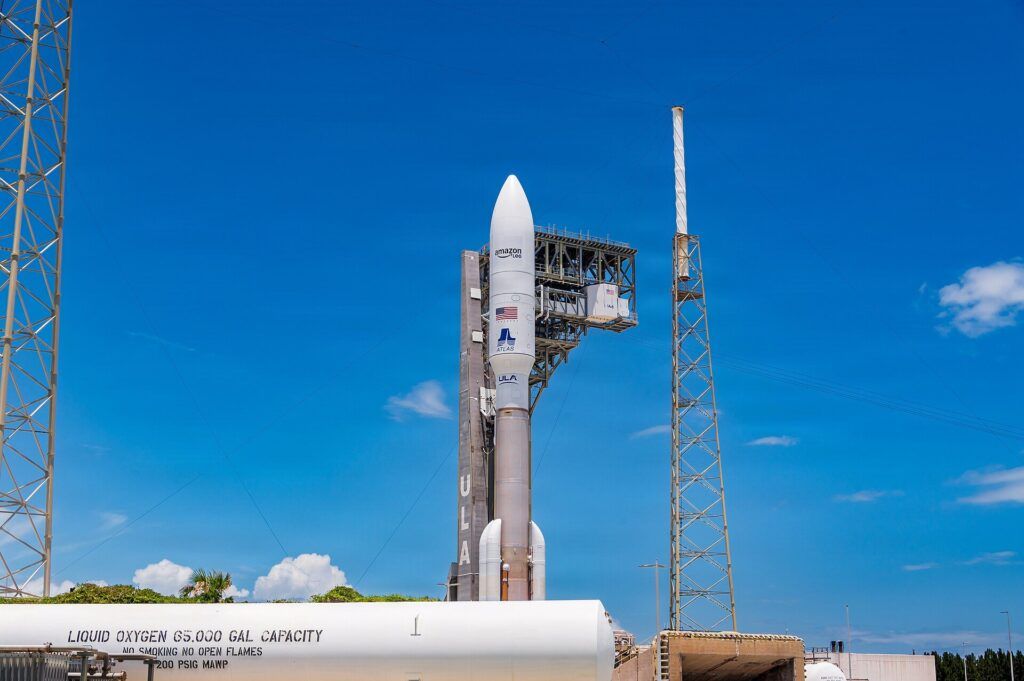
The Amazon Leo team spread its bets across four rocket families precisely to avoid this kind of single point of failure. Yet two of those families share one engine. Blue Origin’s BE-4 powers Vulcan’s first stage, and seven of them power New Glenn’s booster.
New Glenn has been down since a booster exploded during a ground test in May. Investigators traced that blast to a faulty oxygen valve on a BE-4. The engines on Sunday’s Vulcan had been retrofitted with Blue Origin’s fix. If the new investigation points to the BE-4 again, Ars notes, it could stand in the way of New Glenn’s planned return early next year. Those two rockets account for 61 of the 92 launches still left on the Amazon Leo manifest.
The ripple reaches beyond Amazon. New Glenn also carried NASA’s ESCAPADE twin Mars probes into their Earth loiter orbit last year. Next, it is due to fly Blue Moon lander tests that feed NASA’s plan for the Artemis III docking rehearsal. Furthermore, NASA recently picked a version of ULA’s Centaur upper stage for future Space Launch System flights. So the agency will want to rule out the Centaur as quickly as ULA does.
What Amazon Leo customers and the Pentagon should expect
For people waiting on the service, the near-term picture changes less than the headline suggests. Amazon told Ars in October that it already has enough satellites in orbit to begin initial commercial service by the end of the year. Sunday’s 40 satellites were about capacity and coverage, not the on switch.
The longer view is different. More satellites mean more bandwidth per user and better coverage at higher latitudes. Therefore, any Vulcan delay stretches the period in which Amazon Leo competes with Starlink’s 11,000-plus satellites on a much thinner network. SpaceX, which launches its own constellation, is not exposed to this bottleneck at all.
The Pentagon faces a sharper problem. Reuters reported that the Space Force had not yet cleared Vulcan to resume national security missions and was waiting on this flight. Vulcan’s earlier delays already pushed six military launches over to SpaceX, and more swaps now look likely. That would only deepen the reliance on Falcon 9 and Falcon Heavy at a time when SpaceX has stopped taking new Falcon 9 bookings.
Four dates that will show how deep the hole is
- November 23 (earliest): Ariane 6 is due to launch 36 more satellites on LE-04 from French Guiana. That would make 432 launched in total.
- The first ULA findings: whether the cause sits in the BE-4 engines, the booster’s plumbing or the Centaur decides how many rockets stay grounded.
- Early 2027: Blue Origin’s target for returning New Glenn to flight, now tied to whatever Vulcan’s investigators find.
- March 30, 2028, and July 30, 2029: the latest end of Amazon’s spectrum penalty, and the FCC deadline for the full first-generation network.
Until ULA names a cause, the most useful number is the gap between 1,392 and 1,616. If Ariane 6 and the last Falcon 9 slots fly cleanly, Amazon Leo can keep adding capacity through 2027. However, it cannot reach the halfway line, or anything close to 2029’s finish line, without at least one of the BE-4 rockets flying again.