United Airlines drew a hard line on Wednesday, November 11: third-party United AI agents, meaning personal assistants that act for a traveler on the airline’s systems without its permission, can no longer book, change or manage trips. The restriction reaches beyond united.com and the United app. It also covers travel agencies and aggregators, which is exactly where most agent-made flight bookings were landing.
That second part is the bigger story. A study published this week found that AI agents routinely reach the checkout page on their own, and that most flight bookings flow through an intermediary rather than the airline’s own site. So the question is not only whether a bot can open the United app. It is whether United can see, and stop, bookings that arrive from somewhere else.
Three channels, one policy
In its newsroom statement, United said it is restricting access “directly within our digital platforms and indirectly via travel agencies and aggregators” and is updating its booking, ticketing and distribution policies to match. The airline gave three reasons. Sharing account logins with an assistant can expose personal data. Agents can make purchases, account changes or spend MileagePlus miles that the traveler didn’t intend. And some automated actions may conflict with FAA and DOT rules.
The airline’s Digital Trust Center page spells out the scope. Any agent, bot, browser extension or browser feature that searches, books, buys, manages or collects information on united.com or in the app without United’s permission counts as unauthorized. Travel agencies and booking platforms also cannot use third-party agents to search, book or manage United travel for customers. They may only use their own AI tools if United approves them. For now, United says it works with no third-party agents at all.
What the United AI agents rule still allows
The ban is narrower than the headlines suggest for ordinary trip planning. United says travelers can still use AI to research and plan, as long as the tool doesn’t touch united.com or the United app. Asking a chatbot where to go in January, or which neighborhoods suit a short stay in Rome, is fine. Pasting a confirmation number into that chat and asking it to upgrade the seat is the kind of request United tells customers to avoid.
Two groups get specific reassurance. First, assistive technology used by customers with disabilities is not affected. Second, bookings that an agent made before November 11 will not be canceled, although United recommends that travelers check those trips to confirm they were booked and ticketed correctly. In other words, the policy looks forward. It does not unwind existing reservations.
Most agent flights already arrive through a middleman
The indirect clause matters because of how today’s agents actually buy tickets. Propellic, a travel marketing agency, ran 176 scripted booking requests for hotels, flights and tours through Meta’s Muse and Instinct agents. As PhocusWire reported, both agents carried every run through to the payment step, with 6% needing a retry. “I was surprised that in all 176 scripted booking requests, the agents navigated their way to the payment step on their own, with no captchas or login walls stopping them,” Propellic CEO Brennen Bliss said.
Where those bookings went is the telling part. With no accounts connected, the flight API company Duffel handled 57% of runs, while 28% went straight to the hotel, airline or tour operator and 14% to online travel agencies such as Booking.com or Expedia. Instinct sent all of its flights through Duffel. Muse sent 16 of 20. Even when the request named a specific airline, both agents still booked flights via Duffel.
Duffel’s own site says its Flights API lets customers sell United flights. PhocusWire said it had contacted Duffel for comment. Therefore, the practical test of the United AI agents policy is less about blocking a bot on united.com and more about what United’s revised distribution terms require of intermediaries like this one. United has not publicly said how it will identify agent-made bookings that arrive through a partner.
Why check-in is the line software can’t cross
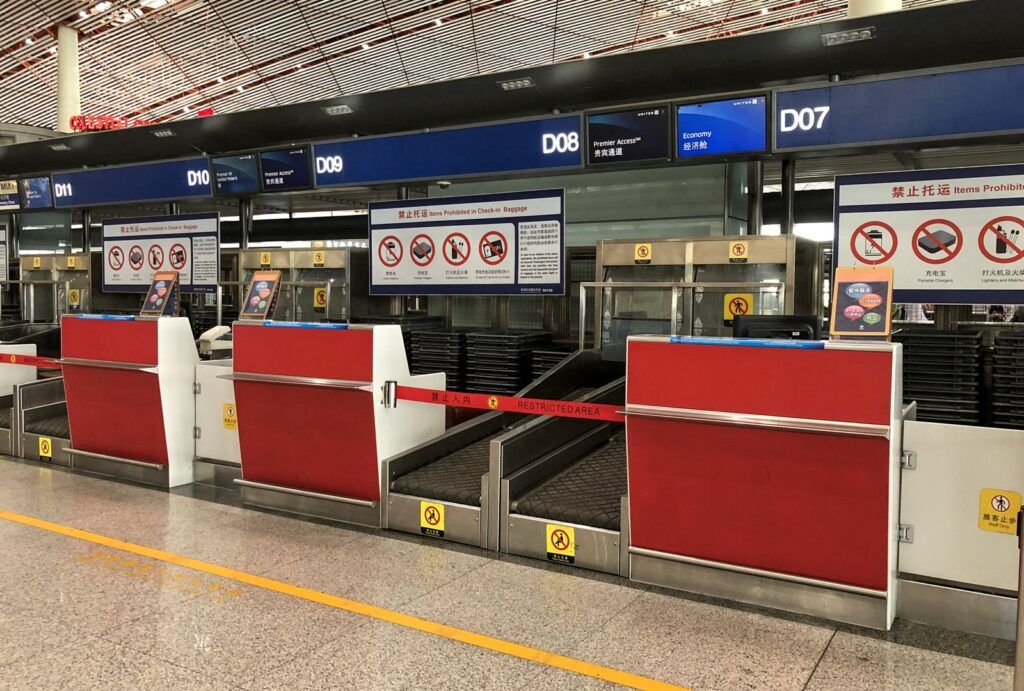
United’s most concrete argument is about check-in, not shopping. Checking in requires a person to confirm that their bags contain no banned items, such as explosives. If an agent ticks that box automatically, the traveler may never see the safety content, and United says that could put the action at odds with FAA and DOT regulations. That is a stronger case than a vague worry about data, because it points to a specific step where a human acknowledgment is the whole point.
Miles are the other pressure point. A MileagePlus balance works like money, yet it often sits behind a single password. An assistant holding that password could redeem points for a flight the traveler didn’t want. Meanwhile, stolen logins are already a familiar route into accounts, as the fake job interview behind the Binance theft showed in a very different setting.
Few travelers were letting agents finish the job
The same Propellic research suggests the ban will change less for travelers than it might for the agent makers. In its survey of 167 Muse users and 50 Instinct users, 66% said they stopped at research or a shortlist. Another 18% stepped in and booked elsewhere, and just 13% completed the booking through the agent. Even among that last group, 83% checked another source first. Only 5% of all respondents let an agent book without checking elsewhere.
Privacy worries were common, too. Among users who had not connected any accounts, 55% cited privacy or security concerns. About seven in 10 respondents had connected at least one account, but only 11% had connected a payment method. Those figures line up with the airline’s message: most people use agents to narrow options, then finish the purchase themselves.
Retailers and airlines are splitting on shopping bots
The United AI agents decision did not come out of nowhere. According to CNBC, Amazon has blocked Meta’s Muse agent, while Walmart has partnered with it. Online travel companies Expedia and Booking are working with OpenAI. United’s own statement notes that banking and retail leaders have taken similar steps and encourages other companies to follow.
Other airlines have been more cautious in public. PhocusWire noted that Delta told TechCrunch last month it would need to be mindful of “security and the customer experience” before opening up to agents, and described United as the first airline to draw a hard line on agentic shopping. The pattern resembles the fight over web crawlers, where sites are still working out what robots.txt can and can’t do against AI crawlers. Rules on paper only go so far without technical enforcement.
A checklist for travelers who use United AI agents
For anyone who has handed travel chores to an assistant, United’s guidance boils down to a few steps:
- Change your MileagePlus password if you ever shared it with an agent. United recommends doing this immediately.
- Review recent bookings made by an agent before November 11 to confirm they were ticketed correctly.
- Keep sensitive details out of chats. United lists confirmation numbers, account numbers, passwords, dates of birth and addresses as information not to share.
- Check in yourself so you see the safety declarations about prohibited items.
- Act fast on surprises. If an agent bought something or spent miles you didn’t approve, United says to secure the account right away.
Similarly, it helps to check what an assistant can access across services, not only on United. Usage terms for AI tools shift often, as the recent change to ChatGPT’s shared Codex allowance showed.
The deal United AI agents would need
United frames the move as a pause rather than a permanent wall. Its Trust Center says the airline wants “standardized, secure technology integrations with privacy, security, authorization and accountability protections in place,” and that it will update the page if it starts working with any third-party agent. That reads like an invitation to negotiate: approved agents, on United’s terms, possibly through its own distribution rules.
The timing also matters. Bloomberg Law noted that the restriction lands ahead of the holiday travel season, when booking volumes rise. For travelers, the short-term effect is modest, because most were finishing purchases themselves anyway. For agent makers and intermediaries, however, the stakes are higher. If other carriers copy United’s indirect-channel language, the fastest route agents now use to buy flights could narrow just as consumer agents start to catch on.