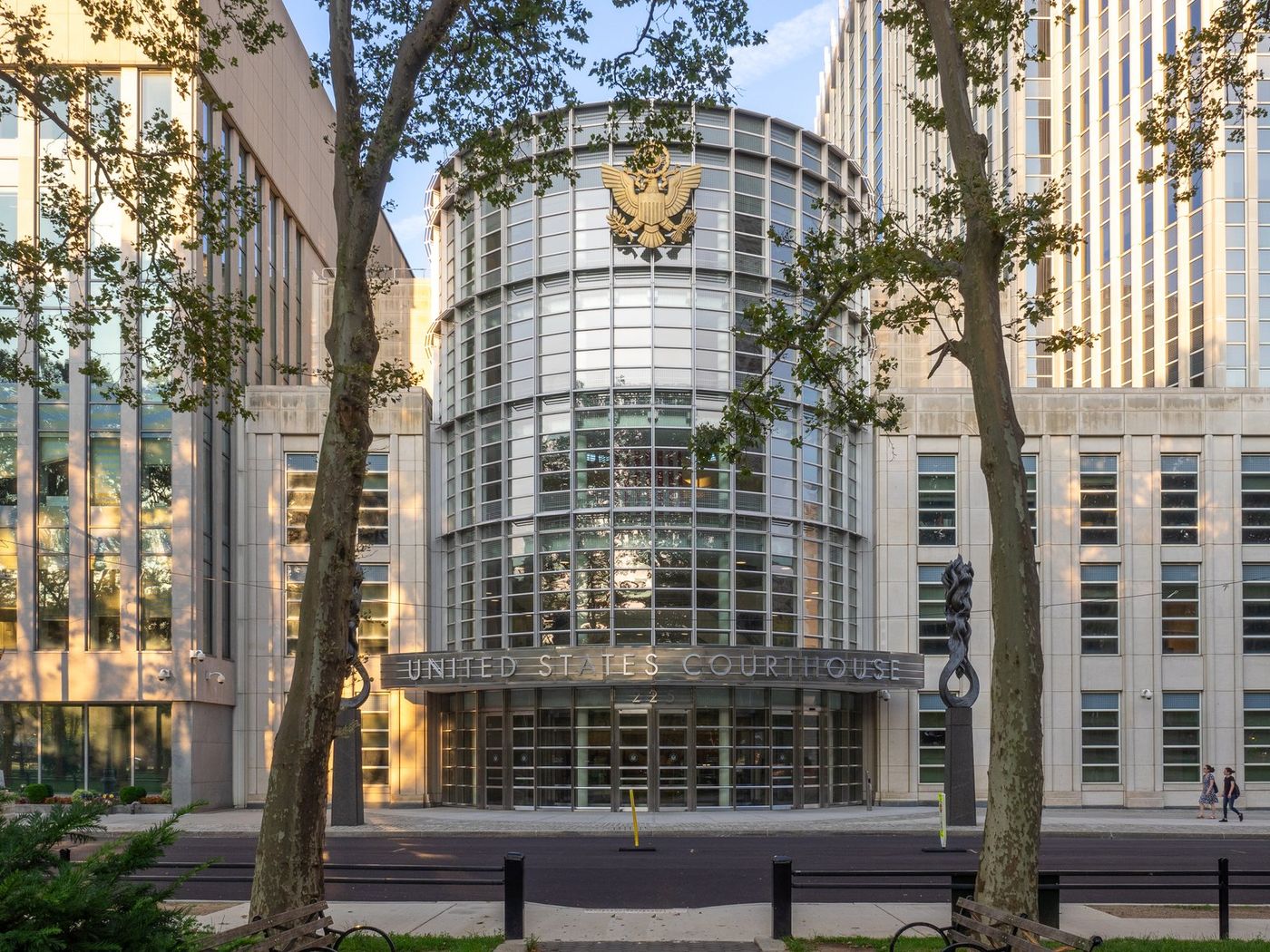
Cisco settled with Huawei in 2004. T-Mobile took its case to a Seattle jury in 2017 and won $4.8 million. A Texas jury in 2019 found Huawei had taken a startup’s secrets but awarded nothing. On Tuesday, a federal jury in Brooklyn weighed those same disputes, plus two others. The Huawei verdict it returned folded all five into a criminal conviction. Jurors found Huawei and three subsidiaries guilty on 10 of 12 counts, including conspiracy to steal trade secrets, bank fraud, Iran sanctions violations and money laundering conspiracy.
The jury also refused to call the company a criminal enterprise. It acquitted Huawei of racketeering conspiracy, the charge that tied everything together, and of conspiracy to obstruct justice. That split is why both sides claimed a win within hours. However, the surviving counts point somewhere neither statement dwells on. The trade secret story makes headlines, but the Iran banking story will likely set the bill.
What the Huawei verdict actually covers
According to the Justice Department’s announcement, the defendants are Huawei Technologies, its Chinese unit Huawei Device, and two US subsidiaries, Futurewei Technologies and Huawei Device USA. The convictions cover conspiracy to steal trade secrets, conspiracy to commit wire and bank fraud, wire fraud, bank fraud, conspiracy to defraud the United States, conspiracy to violate the International Emergency Economic Powers Act, substantive violations of that law, and money laundering conspiracy.
Bloomberg reported that the panel deliberated for about four days after an 11-week trial. It called the case a rare US prosecution of a foreign corporation. Judge Ann M. Donnelly has set sentencing for September 14, 2027. A company cannot go to prison, so the Huawei verdict leaves three tools: fines, forfeiture and restitution.
Huawei’s lawyer, Brian Heberlig, told the BBC that the racketeering count was “a significant overreach, and the jury soundly rejected it.” He added that he fully expects an appeal after sentencing. In an interview with NBC News, he described the evidence as “a series of isolated events over a 20-year period.”
Five old disputes inside the Huawei verdict
Most of the episodes behind the trade secret count had already been through civil courts or settlement talks. Prosecutors described five, and each has its own history:
- Cisco: prosecutors said Huawei copied router source code and left Cisco’s own notes in it, referring to Cisco as “ocsic.” Cisco sued in 2003 and settled the next year, apparently without payment, after Huawei agreed to change the products, EE Times reported.
- Fujitsu: a Huawei employee caught photographing Fujitsu equipment wore a badge naming his employer as “Weihua,” the Justice Department said.
- T-Mobile’s Tappy robot: Huawei staff sent photos and technical details of the phone testing robot to China, and one employee left the lab with a robot arm in his bag. T-Mobile sued in 2014 and a jury awarded it $4.8 million in 2017, far below the $500 million it had sought.
- Quintel: prosecutors said Huawei filed a patent application using the antenna maker’s idea soon after receiving it under a non-disclosure agreement, and attached Quintel’s confidential slide.
- CNEX Labs: in 2019, a jury in Sherman, Texas, found that Huawei misappropriated the startup’s trade secrets but awarded no damages because Huawei was not unjustly enriched, AP reported.
Huawei says those cases were closed long ago
That history is the core of Huawei’s response. In its statement on the verdict, the company said the five disputes “were all civil matters that were resolved over the past two decades” and that it was never ordered to pay damages for trade secret misappropriation. As a result, Huawei can argue on appeal that prosecutors repackaged settled commercial fights as crimes. The government’s answer is that the pattern was the point. A civil settlement ends a lawsuit, not criminal liability, and the jury agreed.
Why the trade secret counts carry a small price tag
Here is the less obvious part. The federal trade secret theft statute caps fines for an organization at the greater of $5 million or three times the value of the stolen secret, according to 18 U.S.C. 1832. Congress only added the “three times the value” option in 2016. Before that, the cap was a flat $5 million. Most of the conduct described at trial, from Cisco’s code to the Tappy robot, happened well before then.
Precedent points the same way. In 2018, a federal judge gave Chinese wind turbine maker Sinovel the maximum $1.5 million fine for stealing trade secrets from AMSC. Sinovel also agreed to pay $57.5 million in restitution, according to AMSC. Restitution is tied to a victim’s losses. For Huawei, courts or settlements already put a value on several of those losses, such as the $4.8 million T-Mobile award and the zero-damages CNEX ruling. That gives the defense room to argue for small restitution numbers on this half of the Huawei verdict.
The Iran counts are where the money is
The banking half of the Huawei verdict looks very different. Prosecutors said Huawei ran its Iran business through Skycom. It then told banks that Skycom was a partner rather than a wholly owned subsidiary. According to the Justice Department, those statements helped Huawei obtain “billions of U.S. dollars” and access to dollar-clearing services. Prosecutors also said Huawei helped Iran monitor and censor internet users and supplied cameras used to watch protests.
Those claims overlap with the 2021 deal that let Meng Wanzhou, Huawei’s finance chief and the founder’s daughter, return to China. Canada had held her for about three years after her arrest in late 2018, the BBC notes. The court admitted her deferred prosecution agreement at trial. Its statement of facts centered on her 2013 presentation to HSBC about Skycom.
The scale matters for sentencing. Fraud and money laundering counts let prosecutors seek forfeiture tied to the money involved. Federal law also allows a fine of up to twice the gross gain or loss from an offense. The closest comparison is ZTE, another Chinese telecom company accused of illegal business with Iran. In 2017, ZTE pleaded guilty and agreed to pay $430,488,798 to the Justice Department, made up of a $286,992,532 criminal fine and $143,496,266 in forfeiture, according to the department. Including settlements with Commerce and Treasury, ZTE’s total came to $892,360,064, with another $300 million suspended.
ZTE got credit for pleading guilty. Huawei went to trial and lost on the sanctions and fraud counts, so it gets no such credit. Nobody outside the case can yet say what number prosecutors will request. Still, the ZTE figures suggest the Iran counts, not the stolen robot arm, will decide what the Huawei verdict costs.
What changes for Huawei now, and what does not
In commercial terms, less than the headlines suggest. The US had already barred Huawei from selling network equipment to American carriers, and Canada and Britain also restrict its gear. The company says it operates in more than 170 countries and has invested over $270 billion in research since 2007. A fine paid in 2027 or later will not reshape a business of that size.
Even so, the conviction changes Huawei’s legal standing. Until Tuesday, the company could describe its US problems as political restrictions. Now a jury has found, beyond a reasonable doubt, that it lied to banks and conspired to take competitors’ technology. That finding will follow Huawei into debates in other countries over whether to keep its equipment in their networks. Meanwhile, the timing is awkward for Washington. Attorney General Todd Blanche said the result showed “no person or company is above the law.” The same day, he declined to say whether Nvidia’s Jensen Huang had been investigated, a question tied to our look at Nvidia’s board review.
Ten months before a judge prices the Huawei verdict
The next steps are slow. The court has scheduled sentencing for September 14, 2027, and Heberlig told the BBC there will be “significant advocacy” for the lowest possible sentence. An appeal would then go to the federal appeals court in New York. That would likely carry the dispute into 2028.
Cisco, T-Mobile and CNEX resolved their claims long ago. Any restitution depends on how the judge values losses from events now 10 to 20 years old. For banks, the sharper lesson sits in the Skycom evidence. A trade fight such as the EU and Indonesia’s race against a tariff deadline is settled with documents both sides sign. This case shows US prosecutors still pursuing one false description of a business partner, given to a bank more than a decade earlier.
The jury drew a clear line in the Huawei verdict. It would not call Huawei a criminal organization, but it convicted on specific acts. The bigger number, however, will come from the Iran counts, which drew far less attention than the backwards “ocsic” in the copied code. Unlike the stolen SSH keys in the Fugaku breach, nothing here involved hacking. The secrets left through partnerships, contracts and visitor badges.