Why does Mark Rober show failed experiments? The engineer and YouTuber says he leaves setbacks in his videos on purpose, so young viewers see that even experienced builders rarely get things right the first time. “I always include the failures in my videos. They happen every single time,” he said in a September 22, 2026 as-told-to essay for Business Insider. “Kids need to see that even I don’t get it right the first time. That’s part of the process.”
The point matters for anyone who watches a spectacular finished contraption and assumes its creator nailed it immediately. Showing the trial runs turns the story from a magic trick into a process a viewer can copy.
What Mark Rober said about failed experiments in 2026
In the Business Insider piece, Rober said he wants children to finish one of his videos, “look around the room and ask a question,” then build and try things “knowing it probably won’t work the first time.” He went further: “Hopefully it doesn’t — because if it does, you’re not taking enough risks.”
He linked that attitude to the games he played as a child. “When I died in the game, I didn’t give up; I learned from it and got excited to try again,” he said of Super Mario Bros. He described conflict and challenge as essential parts of any good story: “Those aren’t bugs of this life; they’re a feature.”
He also tied it to a wider worry. With AI putting “the answer to any question in their pockets,” Rober argued, moments that spark curiosity will become “more important and precious.”
The idea goes back to his “Super Mario Effect” talk
Rober has made this argument for years. In his TEDxPenn talk, “The Super Mario Effect: Tricking Your Brain into Learning More,” he described an experiment run through his channel. According to the talk’s transcript, about 50,000 of his followers tried a simple coding puzzle, and players were randomly shown one of two versions.
In one, a failed attempt simply produced a message to try again. In the other, the player also lost five of a starting 200 meaningless points. Rober reported a success rate of around 52% for the penalised group and 68% for those who were not penalised. The un-penalised group also made nearly two and a half times as many attempts.
His conclusion was that framing matters: focus on “the princess and not the pits,” and people stick with a task longer and learn more. That was his own informal online experiment, presented in a talk rather than a peer-reviewed study, and he acknowledged that “results may vary.” It still explains why he treats visible failure as a teaching tool rather than an embarrassment.
Why Mark Rober treats failed experiments as an engineer’s habit
Rober worked as a mechanical engineer at NASA before YouTube. In the Business Insider essay, he said the skills he learned there, such as breaking down a problem, are the same ones he now uses to design toys. He even argued that making toys is arguably harder than space engineering, because toy engineers face much tighter cost limits.
Engineering is iterative by nature: build a version, test it, find what broke, change it and test again. In the TEDxPenn talk, Rober described a bullseye-every-time dartboard that took him three years of “failures and setbacks” before it worked. He said all six tracking cameras failed backstage minutes before he demonstrated it on Jimmy Kimmel’s show.
An example from his channel
Rober’s Backyard Squirrel Maze video is one of the playful engineering projects that made him widely known. It was released years before the September 2026 interview. It is included here for context, not as a new upload or as evidence of any particular failed test.
How the idea shows up in CrunchLabs and his teaching projects
Rober’s company CrunchLabs describes its aim as helping children think like engineers through hands-on build projects, and identifies him as a former NASA engineer. Building something yourself, with real chances that it won’t work at first, is the same lesson in physical form.
He has extended the approach into classrooms. Our coverage of the first Class CrunchLabs courses and the program’s $2.5 million grant explains that effort. His Netflix competition SCHOOLED! brings the build-and-test format to television.
What parents and young makers can take from it
For a young maker, the lesson is concrete. Build a small version, test it, change one thing and test again. A result that misses the target still tells you something about the design. The following tips are our practical reading of Rober’s comments, not a promise that the next attempt will work:
- Make failure cheap. Prototype with cardboard, tape or spare parts so a broken attempt costs little.
- Change one variable at a time. Then you know what made the difference.
- Talk about the attempts, not just the result. Asking “what did you learn from that try?” rewards the process.
- Avoid needless penalties. Rober’s puzzle experiment suggests even small, symbolic penalties for failing can discourage people from trying again.
For another creator taking a project well beyond a single video, see our report on MrBeast’s Ghana village project.
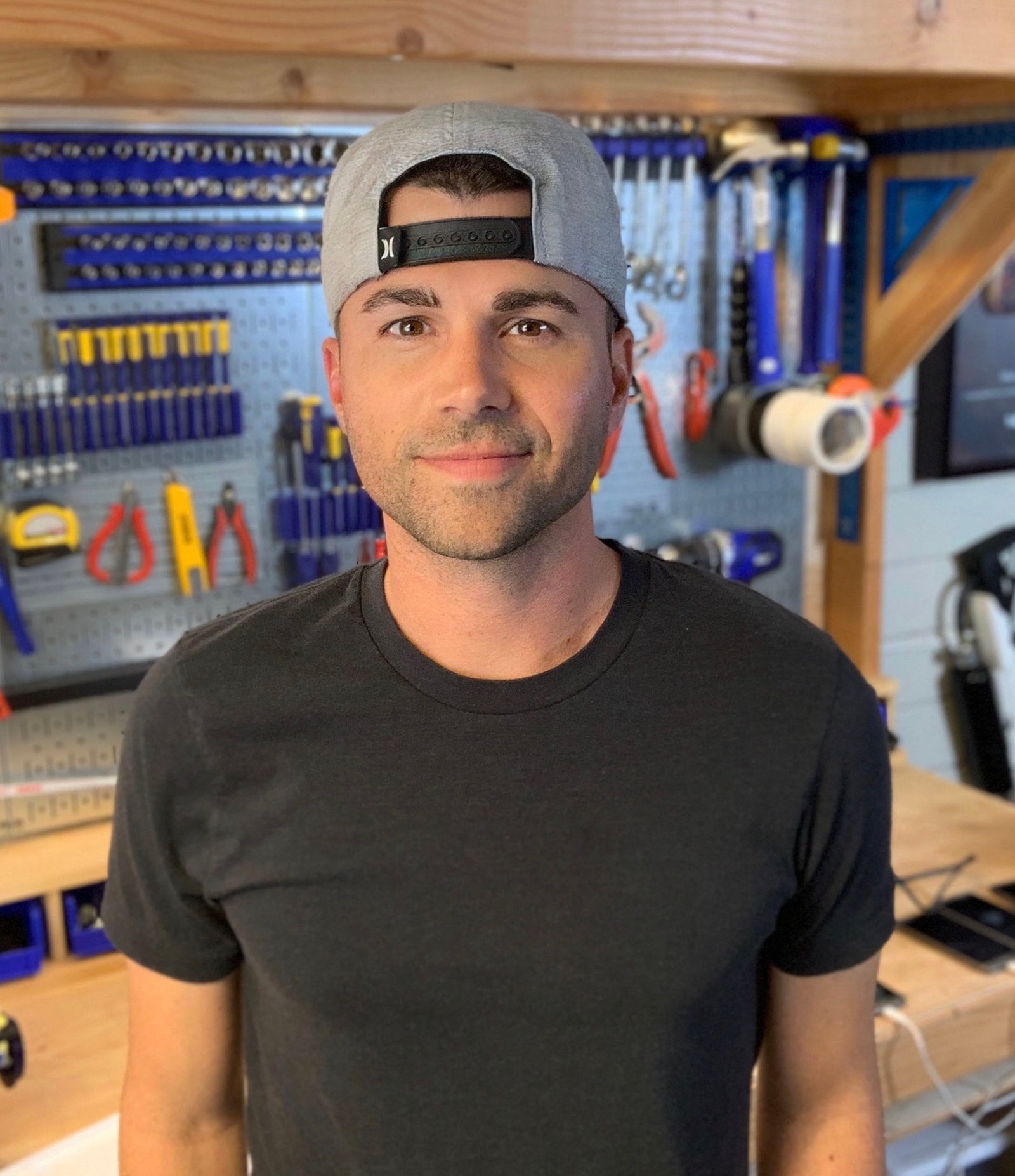
Image: Mark Rober, photographed October 2019; Countingmagic / Wikimedia Commons, CC BY-SA 4.0. This archival portrait does not depict the September 2026 interview.