The World Trade Organization’s 2026 report warns that replacing multilateral trade rules with rival blocs or a patchwork of bilateral deals could sharply reduce global output and exports by 2050. Its strongest positive scenario finds that modernised cooperation could raise global GDP by 2.9% and exports by 17.9%. The figures are scenarios, not forecasts, but they quantify what is at stake for trade-dependent and least-developed economies.
At a glance
- A stronger multilateral system could lift global GDP by 2.9% and exports by 17.9% relative to the baseline by 2050.
- Geopolitical fragmentation could reduce GDP by 5.1%, while an FTA-only world could cut it by 6.9%.
- Least-developed countries have the most to gain from cooperation and are especially exposed to higher trade costs.
What does the WTO trade-fragmentation report say?
The World Trade Report 2026, released on September 15, examines three possible paths for the trading system. In the cooperative scenario, stronger rules, wider market opening and new disciplines for digital trade and services raise global GDP by 2.9% and exports by 17.9% by 2050 compared with the report’s baseline.
Two erosion scenarios produce the opposite result. A world divided into geopolitical blocs lowers global GDP by 5.1% and exports by 18.6%. A system in which multilateral cooperation is replaced by a network of free-trade agreements produces estimated declines of 6.9% in GDP and 26.9% in exports.
The WTO describes the gap between stronger cooperation and erosion as an opportunity cost of roughly 5% to 10% of global real GDP, depending on the scenario. These are modelled outcomes based on assumptions, not predictions that any single result will occur. Their value is in comparing the scale and distribution of different policy choices.
Why can more bilateral trade deals still produce losses?
A free-trade agreement can lower barriers between its members. But a world built mainly from overlapping bilateral and regional deals can also create different rules, product standards and origin requirements across markets. Businesses then face extra administrative costs and may choose suppliers based on preferential tariffs rather than efficiency.
Multilateral rules aim to provide a common foundation. The WTO says about 72% of global merchandise trade still takes place under its most-favoured-nation terms, which generally require equal tariff treatment among members. That shared framework gives exporters more predictable access even when they are not covered by a special regional agreement.
This does not mean bilateral deals are inherently harmful. Today’s separate New Zealand–India trade agreement explainer shows how an FTA can reduce particular barriers. The WTO’s warning concerns what happens if such arrangements replace, rather than complement, a functioning multilateral system.
Why are the current rules under pressure?
Trade has changed substantially since the WTO was established in 1995. Digital services have expanded, economic power has become more dispersed and governments use subsidies and industrial policies more actively. National-security concerns now affect decisions about semiconductors, energy, communications and critical minerals.
At the same time, members disagree over development status, decision-making and enforcement. Reuters reported that the WTO’s 166 members have struggled to reach consensus, while regional and sector-specific arrangements have grown. The report does not present one complete reform blueprint; it identifies the areas where rules must adapt while preserving predictability and non-discrimination.
What could WTO reform involve?
The cooperative scenario assumes wider market-opening commitments, updated rules for services and digital trade, broader membership and a framework that balances openness with genuine security concerns. The WTO’s reform agenda also includes debate over decision-making, subsidies, transparency, developing-country treatment and the dispute-settlement system.
Why it matters for Bangladesh and South Asia
Bangladesh is closely tied to global merchandise trade, particularly through ready-made garments, and faces the challenge of graduating from least-developed-country status. Predictable market access, transparent standards and manageable trade costs are therefore material economic issues, not abstract diplomatic questions.
The WTO estimates that least-developed countries’ GDP could be 7.7% higher in the strengthened-cooperation scenario, partly because of lower tariffs and other trade costs. That group currently accounts for less than 1% of world trade. The number does not forecast Bangladesh’s individual growth, but it shows why smaller economies can gain disproportionately from rules that prevent powerful markets from discriminating among suppliers.
South Asian exporters also face non-tariff measures, logistics costs and varying product standards. Modernisation that improves transparency and digital trade could help, while fragmentation may force firms to comply with multiple competing systems.
Why it matters
The report reframes WTO reform as an economic choice with measurable consequences. Multilateral cooperation cannot eliminate geopolitical rivalry, but shared rules can limit how much that rivalry raises costs for households and businesses. Poorer countries have less power to negotiate separate deals with every major market, making a predictable common system particularly valuable.
What happens next?
The report was launched during the WTO Public Forum and will feed into member-led reform discussions. The real test is whether members translate broad support into agreements on rulemaking, dispute settlement, subsidies, digital trade and development. Future tariff decisions and the share of commerce conducted under common terms will show whether the system is being renewed or gradually bypassed.
Sources
- World Trade Organization: World Trade Report 2026 launch and scenarios
- WTO: World Trade Report 2026 executive summary
- Reuters: WTO urges reform at a critical juncture
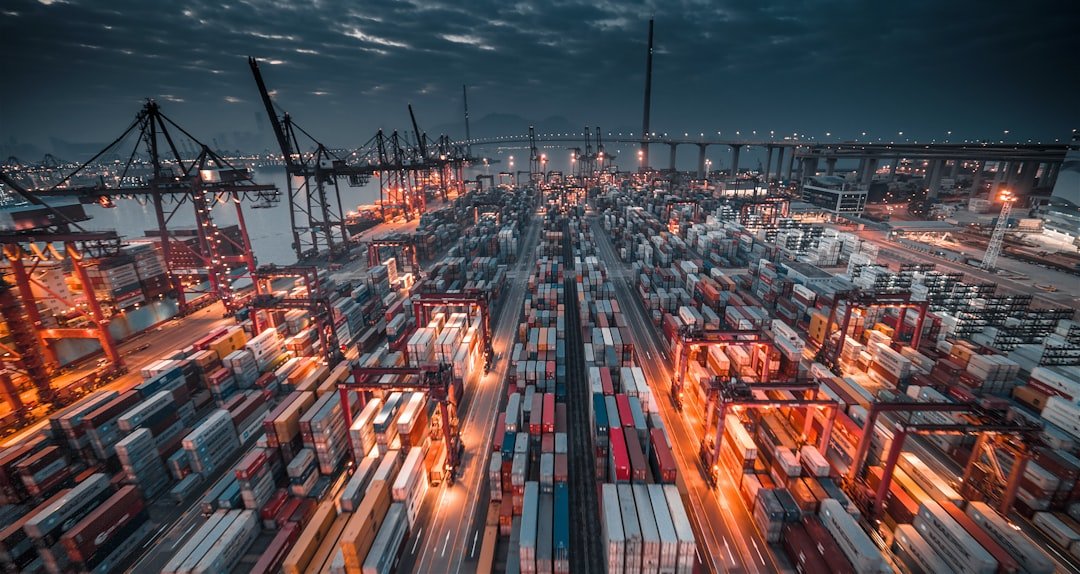
Featured image: container port illustrating international merchandise trade, photo by Timelab on Unsplash.