The Huawei Atlas 960 SuperPoD is the clearest sign yet that Huawei plans to compete in AI computing by connecting large numbers of Chinese-designed processors, even when individual chips may trail Nvidia’s most advanced hardware. Huawei presented the system and a longer chip roadmap at its Connect conference in Shanghai on September 17, 2026. The strategy matters because access to computing capacity increasingly shapes who can train and operate powerful AI models.
At a glance
- Huawei unveiled the Atlas 960 SuperPoD and outlined later Ascend AI processors extending into 2028 and 2029.
- The company’s approach relies on combining many processors through high-speed interconnects to create larger computing systems.
- The roadmap could strengthen China’s domestic AI supply chain, but performance, production volume, energy use and software support still need independent testing.
The Huawei Atlas 960 SuperPoD is a computing cluster rather than a single chip. That distinction is central to Huawei’s plan. AI developers need processors, memory, networking, storage, cooling and software to work together. If one component is constrained, system-level engineering can sometimes recover part of the lost performance by distributing a workload across more hardware.
What did Huawei announce at Connect 2026?
At Huawei Connect 2026, the company put AI infrastructure at the centre of its “All Intelligence” strategy. The official event programme described a blueprint for expanding AI infrastructure and highlighted a keynote titled “Advancing the Agentic World, Building a Solid Silicon Foundation.” Associated Press reported that Huawei unveiled the Atlas 960 SuperPoD and discussed Ascend 970 and 980 chip families planned for 2028 and 2029.
Those dates make this a roadmap, not a shipping-product review. Buyers cannot yet judge later processors on real-world availability, yields, reliability or total operating cost. Huawei’s announcement is still important because it reveals where the company is directing research, manufacturing and customer expectations.
How does the Huawei Atlas 960 SuperPoD strategy work?
A SuperPoD links many computing nodes so they can tackle a large AI task together. The difficult part is not merely adding more processors. Data must move rapidly among chips, memory and storage; delays in that movement can erase the benefit of extra hardware. Networking software must also divide jobs efficiently, recover from failures and keep expensive equipment occupied.
Huawei is therefore competing at the system level. Its pitch is that architecture and interconnection can create useful training and inference capacity even under restrictions that limit Chinese companies’ access to the most advanced foreign chips and semiconductor equipment.
The approach has limits. Larger clusters consume more power, require sophisticated cooling and can be harder to operate. Software compatibility matters too: Nvidia’s advantage is not limited to silicon, because developers have spent years building around its CUDA tools and ecosystem. Huawei needs an alternative that organisations can actually deploy and maintain.
Why it matters
The Huawei Atlas 960 SuperPoD matters for three reasons. First, it gives Chinese AI companies another domestic route to computing capacity. Second, it puts more pressure on the idea that competition can be measured by comparing one chip with another; full systems, networking and software increasingly determine performance. Third, it shows how technology restrictions can redirect innovation toward domestic supply chains and different technical designs.
The roadmap also follows a wider expansion in specialised AI hardware. The Daily Vantage has previously examined MediaTek’s 2nm mobile-chip strategy and the Qualcomm–Amazon data-centre collaboration. Huawei’s announcement belongs to the same broader contest over who controls the processors and infrastructure behind AI services.
What could it mean for South Asia?
No Bangladesh-specific deployment was announced, so the roadmap should not be presented as a direct local investment. The relevant regional question is whether competition among infrastructure suppliers lowers the cost of AI computing or instead creates separate technology ecosystems with different security, procurement and compatibility requirements. Governments and companies in South Asia will need to compare performance, energy costs, data governance and long-term vendor support—not only headline processor counts.
What should readers watch next?
The most useful evidence will come from independently reproducible benchmarks and confirmed customer deployments. Watch for power consumption per completed workload, system availability, software adoption, manufacturing volume and delivery dates. Those measures will show whether Huawei’s architecture becomes a practical Nvidia alternative or remains primarily an ambitious roadmap.
Sources
- Huawei Connect 2026 official event and announcements
- Associated Press reporting on Huawei’s new chip technologies
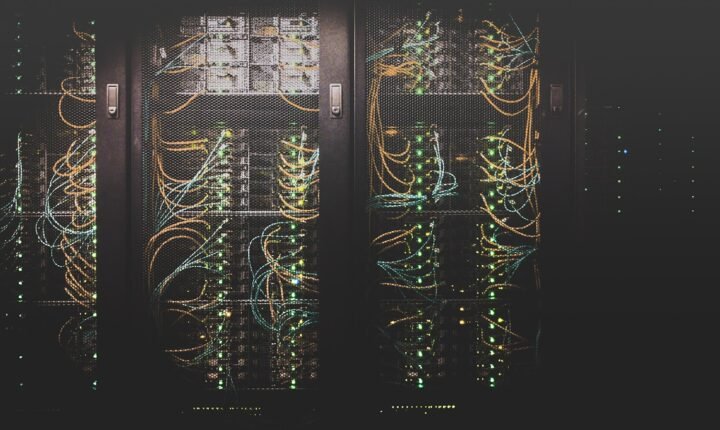
Featured image: electronic computing hardware, photographed by Kvistholt Photography via Unsplash. Used as a clearly labelled illustrative image.