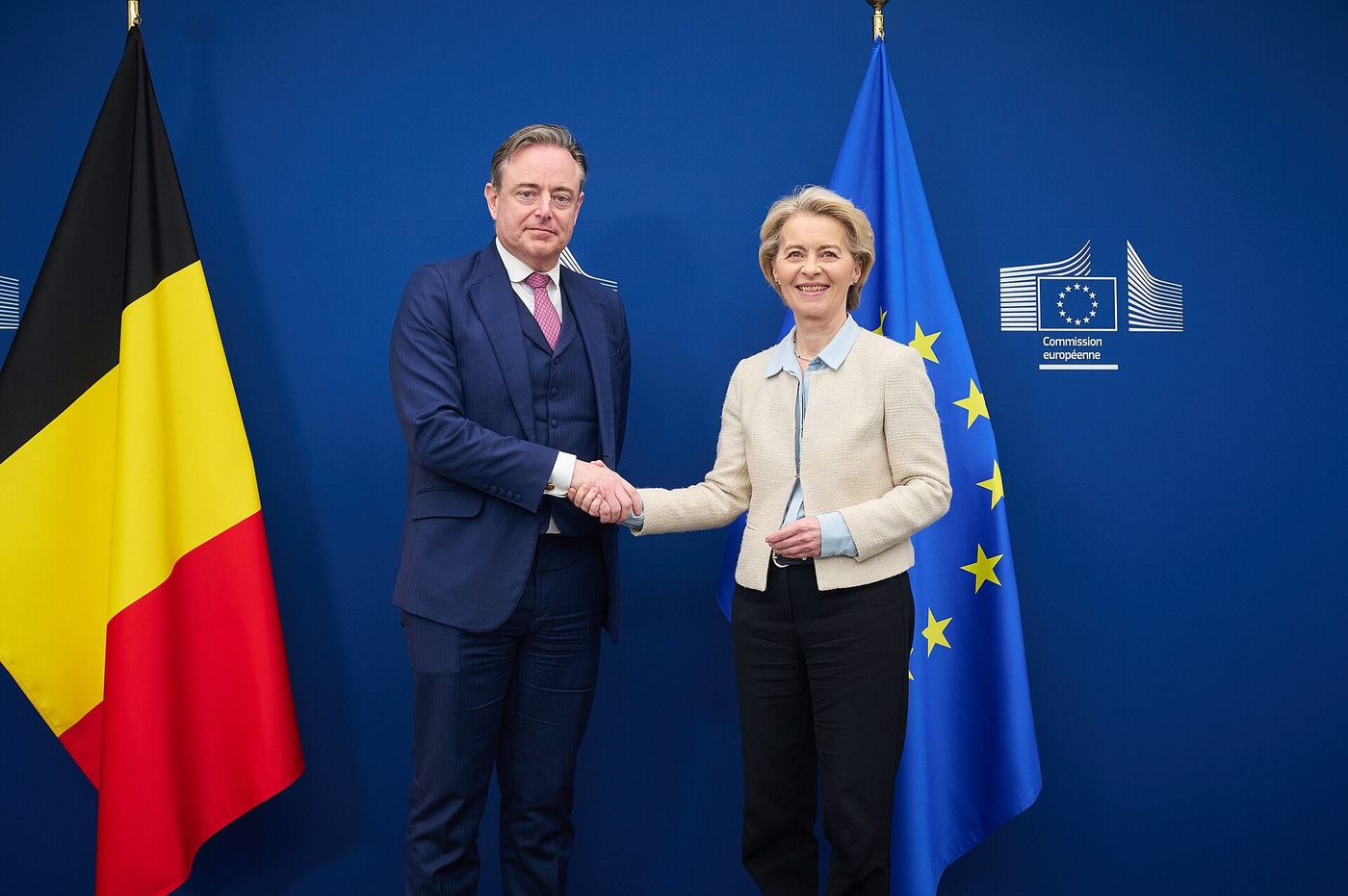
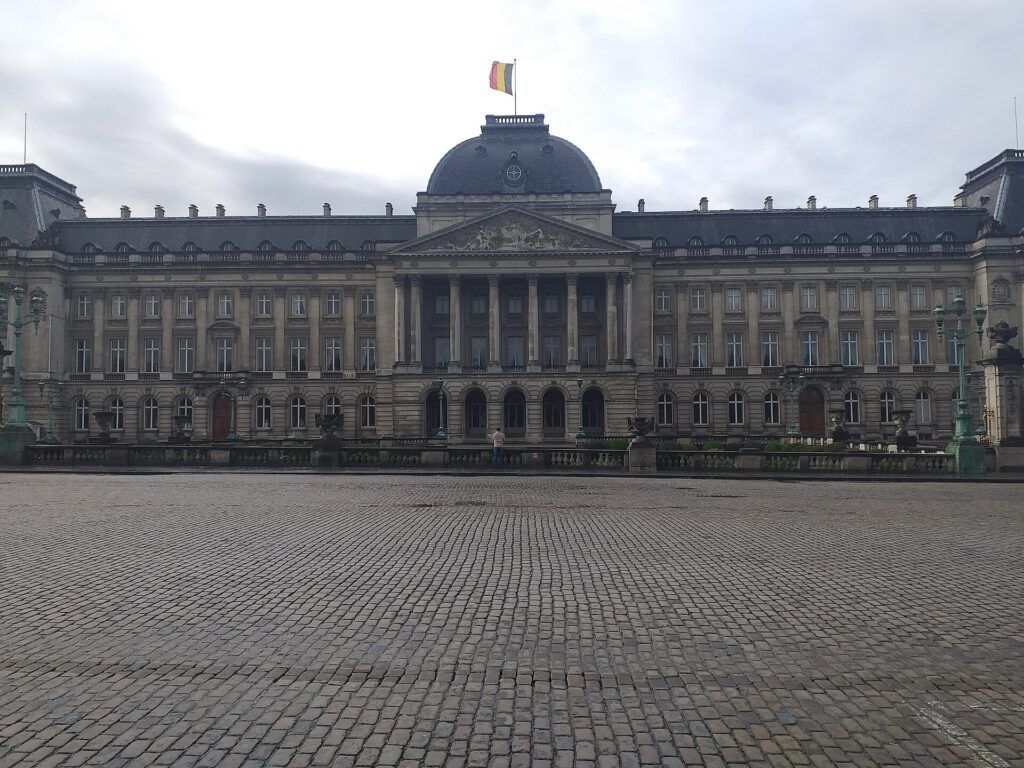
Belgian Prime Minister Bart De Wever walked into the Royal Palace on Monday morning and offered to quit, and the Belgium budget crisis now runs on a four-day clock. King Philippe did not accept the resignation. Instead, he put it on hold until Friday and began calling in the leaders of the five coalition parties one by one. In practice, that turns a resignation into a deadline, and the outcome will decide whether Belgium starts 2027 with a real budget, a stopgap or a caretaker government.
This piece sets out what is actually on the table: the size of the gap between the parties, what bond markets have already priced in, how the emergency spending rules work, and the three realistic ways the week can end.
How the Belgium budget crisis reached the palace
The coalition, nicknamed “Arizona” after the colours of its parties, joins De Wever’s Flemish nationalist N-VA, the French-speaking liberal MR, the centrist Les Engagés, the Flemish socialists of Vooruit and the Christian democrats of CD&V. It took 234 days of talks to form, according to Euronews. Now it has spent about two months trying to agree on roughly €10 billion in savings and new revenue by 2029.
Overnight talks collapsed in the early hours of Monday, November 2. After about an hour and a half with the king, De Wever left without speaking to reporters. The palace then said the country “cannot afford a prolonged political crisis” and urged every party to put “the spirit of compromise first,” AFP reported. Foreign Minister Maxime Prévot, from Les Engagés, told Belgian media there were “too many sticking points” to list.
The move is not new for De Wever. In early November 2025 he also went to the palace over a stalled budget. That time, however, he asked for more time instead of resigning, and he received 50 extra days. A deal followed only at the end of that month.
The €1.5 billion gap inside a €10 billion plan
On paper, the Belgium budget crisis looks like a fight over €10 billion. In reality, the public fault line is narrower than the headline figure suggests. Vooruit, CD&V and Les Engagés want €1 billion to €1.5 billion of the package to come from taxing higher incomes and financial wealth. By contrast, N-VA and MR want the effort to come mainly from spending cuts, including in healthcare.
The plan also lost its biggest single revenue item before the weekend. De Wever had proposed an across-the-board VAT increase that ING economist Philippe Ledent says would have raised about €4 billion. MR opposed it, and De Wever took it off the table. As a result, the remaining parties began drawing their own red lines, on social security savings for some and on wealth taxes for others, ING’s analysis notes.
Deputy Prime Minister David Clarinval of MR blamed Vooruit for insisting on higher taxes. Meanwhile, the opposition Greens took aim at the prime minister himself. Groen’s Matti Vandemaele called him “the prime minister of standstill.”
What bond traders are pricing into the Belgium budget crisis
The money side explains why the palace sounded so alarmed. Belgium’s deficit sits at around 5% of GDP, well above the 3% ceiling in EU rules. Its debt is above €735 billion, or more than 110% of GDP. Only Greece, Italy and France carry heavier debt loads in the eurozone, according to the Brussels Times.
Markets had started pricing the Belgium budget crisis before the talks broke down. On Monday morning, Reuters reported that Belgium’s 10-year bond yield stood at 4.36%. That compares with 3.30% for Germany and 4.92% for France. Four months earlier, the Belgian yield was 3.48%.
| 10-year government bond | Yield, Nov 2 morning | Gap to Germany |
|---|---|---|
| Germany | 3.30% | – |
| Belgium | 4.36% | 1.06 points |
| France | 4.92% | 1.62 points |
| Belgium, four months earlier | 3.48% | – |
Our own rough arithmetic shows why a 0.88-point rise matters. If the whole €735 billion stock were refinanced at that higher rate, the yearly interest bill would grow by about €6.5 billion. Belgium does not roll over all its debt at once, so the real cost arrives gradually. Still, every maturing bond is now replaced at a higher price. In early October, the National Bank of Belgium and the Debt Agency warned of an “interest snowball,” meaning new borrowing just to pay interest, possibly from 2028 or 2029.
Belgium is also still under the EU’s excessive deficit procedure, opened in July 2024. Its latest report to Brussels on the action it has taken is dated October 30, three days before the talks collapsed.
Provisional twelfths, again
Whatever happens on Friday, one consequence of the Belgium budget crisis already looks locked in. Parliament needs six to eight weeks to pass a budget. Therefore, with the holidays approaching, a fully approved 2027 budget before January 1 is very unlikely. ING’s Ledent reached the same conclusion, and so did De Wever, by ING’s account.
Without an approved budget, the federal state falls back on “provisional twelfths.” Each month, departments may spend no more than one-twelfth of the previous year’s budget. In other words, the 2026 budget is extended month by month. Belgium already started 2026 this way, with three months on the emergency regime.
For households and businesses, the direct effect is limited at first. Salaries, pensions and benefits keep flowing at existing levels. However, new policies, new hiring and new savings measures cannot start. That is exactly why De Wever said less than a month ago that twelfths were “not an option,” given the state of the finances and the markets.
Three exits from the Belgium budget crisis
Based on what the parties and analysts have said this week, three outcomes look realistic.
- A late full deal. The king grants more time, the five parties return to the table and agree on the €10 billion multi-year package, probably with some tax on higher incomes. ING calls this its base case. The country would still open 2027 on twelfths, but only for a few weeks.
- A smaller, one-year budget. The parties settle on about €3 billion to €4 billion of measures for 2027 only, an option De Wever had already floated. Consequently, the coalition survives, but the debt path barely changes. Investors would probably notice.
- The king accepts the resignation. The government stays on as caretaker, the 2026 budget carries over, and the king could ask other parties to try to form a coalition or move towards elections, Reuters reported. ING says this scenario would look closest to France’s recent difficulties.
There is also a wild card. The opposition liberals of Anders offered to help form an alternative majority. Les Engagés leader Yvan Verougstraete, the first party leader to see the king on Tuesday, has rejected that idea. “We have a team and a coach,” he said, the Brussels Times reported.
The polling problem behind every option
The strongest pressure on the five parties may come from the polls, not the palace. ING notes that current surveys suggest the coalition could not win back its majority in an early election. Instead, the far right would likely gain in Flanders and the far left in the French-speaking south.
That creates an odd incentive. Every party has a reason to threaten collapse, yet none has much to gain from it. Coalition math has decided outcomes elsewhere in Europe this autumn too, as our report on how a single seat could decide Sweden’s government showed. The rise of the hard right in eastern Germany, covered in our story on the AfD’s win in Saxony-Anhalt, is another reminder of what mainstream parties fear from early votes. For a sense of how quickly rising borrowing costs can move markets, see our earlier look at why the Bank of Japan raised rates to 1.25%.
Dates to watch this week
The king’s schedule is the timetable, according to Belgian broadcaster RTBF:
- Tuesday, Nov 3: Les Engagés and CD&V meet the king.
- Wednesday, Nov 4: Vooruit and MR, the two parties most often named in the deadlock.
- Thursday, Nov 5: the N-VA party chair.
- Friday, Nov 6, morning: De Wever returns to the palace for the decision on his resignation.
In the meantime, the useful signal is Wednesday. If Vooruit and MR both leave the palace talking about compromise, a time extension becomes likely. If either repeats its red line on taxes, Friday’s meeting becomes much harder. Either way, the Belgium budget crisis will not end with a fully approved budget this year. The real question is whether Belgium gets a plan that bond markets believe, or only another stopgap.