Studio Dragon, the studio behind “Crash Landing on You,” rose 29.96% in Seoul on Thursday morning. That is close to the 30% daily cap Korean rules allow. Many investors read the previous day’s trade deal as the first real crack in China’s unofficial Hallyu ban. However, the size of the move says less about what Beijing signed than about how little Korean television earns in China today.
That gap is the useful part of the story. Korean game exports to China reached $1.9 billion in 2024, according to Korea Creative Content Agency figures cited by Aju Press. Broadcasting exports, by contrast, came to $15 million, and film to $7 million. So the market paid the most for the sector with the smallest base. Game publishers, which already earn real money in China, gained only a few percent.
A summit in Shenzhen ends eight years of stalled talks
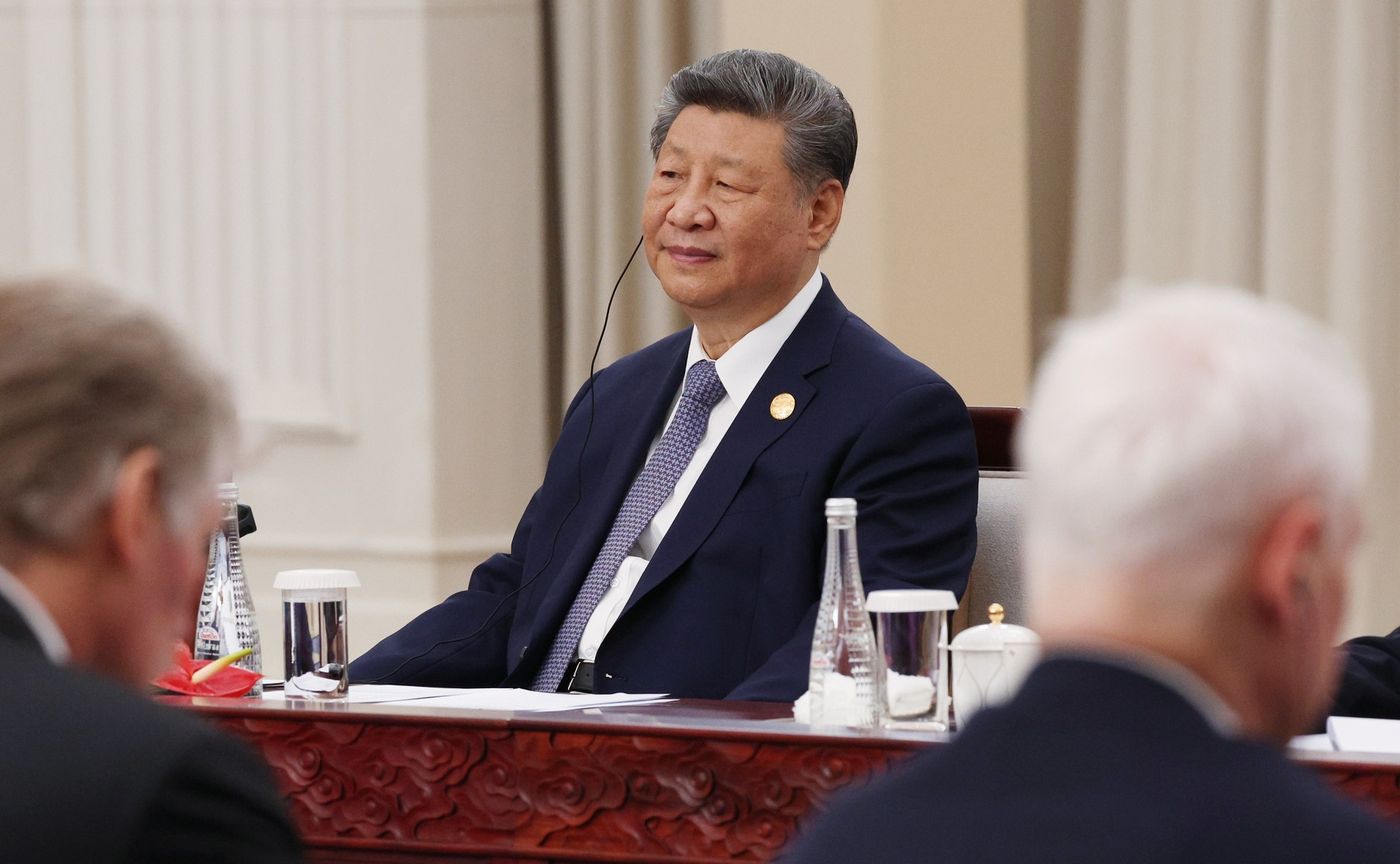
President Lee Jae Myung and Chinese President Xi Jinping met for about 35 minutes at Kylin Villa in Shenzhen on Wednesday. The talks took place on the sidelines of the APEC summit, The Korea Herald reported. Afterward, the two governments declared the services and investment chapter of their free trade agreement “substantially concluded.”
The original FTA took effect in December 2015. Follow-up talks on services began in March 2018 and ran through 17 rounds, according to The Korea Times. Then the process stalled for years. A senior presidential official said China had insisted on keeping culture out of the talks. Momentum returned only after Lee and Xi agreed in January to seek real progress by the end of 2026.
The Hallyu ban itself dates to 2016, when Seoul agreed to host the US THAAD missile defense system. China never acknowledged any ban. Even so, Korean dramas, films and K-pop tours largely vanished from Chinese networks, licensed streaming services and stages.
What the treaty text says, line by line
Three commitments matter for entertainment companies. First, China will give Korea most-favored-nation treatment in sectors including films and games. In plain terms, Korean firms cannot be treated worse than firms from any other country.
Second, Beijing agreed to apply non-discrimination to preliminary reviews of online games, films and other content. Korea’s trade ministry says this is the first time China has put such a provision into a trade agreement. Still, the two governments have not disclosed which sectors beyond films and games the principle covers, Yonhap reported.
Third, a new annex on audiovisual co-production widens domestic status. Until now, only approved co-produced films had it. Now dramas, documentaries, animation and variety shows can qualify too. As a result, a Korea-China co-production counts as Chinese content and escapes the quotas on foreign programming.
Notably, none of these clauses mentions the Hallyu ban by name. That fits Beijing’s line that no such ban exists. The deal also reaches beyond culture. Korean travel agencies in 23 designated Chinese regions may sell outbound trips directly to Chinese customers. In addition, Korean retailers may run 30 or more stores without a local joint venture, and forced technology transfers are prohibited.
Where the Hallyu ban rally priced the most hope
Set against those clauses, Thursday’s price moves look less random. CJ ENM, which backed “Parasite,” gained about 26%, while Hana Tour rose 18%, CNBC reported. Production company AStory hit the upper price limit, and travel firm Yellow Balloon Tour rose 29.98%, according to Financial News. Cosmetics makers also jumped, a bet that more Chinese tour groups will mean more beauty shopping in Seoul.
Game stocks moved far less. Krafton gained around 3%, NCSoft about 4% and Netmarble just over 5% in early trade. That modest response fits the base numbers. After all, a $1.9 billion export business does not double on one clause.
For drama makers, however, the co-production annex is the most concrete promise in the package. Shinhan Securities estimated that simultaneous airing in both countries could lift overseas cost recovery by at least 10 percentage points. Chosun Biz reported the estimate on Thursday. Even so, that scenario depends on Chinese broadcasters actually buying shows. A co-production also needs a Chinese partner, so a finished Korean drama does not automatically qualify.
Games gain a treaty right to challenge the license queue
Game studios felt the Hallyu ban as a slowdown rather than a wall. Every game sold in China needs a publishing license, known as a panho. Approvals for Korean titles collapsed after 2017 and only began recovering in 2022. This year, Korean games won nine of 36 imported approvals through late July. By late August, the tally reached 12, Aju Press reported.
Once the agreement takes effect, Seoul gains a formal basis to object to unequal treatment. For example, it could complain if Korean studios wait longer than rivals from elsewhere. That right does not guarantee more licenses. Instead, it turns a political grievance into a treaty question, which is a slower but sturdier lever.
K-pop concerts sit outside the Hallyu ban fix

The biggest gap is live music. A senior presidential official spoke plainly about it, according to The Korea Herald. “The agreement does not contain a provision requiring either country to approve performances by singers from the other country,” the official said. Instead, Seoul now has “more channels” to seek approval case by case.
The track record explains the caution. BIGBANG’s 2016 tour remains the last large-scale K-pop concert in mainland China. Authorities approved a roughly 1,000-seat show by the boy band EPEX in Fuzhou for May 2025. It was then postponed and never held. Since May this year, at least 15 events featuring Korean stars have been canceled or postponed.
Meanwhile, the music business has adjusted around the gap. According to Shinhan Securities, China’s share of Korea’s album exports fell from 36% in 2016 to 27% so far this year. Agency shares such as SM, JYP and HYBE rose roughly 4% to 9% on Thursday, well behind drama producers. One K-pop agency official told Yonhap that permission for concerts of 5,000 seats or more would be “a meaningful change.”
The Hallyu ban timeline still runs through two legislatures
Nothing changes on paper yet. Negotiators still have technical provisions to finish, and then both sides must sign. After that, Korea’s National Assembly and the Standing Committee of China’s National People’s Congress must ratify the text. The presidential official said signing alone “could take several more months.”
For fans and investors, a few signals will show whether the opening is real:
- A signing date: ratification cannot start until both sides sign, so a firm date is the first real milestone.
- The monthly game approval lists: a rising share of Korean titles among imported panho licenses would show the non-discrimination clause biting.
- A first co-produced drama: watch for a Korea-China series announced under the new annex and picked up by a Chinese platform.
- An arena-sized concert permit: a mainland show of 5,000 seats or more by a Korean act would be the clearest sign yet.
- Direct tour sales: Korean agencies selling group trips in the 23 designated regions would move tourism from promise to practice.
Co-productions could reshape what Korean studios make
Fans of Korean content outside China will likely notice little at first. Over time, though, co-productions could change what gets made. A show planned for two markets has to satisfy Chinese content reviewers as well as Korean viewers. Distribution terms already shape productions elsewhere, as our report on the structure of Druski’s Netflix deal showed.
There is also a softer measure. Lee noted that travel between the two countries is expected to pass 10 million people this year. He also called for a return to the 2016 level of 13 million. If tourists, dramas and games return first, the gradual approach both leaders described will be working. But if concerts never follow, the Hallyu ban will have been narrowed rather than lifted. Streaming platforms, meanwhile, keep testing new routes for shows, from the Tubi and TikTok creator incubator to cross-border deals like this one.