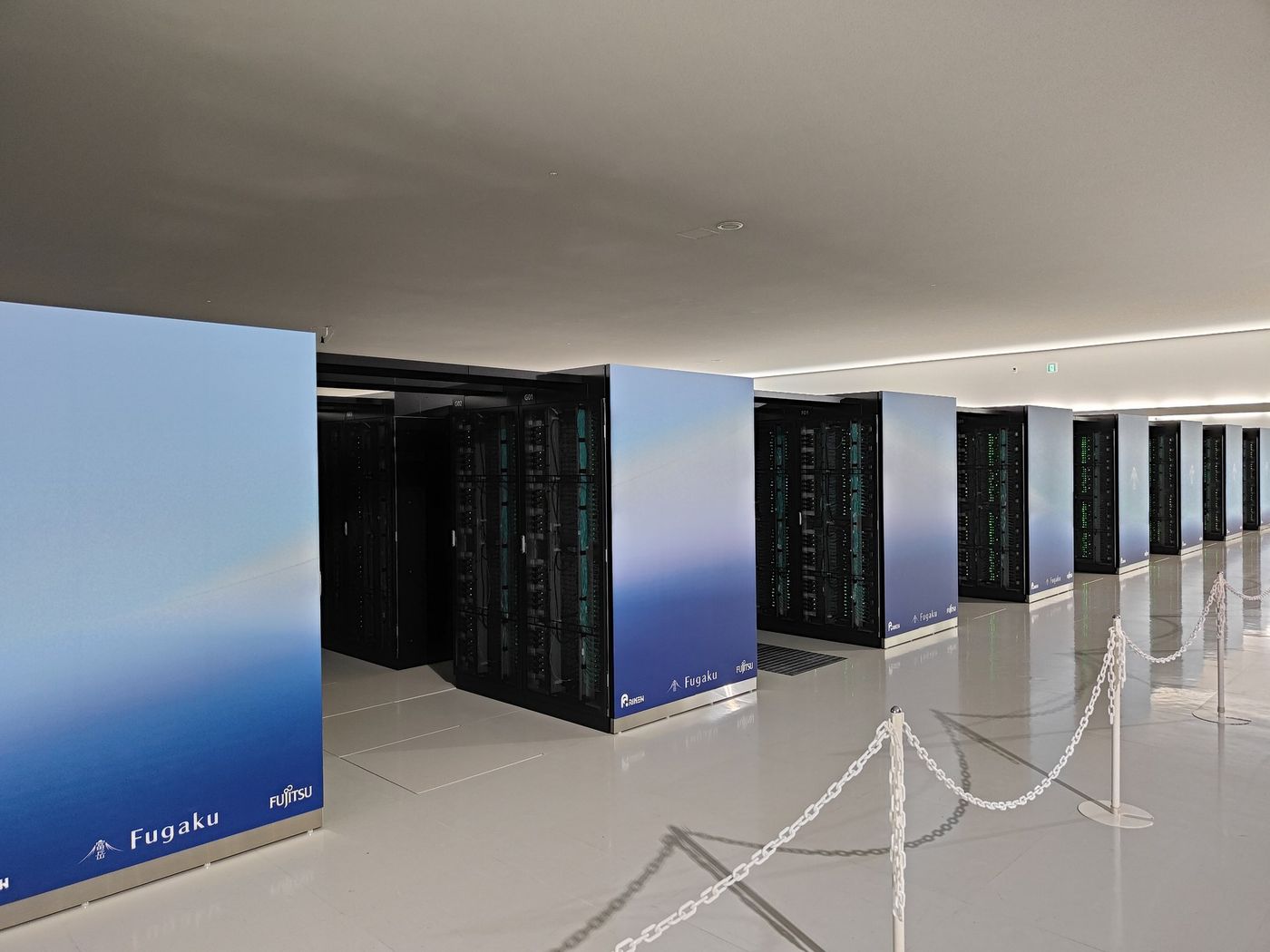
For four days this month, someone was inside the network that runs Fugaku, Japan’s flagship supercomputer, and the way in was a web page anyone could open. RIKEN, the state-backed institute that operates the machine in Kobe, says the intruder used Fugaku’s public “operating status” dashboard to reach its internal operations network between November 10 and 13. RIKEN now treats the Fugaku breach as a possible leak affecting up to 4,597 people. Yet the number that matters most is not on any list of names. It is the pile of SSH private keys and access keys that researchers had left in their home directories, keys that open doors at universities and labs far from Kobe.
RIKEN’s own notice, published in English on November 17, says the intruder tampered with several internal servers, installed malicious programs and then “attempted to connect to other systems using some of the obtained credentials.” In other words, the attacker has already tried to use what was taken.
Four Days From the First Alert to the Privacy Regulator
The institute released an unusually detailed log. Read in order, it shows how quickly the machine was shut and how slowly the wider circle was told. All times below are Japan Standard Time, as given by RIKEN.
| Date and time (JST) | What RIKEN says happened |
|---|---|
| Nov 10 to 13 | Intruder reaches the internal operations network through the public status dashboard |
| Nov 12 | Suspicious network traffic detected; investigation begins with the outside maintenance provider |
| Nov 13, 4:33 PM | Unauthorized access confirmed |
| Nov 13, 8:59 PM | Education and science ministry (MEXT) informed |
| Nov 13, 10:07 PM | System used for the intrusion isolated |
| Nov 14, 4:30 AM | Fugaku operations suspended and outside access blocked |
| Nov 14, 8:20 PM | Administrative keys replaced |
| Nov 15, 10:51 AM | National HPCI computing network organisations informed |
| Nov 15, 4:18 PM | Users emailed, all running and queued jobs halted, user login keys invalidated |
| Nov 16, 5:55 PM | Personal Information Protection Commission informed |
Two gaps stand out. First, almost 48 hours passed between RIKEN confirming the intrusion and the email that told users to replace their keys. During that window, any key stolen from Fugaku still worked wherever it was trusted. Second, the account of when the government heard differs. RIKEN’s log says it informed the education and science ministry at 8:59 PM on November 13. However, the ministry told Kyodo News that RIKEN first reported the matter on Friday “as only an information security case,” followed by “intermittent updates” about the shutdown and a possible leak.
Neither account suggests anything was hidden. Still, they show how the Fugaku breach took days to be recognised as a possible data leak, even inside a national lab.
A Status Page Became the Way In
Status pages are among the most ordinary things a computing centre runs. They tell researchers whether the queue is busy and when maintenance is due. That is exactly why they are easy to forget. RIKEN says the exact method behind the Fugaku breach is still under investigation, and RIKEN has since pulled the page offline, The Japan Times reported.
One more detail deserves attention. RIKEN says maintenance and management of the affected system had been outsourced to an outside service provider. Staff spotted suspicious traffic on November 12, and RIKEN then worked with that provider to investigate. Among its promised fixes, the institute says it will “review the division of responsibilities for operations and maintenance” so it can respond faster in an emergency. That reads as a quiet admission that the hand-off between owner and contractor slowed things down.
Why the Fugaku Breach Travels Beyond Kobe
A supercomputer account is rarely a dead end. Researchers often keep private keys on the machine so their jobs can pull data from, or push results to, other clusters and storage services. If one of those keys has no passphrase, whoever holds the file can log in as that researcher, with no password needed.
That is why RIKEN’s advice to users goes further than “change your password.” It tells them to remove the matching public key from every external service where it is authorised, generate a fresh key pair, and replace any other credentials they stored on Fugaku. RIKEN has already invalidated every user’s login key on its own side. The keys that matter now, however, sit on servers RIKEN does not control.
So far, RIKEN says there is no evidence that research data or user files left the system. It is still checking whether files included personal details of third parties, such as study participants. Fugaku is also used for simulations in industrial and defence-related research, Kyodo noted, which is why the government is watching closely. Chief Cabinet Secretary Minoru Kihara said on Tuesday that operators must “prioritize security while limiting the impact on research activities.”
The Fugaku Breach Turns a 2020 Pattern Around
Supercomputer centres have faced this kind of chain before. In May 2020, around a dozen academic machines across the UK, Germany and Switzerland went offline after attackers moved between them using stolen SSH credentials, the BBC reported at the time. Europe’s grid security team found that the attackers were “hopping from one victim to another” to mine cryptocurrency. Britain’s ARCHER service, for instance, reset every password and key, and users returning to it needed both a new password and a passphrase-protected SSH key, BleepingComputer reported.
This month’s incident runs that pattern backwards. In 2020, stolen keys were the way in. This time, a web page was the way in and the keys were the haul. That makes the follow-up risk larger, because a key that worked on one system may also open several others.
Rikyu Users Caught in Their First Month
The Fugaku breach also reaches beyond the machine itself. The authentication system also held names and email addresses of up to 375 users of Rikyu, RIKEN’s new AI for Science supercomputer. Rikyu began operating only last month, according to The Japan Times. For a machine meant to show off Japan’s push into AI-driven research, a breach notice in its first weeks is an awkward start.
Fugaku carries a lot of national pride, too. It cost 130 billion yen to build with Fujitsu, began full operations in March 2021 and held the title of world’s fastest supercomputer from June 2020 until America’s Frontier overtook it in May 2022. Today it ranks ninth.
Checks for Anyone Who Touched the Machine
For the roughly 4,600 people affected by the Fugaku breach, and for administrators of any system that trusted their keys, the practical list is short:
- Revoke, then regenerate: delete the public half of any key that ever sat on Fugaku from every authorised-keys list and service, then create a new pair, as RIKEN advises.
- Rotate stored secrets: cloud access keys, tokens and passwords kept in home directories should be replaced at the service that issued them.
- Read the logs: administrators can look for logins with those keys since November 10, the earliest date RIKEN gives for the intrusion.
- Distrust “RIKEN” emails: the institute says it will never ask for a password or personal details by email.
Readers who manage servers will recognise the theme from our five-point check for the OpenSSH password bypass on Alpine. In both cases, the job is to find out which accounts can log in, and with what. The human side matters too. As the fake coding test behind the Binance theft showed, attackers who already hold names and email addresses can write very convincing follow-up messages.
When the Fugaku Breach Ends
RIKEN has not given a restart date. Before the machine returns, it says it will fix any flaws in the exploited software, rebuild the compromised servers, review the network layout and add new security measures “utilizing AI.” RIKEN halted running and queued jobs on November 15, so research groups have lost time as well as trust.
The ministry wants Fugaku back online as soon as possible. The more useful milestone, however, will be RIKEN’s next disclosure: whether any stolen key was successfully used elsewhere. Until that answer arrives, the Fugaku breach remains open in every lab that once trusted a key stored in Kobe. As projects like France’s test of linking quantum processors to conventional supercomputers show, these machines are increasingly wired into everything around them, and so are their weak points.