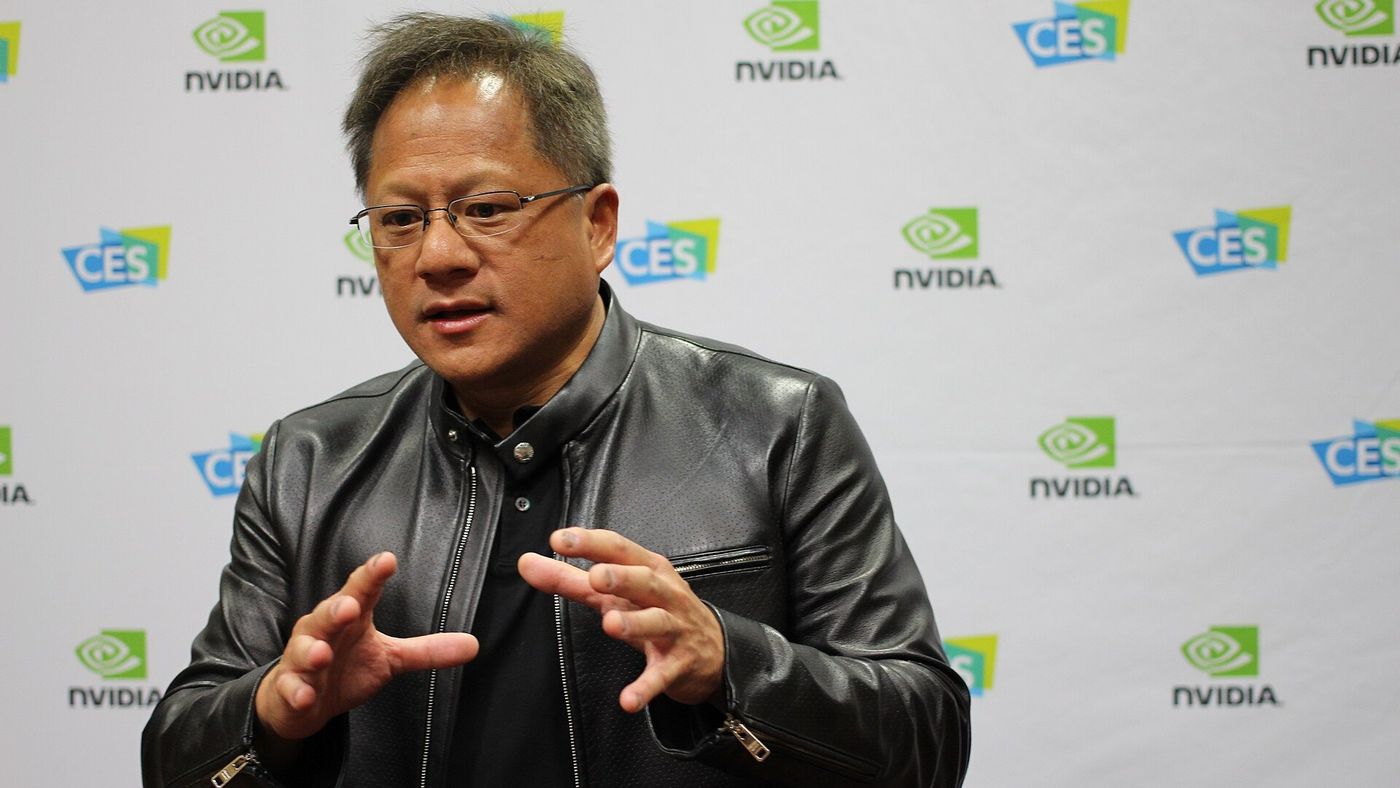
Jensen Huang has led Nvidia since he co-founded it in 1993, and for most of that time his board has stayed in the background. That changed on Sunday, Nov. 8, when directors announced an independent review of reports that he was the target of a foreign intelligence effort. The Nvidia board investigation now runs straight into the busiest three weeks on the company’s calendar: quarterly earnings on Nov. 17, a closed-door congressional briefing on Nov. 18 and a keynote in Washington on Dec. 1. Each of those dates will test what the board has said so far, and none of them requires the inquiry to be finished.
Investors reacted quickly. Nvidia shares were down about 5% before the opening bell on Monday, CNBC reported, after a week in which the stock had already slid on fears that the new Democratic majorities in Congress will slow the AI data center buildout. What follows is a guide to what is confirmed, what is only reported, and what each upcoming date can and cannot settle for the Nvidia board investigation.
Three dates now sit on top of the Nvidia board investigation
The story reached this point in stages. Last month, The New York Times reported that Huang had developed a close relationship with Alice Huang, a Chinese citizen linked to the Singapore cloud company Megaspeed. The two are not related. According to the Times, US officials concluded she was a Chinese intelligence asset. On Nov. 4, three Republican House committee chairs wrote to Huang asking him to attend a closed-door briefing on Nov. 18. The following day, the House Select Committee on China described Alice Huang as a “publicly reported Chinese intelligence asset.”
Then, on Friday, the Times reported that Trump administration policymakers had received a memo last spring identifying her as having been recruited by China’s Ministry of State Security. On Sunday, the board posted its statement, and Huang sent employees a memo in which he wrote, “I was unfaithful to my wife.” China’s foreign ministry has dismissed the spying claims as unsubstantiated. Alice Huang has not publicly responded, and Reuters said it could not verify the Times’ claims independently.
What the board said, and what it left out
The statement is short, and its wording is careful. A committee of independent directors, helped by outside counsel, will oversee the review. The board says it has “no reason to believe that either national security or NVIDIA secrets were compromised,” yet it also promises to “examine all available information.” It ends by expressing confidence in Huang and his leadership team.
Notably, the statement does not mention the affair, which Huang disclosed himself. It gives no timeline, names no law firm and does not say whether findings will be published. That matters because the Nvidia board investigation, with no deadline, can stay open through earnings and the congressional briefing. In other words, the board can keep saying it is “examining” the matter for weeks without contradicting itself.
The structure of the board also shapes what happens next. Unlike many founder-led tech companies, Huang is not chairman. According to CNBC’s reporting on the governance questions, he is one of 11 directors and the board has no designated chair. As a result, the independent members already control the process on paper. Still, Bernstein analyst Stacy Rasgon summed up the practical problem: “Jensen is not an ordinary CEO; he IS Nvidia,” and it is not clear who would succeed him.
Why Megaspeed matters more than the affair
For investors, the personal side of the story is less important than the customer involved. Megaspeed advertises itself as an Nvidia Cloud Partner in the Asia-Pacific region, offering access to GB200 NVL72 systems and HGX H100 servers, according to a Reuters explainer. The Times reported that the company bought more than $4.8 billion worth of Nvidia chips over two years.
Megaspeed has also faced US scrutiny over whether restricted chips reached China. The company denies wrongdoing. In a response quoted by CNBC’s profile of Megaspeed, it said inspections by the US Commerce Department, Malaysia’s trade ministry and Nvidia found “no evidence of any violations.” Nvidia, for its part, has said Huang’s meetings with Alice Huang were consistent with his contact with any customer.
So the real question for the Nvidia board investigation is not whether the CEO behaved badly in private. Instead, it is whether a senior executive at a customer under export-control scrutiny gained access, information or influence she should not have had. That is a compliance question, and it touches the area where Nvidia is most exposed to Washington.
Nov. 17 earnings arrive with the Nvidia board investigation unresolved
Nvidia will report results for its third fiscal quarter, which ended Oct. 25, after the US market closes on Tuesday, Nov. 17. The company’s call notice sets the call for 2 p.m. Pacific time, which is 4 a.m. on Nov. 18 in Dhaka. Questions are limited to financial analysts and institutional investors.
Analysts will ask about the probe, and the answer will probably be some version of the board statement. However, three details are worth watching. First, whether Huang hosts the call himself, as he usually does. Second, whether the quarterly filing adds new risk-factor language about the review or about key-person dependence. Third, whether management says anything about Megaspeed as a customer. Any of those would reveal more than Sunday’s statement did.
Demand is unlikely to be the issue. Rasgon wrote that demand for Nvidia’s products “seems unlikely to be affected,” while warning of higher regulatory risk as AI spending becomes political. That echoes the political pressure covered in the Texas data center freeze debate after the midterms, where the risk to AI companies came from elected officials rather than customers.
Nov. 18 and beyond: a Congress that is changing hands
The Nov. 18 briefing was requested by Republicans, who still control the House until January. Democrats, who won both chambers in last week’s midterms, have signaled they want more. Delaware Sen. Chris Coons, in line to chair the Senate Foreign Relations Committee, wrote that “Congress will investigate and get answers.” Rep. Seth Magaziner has called for Commerce Secretary Howard Lutnick to testify alongside Huang, CNBC reported.
Meanwhile, President Trump has defended Huang, calling him “an honorable guy.” That support may count for less once committee gavels change. Huang has been a leading advocate for selling more chips to China. Democrats are likely to ask what the administration knew about the relationship and whether Huang influenced policy, said Sam Bresnick, a research fellow at Georgetown’s Center for Security and Emerging Technology. The Dec. 1 keynote in Washington will then put him on stage in the same city, days after those questions are asked.
How this differs from the Intel and McDonald’s exits
The obvious comparisons are former chief executives who left over relationships. Intel’s Brian Krzanich resigned in June 2018 after a past consensual relationship with a subordinate was found to breach company policy. McDonald’s dismissed Steve Easterbrook in 2019 over a relationship with an employee. In both cases, the board could point to a written rule about dealings with staff.
Huang’s situation is different, as Moneycontrol noted in its review of Nvidia’s filings. Alice Huang worked for a customer, not for Nvidia. Therefore the review is more likely to turn on conflict-of-interest and information-security rules than on workplace conduct. That cuts both ways. It is harder to prove a clear breach, but a finding that sensitive information leaked would be far more serious than a policy violation.
Signs the Nvidia board investigation is getting worse
Nvidia has said Huang will keep leading the company “without interruption.” One investor close to Huang told CNBC he could foresee a leave of absence, depending on what the review finds. Dan Ives of Yorkville Ives & Co. called talk of replacing Huang “comedy,” but added that “anything could happen.”
For readers trying to judge the direction, a few signals would mean more than any statement. They include the board naming the outside counsel or setting a deadline, someone other than Huang leading the earnings call, a cancelled Washington keynote, or new disclosures in Nvidia’s quarterly filing. A formal government action against Megaspeed would also change the picture.
The wider market impact is limited for now. Joachim Klement of Panmure Liberum told CNBC the effect is contained to Nvidia. But Nvidia’s money now reaches far beyond its own chips, from its investment alongside AMD in Meta’s AI push to its stake in Anthropic, the Claude maker whose S-1 filing and IPO plans already have investors watching its suppliers closely. If the Nvidia board investigation weakens Huang’s position, those partners are likely to feel it early.