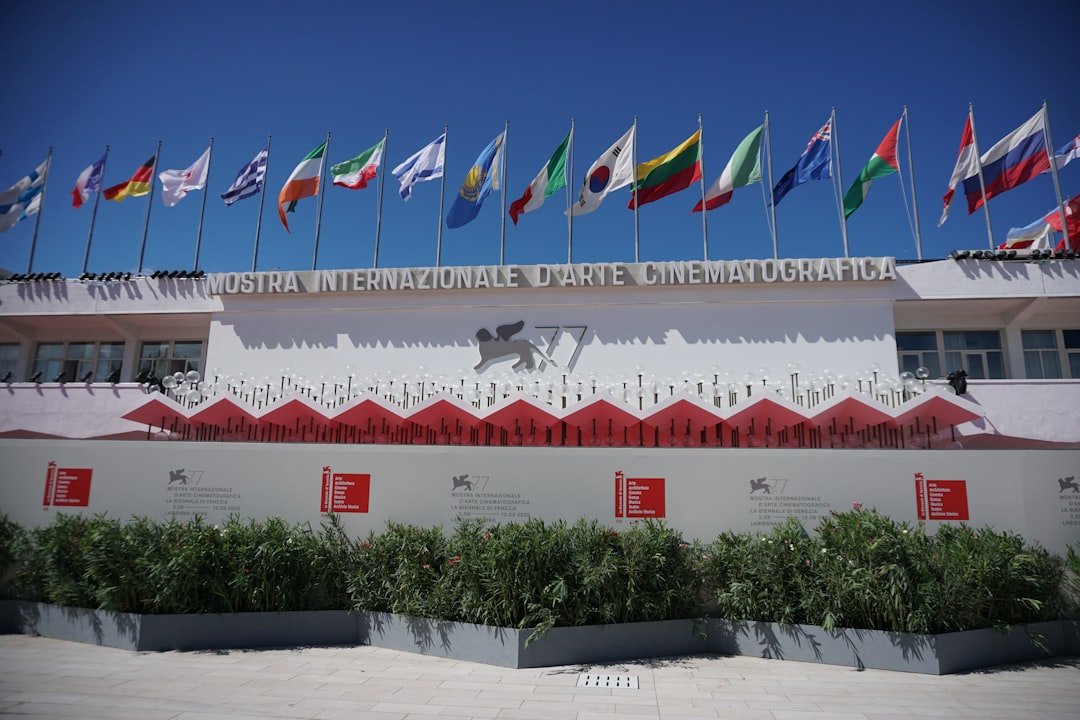
Woman Unknown won the Golden Lion for best film at the 83rd Venice International Film Festival, giving Danish director May el-Toukhy the festival’s highest honour. The postwar drama also earned Mathilde Arcel the best-actress award. The double win matters beyond the ceremony because el-Toukhy was the only woman directing one of the 21 films in the main competition, putting both her achievement and the field’s representation gap in focus.
At a glance
- May el-Toukhy’s Woman Unknown received the Golden Lion at Venice on September 12, 2026.
- Lead performer Mathilde Arcel won the Volpi Cup for best actress.
- The 124-minute Danish-language drama examines punishment and stigma in Denmark after World War II.
Why did Woman Unknown win the Golden Lion?
The jury’s prize establishes Woman Unknown as the 2026 festival’s top competition film. The official La Biennale listing identifies el-Toukhy as director and co-screenwriter, and describes a Danish-Swedish-Latvian production starring Arcel. The film runs 124 minutes and competed under its Danish title, Kvinde Ukendt.
Associated Press reported that the Golden Lion made el-Toukhy the eighth female director to receive Venice’s top prize. Reuters also reported the film’s best-picture and best-actress double and noted that el-Toukhy was the only female director among the main competition’s 21 entries.
A festival prize is a jury decision, not an objective measurement of quality. But the Golden Lion carries unusual weight: Venice is a major launch platform for international films, and its winners often gain distribution interest, critical attention and momentum for the wider awards season.
What is Woman Unknown about?
The story centres on Marie, a young nanny and housemaid preparing to marry a wealthy older widower in the disorder following World War II. She hides a wartime relationship with a German soldier, a secret that threatens both her new status and her safety after Denmark’s liberation.
La Biennale’s synopsis and the director’s statement frame the film around women branded as collaborators because of relationships with occupying soldiers. El-Toukhy connects that historical punishment to a broader question: how women’s bodies become sites of control, shame and political symbolism during and after war.
That gives the film a clear dramatic engine—a concealed past that may be exposed—while grounding it in a documented social phenomenon. Its subject is not simply whether Marie made the “right” choice, but who receives the power to define guilt when legal order and public emotions are unsettled.
What does Mathilde Arcel’s award add?
Arcel’s Volpi Cup for best actress makes the result more than a single jury endorsement. It suggests that the film’s historical and political ideas are carried through a central performance rather than delivered only as background or argument.
For an international film without the marketing scale of a Hollywood studio release, two prominent awards can substantially increase visibility. They give distributors a simple signal to present to cinemas, festivals and audiences: this was both the jury’s best film and home to its best female performance.
Why it matters
The win places a Danish-language historical drama at the centre of the global film conversation. It also creates an uncomfortable contrast. El-Toukhy’s victory is a milestone, but the fact that she was the sole woman in a 21-director competition shows that individual recognition does not by itself resolve access and representation.
The film’s theme has contemporary reach without requiring a forced comparison to a specific current conflict. It asks how societies police women’s conduct in wartime, how punishment continues after fighting ends, and whose stories enter the public record. Those questions can travel across languages and markets even though the narrative is rooted in postwar Denmark.
What happens next for the Golden Lion winner?
The immediate questions concern distribution dates, international sales and further festival screenings. The official page lists TrustNordisk as world-sales representative and Lucky Red for Italian distribution, but release plans can differ by country and should be confirmed market by market.
The Golden Lion guarantees attention, not commercial success. Reviews, cinema access, marketing and word of mouth will decide whether Woman Unknown moves from festival acclaim to a broad audience. The double award gives it a strong starting point.
For more major screen and arts developments, follow The Daily Vantage’s Culture News. Our World News section tracks the international events that often shape films like this one.
Featured image: Palazzo del Cinema during the Venice International Film Festival. Photo by Riccardo Lo Re on Unsplash.