Veritasium is expanding beyond its familiar science-explainer format with InGenius, a new YouTube channel hosted by Radiolab co-host Latif Nasser. Announced this week by Veritasium creator Derek Muller, the project is designed to investigate the inventions, systems and human decisions that shape society—not simply to produce more videos under a different logo.
What is InGenius?
InGenius is a new editorial channel from the team behind Veritasium. In the official announcement video, Muller explains that some stories the team wanted to pursue did not fit naturally inside Veritasium’s physics-and-mathematics identity. The solution was to build a separate home for reporting that starts with technology or innovation but follows its consequences into economics, politics, culture and everyday life.
The channel’s own description calls it “an element of innovation.” That phrase captures the intended scope: not product reviews or generic technology news, but reported stories about how a particular tool, idea or system changed what people could do.
Watch Veritasium’s official InGenius announcement on YouTube if the embedded player does not load.
Who hosts the new Veritasium channel?
InGenius is hosted by Latif Nasser, the journalist and science storyteller known for his work as a co-host of Radiolab. That choice signals a meaningful editorial distinction. Muller remains the public face of Veritasium, while Nasser gives the new channel its own voice rather than presenting it as a second upload feed for the same show.
Veritasium’s official announcement says Nasser will work with a team of journalists and social scientists. The emphasis on those disciplines suggests that InGenius will examine not only whether an invention works, but who adopted it, who benefited and how its effects spread.
How is InGenius different from Veritasium?
Veritasium is best known for videos built around physics, mathematics, engineering and counterintuitive scientific questions. InGenius has a wider social lens. Its stories can begin with an object or technical breakthrough, then move outward to institutions, trade, power and behavior.
That separation is sensible for viewers as well as for YouTube’s recommendation system. A well-defined channel sets a clearer expectation than mixing two substantially different programs in one feed. It also gives the new team room to experiment without weakening the identity Veritasium has built over more than a decade.
This is not evidence that Veritasium is ending or that Muller is stepping away. The announcement presents InGenius as an expansion: a second format for stories that the existing channel was not built to carry.
What was the first InGenius video?
The launch video is titled This $40 Hunk of Metal Changed the World. Its framing is a useful preview of the channel’s method: take an apparently ordinary object and trace the larger system built around it. The subject is presented less as a gadget than as an entry point into a consequential global story.
That approach overlaps with the best of science journalism without being limited to a classroom explanation. The important question is not only “How does this work?” but “What changed after people started using it?”
Why launch a separate channel now?
Veritasium has grown into one of YouTube’s largest independent educational brands. A separate channel lets the production team broaden its reporting while protecting the expectations attached to the main channel. It also makes Nasser a clearly identified host rather than a recurring guest inside someone else’s format.
The move reflects a wider trend among established creators: mature channels increasingly operate like small media studios, with distinct programs, specialist teams and recognizable editorial beats. But InGenius will still have to earn its audience video by video. The Veritasium name provides attention; it does not guarantee that a new format will develop the same trust.
Why Latif Nasser is a strong fit
Nasser’s background is well suited to stories that cross disciplinary boundaries. His work has often connected scientific ideas to history, institutions and individual lives. That makes him a natural guide for a channel whose subject is not merely invention, but the chain of consequences that follows invention.
His appointment also reduces a common risk in creator-led expansion: making every new project depend on the founder’s screen presence. By putting a proven storyteller at the center, Veritasium can give InGenius a distinct identity from its first upload.
What viewers should watch next
The first few releases will show whether InGenius becomes a regular reported series or a looser home for projects that fall outside Veritasium’s core. Viewers should watch for three things: how often it publishes, how deeply it reports beyond the central object, and whether Nasser’s narrative voice remains consistent across subjects.
For another example of a major science creator expanding into real-world education, see our coverage of Mark Rober’s Museum of Science event and award.
The launch is credible because the distinction is clear. Veritasium will continue explaining the science of the world; InGenius is positioned to explain how human choices turn ideas into systems.
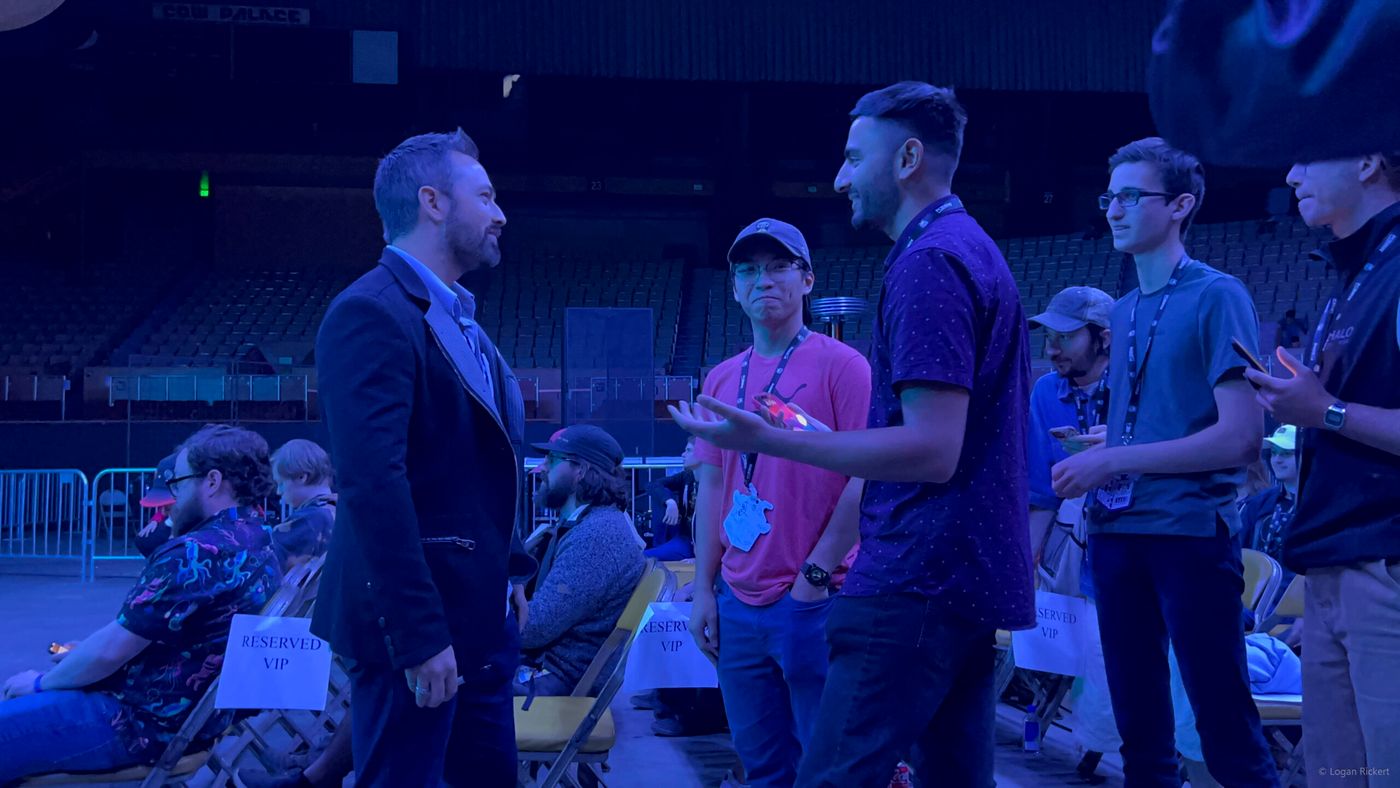
Featured image: Derek Muller, creator of Veritasium, at Open Sauce 2024. Photo by Logan Rickert via Wikimedia Commons, licensed under CC BY 4.0.