South Korea’s expanded espionage law took effect on September 13, 2026, allowing prosecutors to pursue spying conducted for any foreign country or equivalent organisation. The change closes a major gap in a law that had generally treated espionage as conduct benefiting an “enemy state,” a term applied mainly to North Korea.
At a glance
- The revised Criminal Act took effect after a six-month grace period.
- A new offence covers espionage carried out for a foreign country or comparable organisation.
- Supporters say the change strengthens protection for semiconductors, displays, batteries and artificial-intelligence technology.
The amendment arrives as governments treat advanced industrial knowledge as both an economic asset and a national-security concern. South Korea is home to globally important chip and electronics companies, making confidential technical information a matter with consequences beyond its borders.
What changed in South Korea’s espionage law?
Under the previous framework, prosecutors generally used the Criminal Act’s espionage provisions for activity benefiting an enemy state. In practice, that largely meant North Korea. Cases involving other governments or foreign-linked organisations often had to be handled through separate laws governing industrial technology or trade secrets.
The revised law broadens the target of the offence from an enemy state to a foreign country or an organisation treated as equivalent. Reuters reported that the National Assembly passed the amendment on February 26, it was promulgated on March 12 and it entered into force on September 13 after the grace period.
The new offence carries a minimum prison sentence of three years, Reuters reported. Existing provisions covering espionage for an enemy state remain in place. The amendment does not name a particular country, so its legal wording is broader than disputes involving any single government.
Why is semiconductor technology central to the debate?
Modern semiconductor manufacturing depends on specialised processes, equipment settings, materials and engineering knowledge. Some information may be protected by patents, while other valuable knowledge exists as confidential production methods or internal data. A leak can reduce the time and expense a competitor needs to reproduce a technology.
South Korea’s National Intelligence Service welcomed the amendment when it passed, Reuters reported, saying it would strengthen the country’s ability to prevent leaks involving strategic technologies such as chips, displays, batteries and AI. Those fields sit at the centre of competition over data centres, smartphones, electric vehicles and defence systems.
The law’s effect will ultimately depend on enforcement. Prosecutors will still need evidence that protected information qualifies under the relevant legal standard and that alleged conduct was connected to a foreign state or equivalent organisation. An expanded statute does not automatically make every trade-secret dispute an espionage case.
What happens after the law takes effect?
Companies handling sensitive technology are likely to examine access controls, confidentiality procedures and how employees or contractors move information across borders. Investigators and courts will determine how the new language applies in actual cases, including where commercial organisations and state interests overlap.
The change may also affect international business discussions. Governments want to protect strategic technology, but companies still depend on overseas investment, research partnerships, customers and global supply chains. The challenge is enforcing security rules without treating legitimate international cooperation as suspicious.
Why it matters
South Korea is a major link in global technology supply chains. Stronger protection could help companies safeguard expensive research, but broad national-security laws also require clear evidence and careful enforcement. The first prosecutions under the amended provision will show how courts balance those interests.
Does this directly affect Bangladesh or South Asia?
The amendment applies in South Korea, and the cited sources do not identify a direct change for Bangladesh. The regional relevance is indirect: South Asian consumers and businesses rely on electronics and cloud systems built with Korean components. Any effect on technology partnerships, chip production or supply-chain security could eventually influence availability and costs, although no specific impact is established yet.
Sources
- South Korea National Law Information Center: amended law record and explanation
- Reuters: South Korea’s expanded espionage law takes effect
Read related reporting in Technology and World News.
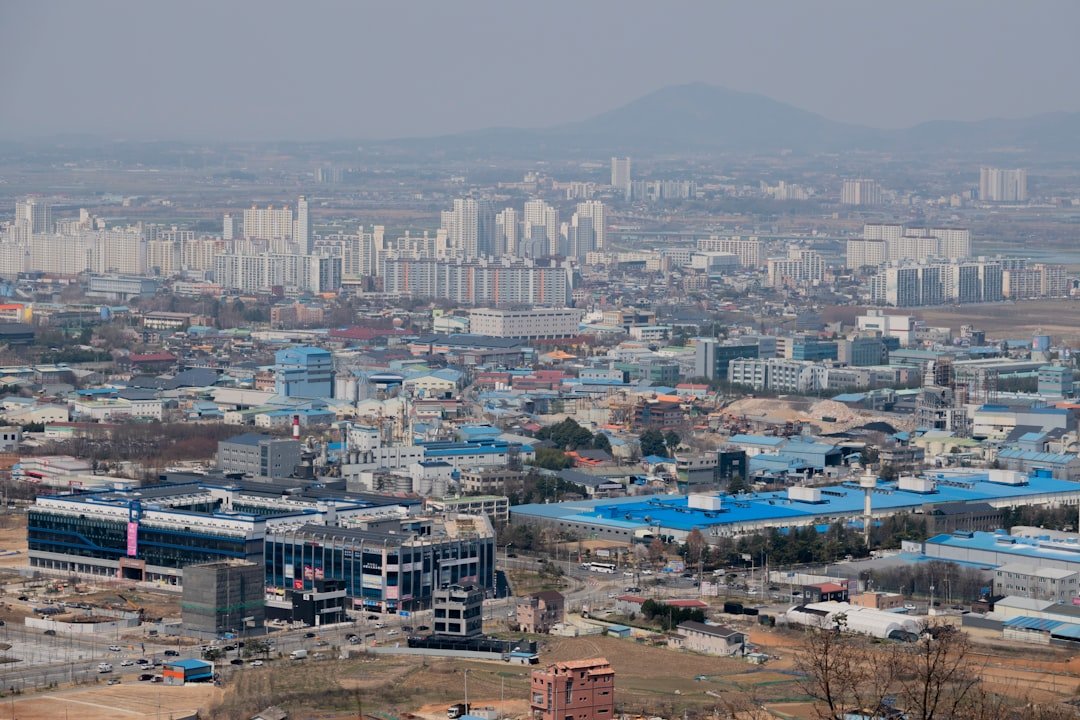
Featured image: Seoul cityscape, South Korea. File photograph by Paran Koo via Unsplash.