Hasan Piker midterm ads are appearing in 2026 because Republican strategists are using his past remarks and his primary-season campaigning to attack Democratic candidates, especially Michigan Senate nominee Abdul El-Sayed. The reporting reviewed does not identify a formal role for Piker in El-Sayed’s general-election campaign, and Piker says the focus on him distracts from policy. The dispute nevertheless shows how a major Twitch and YouTube personality can become campaign material without being a candidate.
Why Hasan Piker midterm ads are appearing now
Piker is a left-wing political commentator whose daily livestreams mix news, interviews and audience interaction. During the 2026 Democratic primaries, he appeared with progressive candidates including El-Sayed in Michigan and Chris Rabb in Pennsylvania. That made his public record available to opponents after the primary season ended.
A September 27 Guardian profile, based on interviews with Piker, reported that Republican advertising has connected him to El-Sayed and replayed inflammatory remarks from Piker’s streams. Republican Senate candidate Mike Rogers has also used the association in campaign messaging. An Associated Press report on the Michigan race described attacks on El-Sayed’s left-wing affiliations as part of Rogers’ broader effort to attract moderates and hold Republican support.
What Piker did—and what he did not do
The confirmed connection is limited but politically useful. Piker campaigned with El-Sayed during the primary and helped put progressive candidates in front of his large online audience. The Guardian reported that he is not campaigning for a candidate in the general election.
That distinction matters. Appearing beside a creator is evidence of a political association; it does not make every statement by that creator a candidate’s position. Candidates can still be asked whether they agree with specific remarks, but coverage should separate an endorsement, a joint event, a paid campaign role and a formal policy appointment. Those relationships are not interchangeable.
Which comments are being used against candidates
One recurring attack cites Piker’s 2019 statement that “America deserved 9/11.” He later called the wording inappropriate and said he was criticizing United States foreign policy. More recently, an Axios interview clip showed Piker answering yes when asked whether the United States was worse than al-Qaida “pound for pound” by deaths caused. Piker then said the United States had caused terror around the world.
Those are Piker’s statements, not El-Sayed’s. They are also the kind of short, emotionally charged clips that campaign advertising can repeat without reproducing the surrounding argument. That does not make the clips fake, but it means voters should check who spoke, when it was said, whether the speaker clarified it and what connection the speaker actually has to the candidate named in the ad.
How Hasan Piker explains the attacks
Piker told The Guardian that he sees the attention as an effort to make progressive candidates answer questions about him instead of discussing their opponents or policy. He also argued that political and media organizations are testing a strategy they could later use against other figures on the left.
That is his interpretation, not a proven motive shared by every campaign or news outlet. The observable fact is narrower: Piker’s remarks and political appearances have become repeatable campaign content, while candidates are being pressed to define their distance from him.
Why a Twitch streamer can matter in an election
Piker’s influence comes from access rather than office. The Guardian reported that he has more than three million Twitch followers and nearly two million YouTube subscribers. His long-form streams let candidates reach politically engaged viewers who may not watch cable television or attend traditional rallies.
The tradeoff is control. A campaign can plan its own advertisement, but it cannot control thousands of hours of a creator’s unscripted archive. A provocative comment can be clipped, searched and resurfaced years later. That vulnerability is part of a wider shift in which platforms act as political media institutions, even though creators operate outside the editorial structures of television networks. Our earlier analysis of Adam Conover’s criticism of YouTube as a gatekeeper examines another side of that change.
How to evaluate creator-based political ads
- Identify the relationship. Was the creator paid, endorsed, invited to one event or hired by the campaign?
- Find the original clip. Check the full question, answer and date before relying on an edited advertisement.
- Separate attribution. A creator’s words belong to the creator unless the candidate adopts them.
- Check the response. Look for the candidate’s current position, not only an opponent’s description of it.
- Return to policy. Decide whether the association changes the candidate’s platform, record or proposed actions.
What remains unresolved
It is too early to know whether Hasan Piker midterm ads will move undecided voters or mainly energize people who already have strong views about him. Public attention is not the same as electoral persuasion, and social-media reach does not automatically translate into votes.
What is clear is that creator archives now function as campaign research libraries. Piker’s role in the 2026 midterms is therefore larger than one controversy: it is a test of how political campaigns use online personalities to define candidates by association.
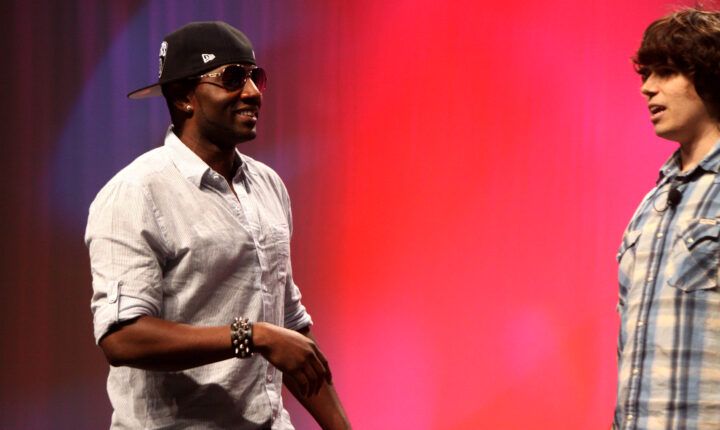
Featured image: Archival photograph of Hasan Piker speaking at a Chris Rabb campaign rally in Philadelphia on April 30, 2026; it was not taken during the current Michigan campaign-ad dispute. Photo by Morgan.rice.bassline.design via Wikimedia Commons, licensed under CC BY 4.0. Resized.