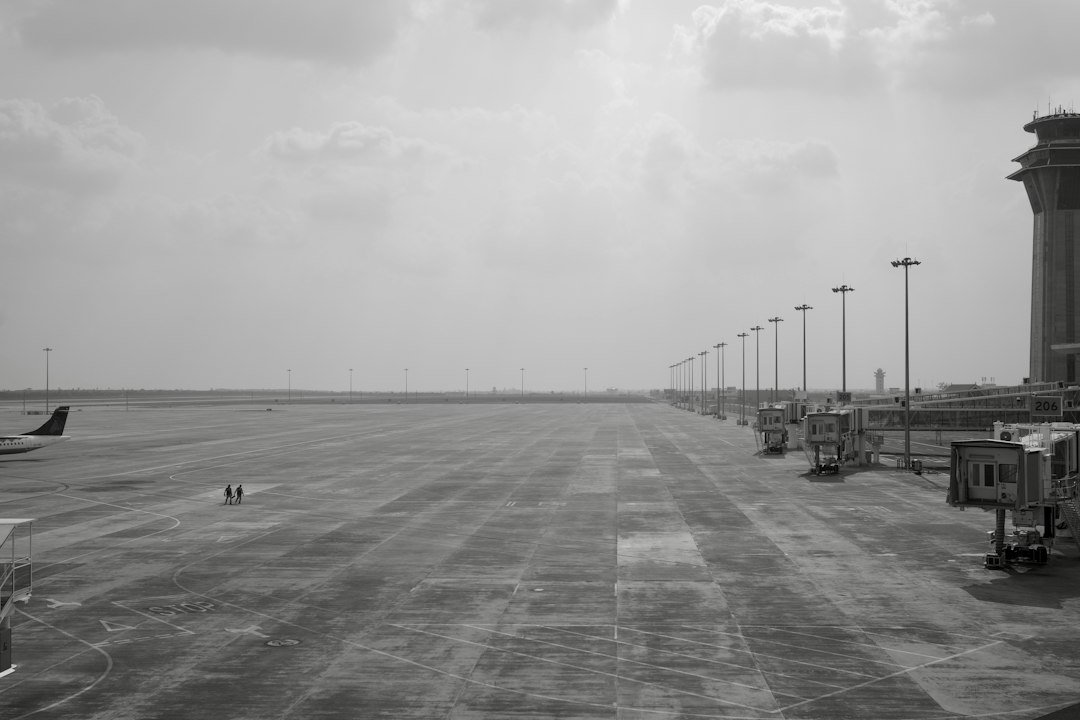
The FAA SMART AI system is an advisory traffic-management tool intended to help planners anticipate congestion and disruptions; it does not replace air-traffic controllers or make safety-critical control decisions. The Federal Aviation Administration began testing it around Washington, D.C., under a wider modernisation contract with Air Space Intelligence, Reuters reported on September 21, 2026.
At a glance
- SMART stands for Strategic Management of Airspace, Routes and Trajectories.
- The initial 90-day pilot uses predictive analysis to support traffic managers dealing with weather, congestion and other disruptions.
- Human officials retain decision-making authority; the system is not an autonomous controller.
What is the FAA SMART AI system?
SMART is designed to combine current operational information with predictive modelling so traffic managers can see likely pressure points earlier. Independent reports say the system draws from numerous data sources and presents dynamic route and disruption information rather than relying only on static planning views.
The test is part of a 12-year contract awarded to Air Space Intelligence in June. Reuters valued the contract at up to $875 million and said the Washington-area deployment would be followed by a gradual expansion if the system proves useful.
Air Space Intelligence develops software for analysing airspace and flight operations. The FAA remains the public authority responsible for managing U.S. civil aviation. That distinction matters: a vendor provides the tool, while government traffic managers decide how to use its recommendations.
How could AI reduce flight delays?
Air-traffic flow management is a coordination problem. Weather, runway capacity, restricted airspace, staffing and congestion can interact across multiple airports. A disruption in one region can create missed arrival slots and aircraft-positioning problems elsewhere.
A predictive system can estimate where those effects may develop and compare alternative routes or timing decisions. Earlier warning can help managers meter departures, reroute flights or balance demand before delays compound. It can also help airlines avoid unnecessary distance and fuel burn when a better route is available.
That does not mean the software can eliminate delays. Severe weather, equipment failures and airport capacity remain physical constraints. The relevant question is whether SMART helps humans make better decisions early enough to reduce avoidable disruption.
What the system does not do
SMART is not an autonomous air-traffic controller. Reports on the launch describe it as an advisory system for strategic traffic management, not a replacement for controllers directing aircraft. It also does not repair ageing communications equipment or create additional runway capacity.
This limitation was especially visible because the launch coincided with a major communications failure affecting airports in the U.S. Northeast. Reuters and the Associated Press reported that a primary line failure and damage to a backup fibre connection contributed to widespread cancellations and delays. Predictive software and resilient communications solve different parts of the aviation problem.
What should the pilot prove?
The strongest evidence will come from measured outcomes: whether forecasts are accurate, whether recommendations arrive early enough to act on, and whether the system reduces delay minutes, cancellations, fuel use or workload without introducing new operational risks.
Auditing also matters. Traffic managers need to understand the quality and limits of the data behind a recommendation, especially when unusual events fall outside normal patterns. Human oversight is most useful when staff can challenge a system rather than simply accept an output.
The programme fits a broader shift toward using AI in critical infrastructure. Our explainer on the proposed U.S.–China AI incident-alert mechanism examined coordination between governments; SMART shows the more immediate operational question of how agencies deploy predictive systems while retaining responsibility.
Could it affect travellers outside the United States?
The pilot is American, so it does not directly change flight-management rules in Bangladesh or South Asia. But large international networks are connected: disruption at a major U.S. hub can affect aircraft and passengers travelling through other regions. Other aviation authorities may also study the results when evaluating their own traffic-management upgrades.
Why it matters
The FAA SMART AI system is a practical test of AI in public infrastructure. Its value will not be established by the size of the contract or by the word “AI.” It will be established if independent performance data shows that it helps trained people make faster, safer and more efficient network decisions. Clear limits and transparent measurement are therefore as important as the predictions themselves.