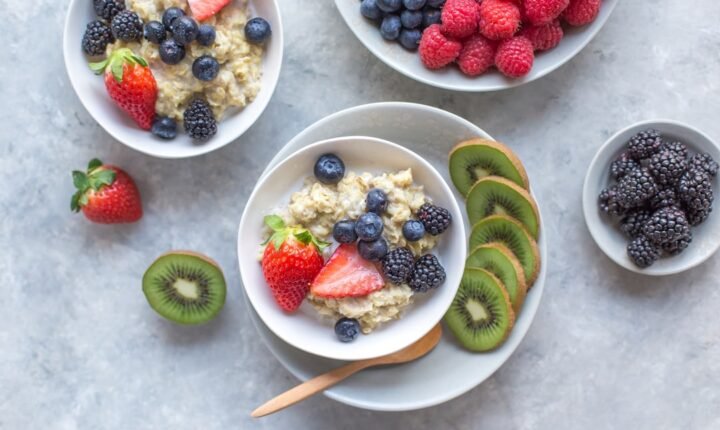
Overnight oats for weight loss work best as a measured, satisfying breakfast that fits your overall food intake. This version combines rolled oats, plain Greek yogurt, milk, chia and strawberries. One jar provides approximately 300 calories, 22 g protein and 7 g fiber, without protein powder. Those are estimates, not a promise of weight loss.
Jump to the recipe · Nutrition breakdown · Ingredient swaps · Storage
The useful part is having breakfast ready when you need it. A jar does not burn belly fat, and making it as small as possible is not the goal. Choose a portion that suits your appetite and the rest of your day.
Overnight oats for weight loss: strawberry yogurt recipe
A make-ahead breakfast with rolled oats, Greek yogurt, chia seeds and strawberries. No protein powder is needed.
Yield: 1 serving · Prep: · Chill: at least 4 hours · Total minimum:
Ingredients
- 40 g dry old-fashioned rolled oats (about 1/2 US cup)
- 120 g plain nonfat Greek yogurt (about 1/2 US cup)
- 80 ml skim milk (about 1/3 US cup)
- 5 g chia seeds (about 1 heaped teaspoon)
- 75 g fresh strawberries, washed, hulled and chopped (about 1/2 US cup)
- Optional: a pinch of cinnamon and a few drops of vanilla extract
Use the gram measurements for the closest match to the nutrition estimate. Cup and spoon weights vary. You need a clean, lidded container with enough room to stir; a roughly 450–500 ml jar works well.
Instructions
- Mix: Stir the oats, yogurt, milk and chia together in the container. Scrape the bottom so no dry pockets remain. Add cinnamon or vanilla if using.
- Chill: Cover and refrigerate immediately for at least four hours, or overnight. Keep the strawberries separately if you prefer a fresher topping.
- Finish: Stir again, then add the strawberries. If too thick, stir in a tablespoon of milk at a time. Extra milk changes the nutrition slightly.
- Serve: Eat cold with a spoon. The entire jar is one serving.
Allergens: Contains milk. Use certified gluten-free oats if needed and check every ingredient label.
Estimated nutrition per jar
| Ingredient | Calories | Protein | Fiber |
|---|---|---|---|
| 40 g rolled oats | 152 kcal | 5.3 g | 4.0 g |
| 120 g nonfat Greek yogurt | 71 kcal | 12.2 g | 0 g |
| 80 ml skim milk | 27 kcal | 2.7 g | 0 g |
| 5 g chia seeds | 24 kcal | 0.8 g | 1.7 g |
| 75 g strawberries | 24 kcal | 0.5 g | 1.5 g |
Rounded total: approximately 300 calories, 22 g protein, 7 g fiber, 43 g carbohydrate and 5 g fat per 1 jar.
These are ingredient-based estimates using typical food-composition values, not laboratory measurements. Rounding means displayed numbers may not sum exactly. Yogurt brands, milk, fruit and optional additions change the result. For your own jar, multiply each label’s per-100-g value by the grams used divided by 100, then add the ingredients together. USDA-derived reference examples: rolled oats and chia seeds.
How to adapt the recipe
- No Greek yogurt: Plain regular yogurt works, but usually provides less protein. Start with less milk if the yogurt is runny, then adjust after chilling.
- Dairy-free: Choose unsweetened soy milk and a soy yogurt with a useful amount of protein on the label. Coconut and almond yogurts are not automatically equivalent protein substitutes. Recalculate the nutrition.
- Different fruit: Replace the strawberries with an equal weight of chopped apple, banana or another berry. Banana makes a sweeter jar; raspberries generally add more fiber. The original nutrition totals will change.
- No chia: Leave it out and reduce the milk slightly to begin with. The jar will have less fiber and a looser texture.
- More filling: Increase the yogurt or oats if the base portion leaves you hungry. Your breakfast does not need to fit an arbitrary calorie ceiling.
For three portions, use 120 g oats, 360 g yogurt, 240 ml milk, 15 g chia and 225 g strawberries, divided evenly between three containers. Keep optional toppings separate so you can vary the flavor.
Why the portion and toppings matter
Oats, nuts and seeds provide useful nutrients, but their calories still count. Measure extras such as nut butter, granola or honey rather than adding several generous spoonfuls by eye. Check whether a flavored yogurt already contains added sugar before adding syrup.
There is no need to ban these foods. Pick the toppings you enjoy and include them in the overall portion. The recipe’s 300-calorie estimate applies only to the listed base ingredients.
How long can you keep overnight oats?
For this recipe, prepare a small batch for the next two or three mornings and keep it covered at 4°C / 40°F or colder. Follow any shorter storage instruction on your dairy or fruit packaging. Use clean utensils and keep cut fruit chilled.
The FDA’s food-storage guidance says perishable foods should not sit out for more than two hours, or one hour above 32°C / 90°F. Soak these oats in the refrigerator, never overnight on the counter. Use an insulated bag with an ice pack for travel. Follow cooking instructions on frozen fruit packets before using the fruit.
What the research actually supports
A review of oats and satiety found evidence that oat beta-glucan can influence fullness, while noting differences between studies. Feeling fuller after a meal is not the same outcome as losing body fat over months. This particular recipe has not been tested in a weight-loss trial.
A small 2026 trial compared complete calorie-restricted diets with different fiber and protein levels. It did not test this jar or establish a special fat-loss effect from overnight oats. Read our high-fiber breakfast guide and explanation of the trial for the findings and limits.
Frequently asked questions
Are overnight oats better than cooked oats for weight loss?
There is no reason to assume that chilling oats makes the same ingredients a weight-loss treatment. Choose the preparation you enjoy; compare the dry-oat quantity, milk and toppings when comparing calories.
Can I use instant oats or steel-cut oats?
Plain quick oats generally soften more and give a less chewy result. Sweetened instant packets change the nutrition. Steel-cut oats need a different preparation and are not a direct substitute for rolled oats in this recipe.
Can I eat them every day?
Yes, if they suit you. Vary fruit and rotate with other breakfasts for variety. If increasing fiber causes bloating, start with a smaller portion and increase gradually. Get individual advice for medical dietary restrictions or persistent symptoms.
Explore more food and nutrition coverage in Healthy Living. This is general food information, not a personalized weight-loss prescription.