Qualcomm and Amazon are working on custom artificial-intelligence data-centre technology under a new long-term collaboration. The deal is important because it shows Qualcomm pushing beyond smartphone chips while cloud companies look for more ways to run AI systems efficiently.
At a glance
- Qualcomm announced the Amazon collaboration on September 8, 2026.
- The work covers custom AI silicon and high-speed optical connectivity for data centres.
- Reuters reported that Amazon received warrants that could let it buy roughly $4 billion in Qualcomm shares if conditions are met.
The agreement centres on infrastructure rather than consumer devices. Qualcomm says it will work with Amazon on product development for next-generation AI data centres, including custom silicon and optical technology that moves large amounts of data between computing systems.
What does the Qualcomm–Amazon AI deal cover?
AI data centres need far more computing power and faster connections than many conventional cloud workloads. Training and running large models involves moving data between processors, memory and storage at high speed. Qualcomm says the partnership will explore custom AI silicon as well as optical connectivity intended for very high-bandwidth systems.
That focus matters because AI inference—the process of using a trained model to answer a request—has become a major business opportunity. Companies want systems that can deliver useful responses quickly while controlling electricity, hardware and operating costs.
Why Qualcomm is making this move
Qualcomm is best known for smartphone chips and wireless technology. The Amazon collaboration is part of its attempt to build a larger data-centre business, an area where Nvidia has been especially influential. A company announcement does not guarantee commercial success, but it signals that Qualcomm sees AI infrastructure as a long-term market rather than a side project.
Reuters reported that the arrangement includes warrants tied to the partnership. Warrants are not the same as an immediate stock purchase: they give the holder a potential right to buy shares under defined terms. The reported size of the potential arrangement reflects the scale of the commercial relationship, not a simple upfront cash payment.
What could this mean for AI data centres?
The deal adds another example of large technology companies seeking alternatives and complements to standard AI hardware. Amazon has its own cloud infrastructure business through AWS, while Qualcomm brings chip-design and connectivity experience. If products resulting from the collaboration perform as planned, they could give cloud operators more choices for particular AI workloads.
For users, the impact will not be immediate. Infrastructure agreements take time to become chips, servers and cloud services. The practical result may eventually be more capacity for tools such as chatbots, coding assistants, search features and business automation.
What to watch after the announcement
The first thing to watch is whether the companies identify products, deployment dates or performance results. Announcements about joint development are important signals, but they are different from a broadly available service. Other indicators will include how much power the systems use, what workloads they support and whether AWS makes any resulting capacity available to customers.
It is also worth watching how rivals respond. Competition in AI infrastructure can come through faster chips, cheaper systems, networking advances or specialised hardware built for particular kinds of inference.
That competition may also encourage more transparency about efficiency and operating costs, two issues that affect the economics of supplying AI at scale.
Why it matters
AI competition is increasingly about the physical systems behind the software: chips, networks, power and data centres. Qualcomm’s deal with Amazon shows that the market is widening beyond a small number of established suppliers.
Bangladesh and South Asia
The sources do not identify a Bangladesh-specific project or benefit from this agreement. The broader regional relevance is indirect: companies and developers in South Asia depend on cloud capacity and AI services whose cost and availability are influenced by global data-centre investment.
Sources
- Qualcomm: collaboration announcement, September 8, 2026
- Reuters: Qualcomm and Amazon AI data-centre deal
Read more sourced coverage in The Daily Vantage Technology section.
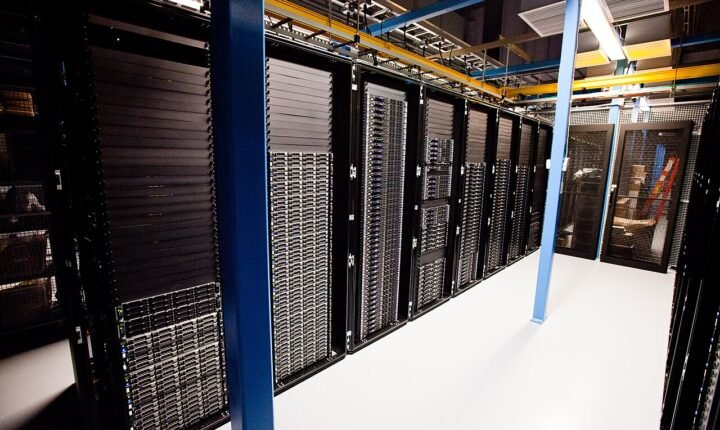
Featured image: server racks, photo by Kevin Ache on Unsplash.