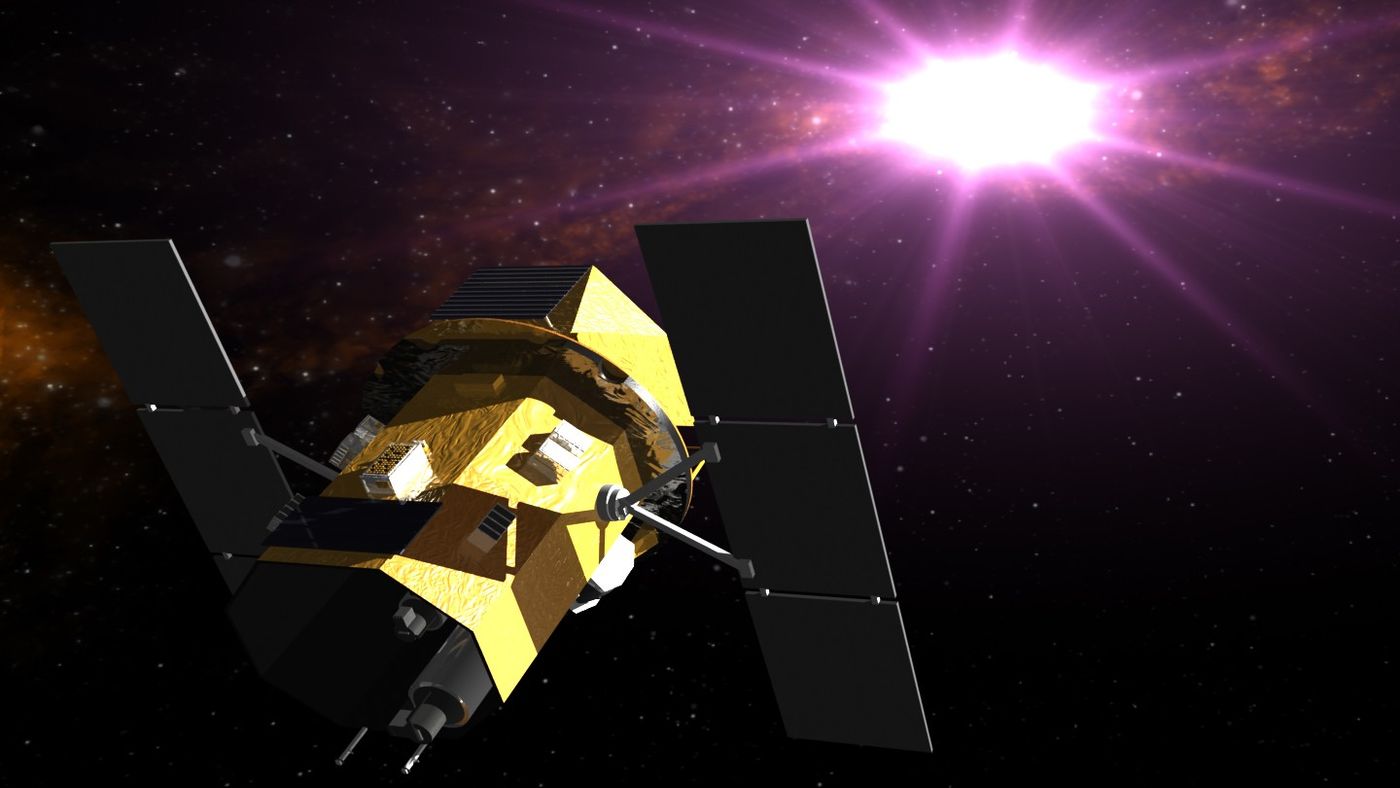
For almost 22 years, the Swift observatory did one job better than anything else in orbit: it spotted a gamma-ray burst, worked out where it came from and swung two telescopes onto the spot in about a minute. On Wednesday, Nov. 4, that job ended for good. The final U.S. Space Force projection, reported by CNN, put the spacecraft’s fiery return at 7:42 a.m. Eastern time, give or take two hours. That is 6:42 PM in Dhaka. NASA had not issued a confirmation of the exact time and place when this article was published.
Most coverage has focused on the falling hardware. However, the bigger change is on the ground. Astronomers now have to rebuild Swift’s fast-response role from spacecraft that nobody designed to do all of it. So we compared the public alert specifications that NASA’s General Coordinates Network (GCN) publishes for each mission. The numbers show which parts of Swift’s work survive and which do not.
The last hours of the Swift observatory
Swift had no engine, so it could never climb back. Solar activity near the peak of the Sun’s 11-year cycle heated and expanded the upper atmosphere, and the extra drag pulled the spacecraft down faster than planned. On Oct. 20, at 171 miles (275 kilometers), Swift slipped into safe mode. Operators at Penn State then sent the command that ended the mission, according to NASA.
NASA expected most of the 3,200-pound spacecraft to burn up. Some parts could survive, though, and they could only land between 20.6 degrees north and 20.6 degrees south latitude. That band covers southern India, Southeast Asia, northern Australia and large stretches of ocean. Dhaka, at roughly 23.8 degrees north, sits outside it. NASA put the risk of harm to anyone at about 1 in 2,100.
That figure deserves a second look. Current U.S. debris rules, updated in 2019, ask that uncontrolled reentries carry an expected casualty risk below 1 in 10,000, a spokesperson for The Aerospace Corporation told CNN. Swift left Earth in 2004, long before that standard, so it never had to meet it.
What 80 seconds bought astronomers
Gamma-ray bursts are the most powerful explosions known. The short ones peak in under two seconds, and their afterglows fade fast. Before Swift, nobody could locate them quickly enough to study what was left behind.
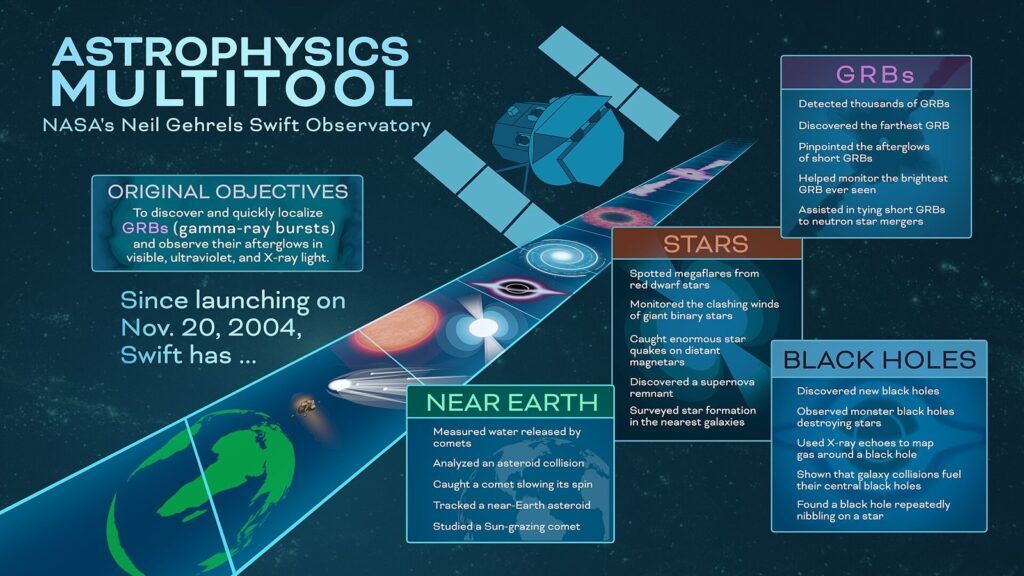
Swift changed that with a chain of three instruments. Its Burst Alert Telescope sent a first position, accurate to 1 to 3 arcminutes, within 13 to 30 seconds. Its X-ray Telescope then refined that to better than 7 arcseconds, usually 30 to 80 seconds after the burst, GCN’s Swift page shows. In practical terms, that is the difference between a neighborhood and a street address. Large ground telescopes need the street address.
The payoff was huge. In May 2005, Swift caught GRB 050509B, a burst that lasted 0.03 seconds, and detected its afterglow. That result supported the idea that short bursts come from merging neutron stars. Over its life, Swift logged more than 2,000 bursts, studied more than 1,400 supernovas and fed about 7,000 scientific papers.
Fermi sees more bursts but blurs the address
NASA’s Fermi Gamma-ray Space Telescope is still working, and it actually detects far more bursts than the Swift observatory did. Its Gamma-ray Burst Monitor triggers on about 200 long bursts and 35 to 40 short bursts a year. By comparison, Swift’s onboard trigger caught 70 to 80 long and 7 to 9 short bursts a year.
The catch is precision. Fermi’s monitor places a burst within roughly 1 to 10 degrees or more, according to GCN. That patch of sky can be bigger than several full Moons laid side by side. Fermi also has no X-ray or optical telescope to swing around. As a result, it can tell astronomers that something exploded, but rarely exactly where.
SVOM is the closest copy of the Swift observatory
The French-Chinese SVOM mission, launched on June 22, 2024, looks most like a successor. It was built by the national space agencies of China and France and carries four instruments, from gamma rays down to visible light. Like Swift, it can turn itself toward a burst without waiting for commands from the ground.
The timings differ, however. SVOM sends its first burst alerts in about 15 seconds, with an ECLAIRs position good to about 10 arcminutes. The notice saying whether the spacecraft will slew arrives after 1 to 8 minutes. Its X-ray position follows in about 3 minutes, with an error of 10 to 100 arcseconds, GCN’s SVOM page shows. Its visible-light telescope can reach about 1 arcsecond. Meanwhile, its ECLAIRs camera catches around 60 bursts a year, GCN estimates.
In short, SVOM can do the Swift observatory’s signature move, but somewhat more slowly and less often. Its planned mission length is also three years, which ends around mid-2027 unless it is extended.
Einstein Probe watches in a different light
China’s Einstein Probe, launched on Jan. 9, 2024 with European partners, takes another approach. Its Wide Field X-ray Telescope stares at 3,600 square degrees of sky in soft X-rays. It sends alerts in about a minute, with positions near 2 arcminutes. A second X-ray telescope can then narrow that to 5 to 15 arcseconds, according to GCN.
That makes it strong at finding faint X-ray flashes that gamma-ray detectors miss. On the other hand, it carries no gamma-ray or ultraviolet instrument, and its wide-field camera logs about 100 triggers a year across all kinds of sources. It complements the rest of the fleet rather than replacing any one craft.
The jobs nobody has picked up
Put the Swift observatory next to the craft still flying, and the gaps become clear:
| Mission | First alert | Best quick position | Bursts per year |
|---|---|---|---|
| Swift (retired) | 13–30 seconds | Under 7 arcseconds in 30–80 seconds | About 80–90 |
| Fermi | About 5 seconds | 1–10 degrees | About 235–240 |
| SVOM | About 15 seconds | 10–100 arcseconds in about 3 minutes | About 60 (ECLAIRs) |
| Einstein Probe | About 1 minute | About 2 arcminutes, then 5–15 arcseconds | About 100 triggers, all types |
First, no remaining craft combines an arcsecond X-ray fix within about a minute and an ultraviolet camera on the same platform. Second, Swift was also a flexible “target of opportunity” telescope. It could schedule up to 75 targets a day, from comets to flaring black holes. Astronomers also used it to chase alerts from gravitational-wave and neutrino detectors. NASA has not said which existing telescope will take over that role.
Finally, there is the question of who hears first. Two of the most capable new burst hunters are Chinese or Chinese-French missions. Their alerts already flow through GCN, so astronomers everywhere can use them. Still, for the first time in two decades, the fastest precise burst positions will not come from a NASA spacecraft.
Why the Swift observatory came down without a backup
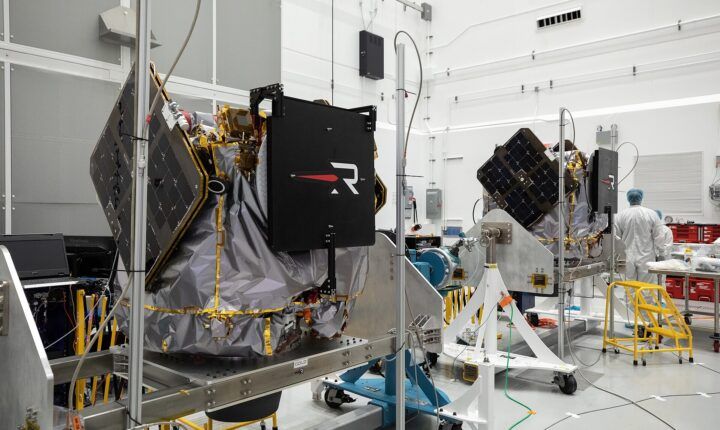
NASA did try to save it. In 2025 it paid Katalyst Space $30 million to build LINK, a robotic tug meant to grab Swift and push it higher. LINK launched on July 3 on the last Pegasus XL rocket. Weeks later, a power switch tied to its reaction wheels failed and the craft began tumbling, Spaceflight Now reported. NASA called off the capture in August.
Since then, NASA has named no dedicated successor. Instead, astrophysics director Shawn Domagal-Goldman said the agency is exploring ways to “use and augment NASA’s fleet of existing space telescopes,” including fast commercial options. Any new mission would still have to win selection, funding and a build schedule, which usually takes years.
Hubble is the next test for orbital rescue
The failed tug matters beyond Swift. Hubble has no engine either, and it is sinking too. On Oct. 29, NASA asked companies how they might boost it, service it or steer it down safely, with a mission needed by 2032. NASA’s analysis gives Hubble a 10% chance of falling by 2032 and 50% by 2033, CNN reported.
Readers who followed our coverage of ESCAPADE’s unusual Earth flyby on the way to Mars or the plan for Artemis III docking rehearsals in Earth orbit will recognise the theme: low Earth orbit is becoming a place for repair and rehearsal, not just launch and forget. The Swift observatory also leaves behind a public archive of about 12 terabytes that will keep producing papers. For now, though, the burst that happens tonight will be found by Fermi, SVOM or Einstein Probe, and pinned down a little later than it used to be.