President Donald Trump’s latest Truth Social post promised to make “AI” disappear from official language. Read closely, though, the plan to swap “artificial intelligence” for Super Intelligence is already four weeks old. It is also much narrower than the post suggests, and it still lacks the one step that would make it stick: a vote in Congress.
On Tuesday, October 27, Trump asked when The Wall Street Journal would stop using “a very bad and inaccurate name” and switch to “SI (Super Intelligence).” He added that “in short order” the administration would be “officially BANNING” the term AI “in all relevant documents, and everything else.” Reuters reported the post the same afternoon, and it quickly spread across tech and politics feeds. Here is what each part of it means in practice.
Reading Tuesday’s post one clause at a time
The post is three sentences long, but it makes three separate claims. Each one holds up differently against the record.
“The name which virtually everyone else is using”
This is the weakest part. Newsrooms, universities and the tech industry still say “AI.” So do most of the government’s own older documents. Forbes noted that the Associated Press Stylebook, which many US newsrooms follow, still lists AI as the standard term. Even the post hedges, adding “or soon will be.”
“In all relevant documents”
Here Trump is describing something that mostly exists already. However, the existing order covers only new executive-branch material. It explicitly leaves old regulations, contracts, grants and historical records untouched.
“And everything else”
This is the part with no legal footing. As The Verge pointed out, the president can require executive agencies to change their wording, but he has no power to force a newspaper, a company or a YouTuber to do the same.
The Super Intelligence order already in force
The rule Trump referred to is Executive Order 14434, “Inaugurating the Era of Super Intelligence.” He signed it on September 29, and it was published in the Federal Register on October 2.
The text is short. Section 2 tells agencies to use “Super Intelligence” and “SI” instead of “Artificial Intelligence” and “AI” in official correspondence, public communications, websites, reports and policy documents, “to the maximum extent permitted by law.” The policy section goes further and says the executive branch “will not acknowledge the usage” of the old terms.
Three limits matter, though. First, nothing in the order requires agencies to rewrite earlier documents. Second, it keeps the existing legal meaning: “SI” is defined as whatever the statute already calls artificial intelligence, under 15 U.S.C. 9401(3). Third, the order says it creates no rights that anyone can enforce, and it sets no penalty for using “AI.”
How the rebrand reached agencies and allies
The change has moved quickly for a naming policy. Here is the sequence so far:
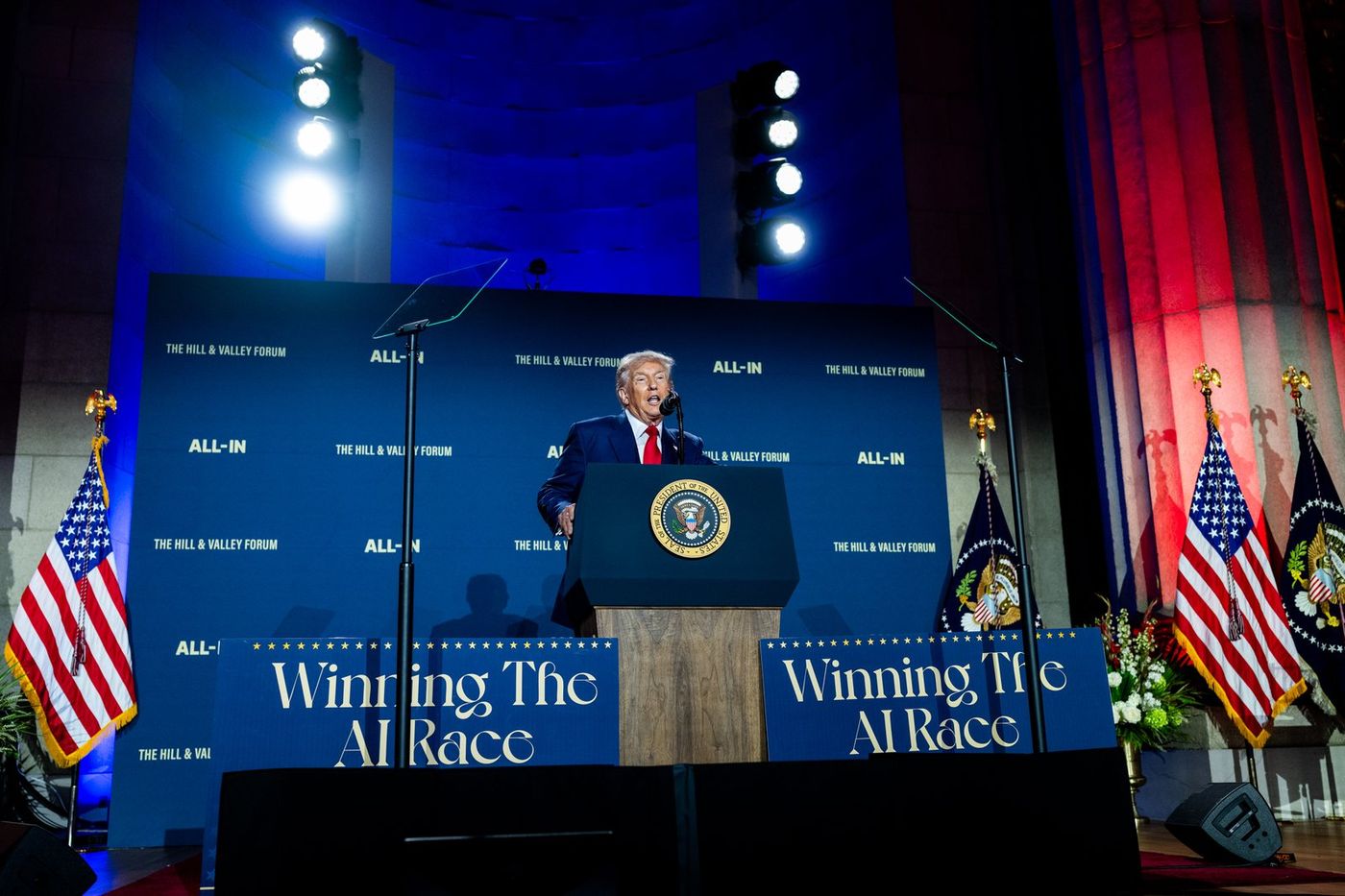
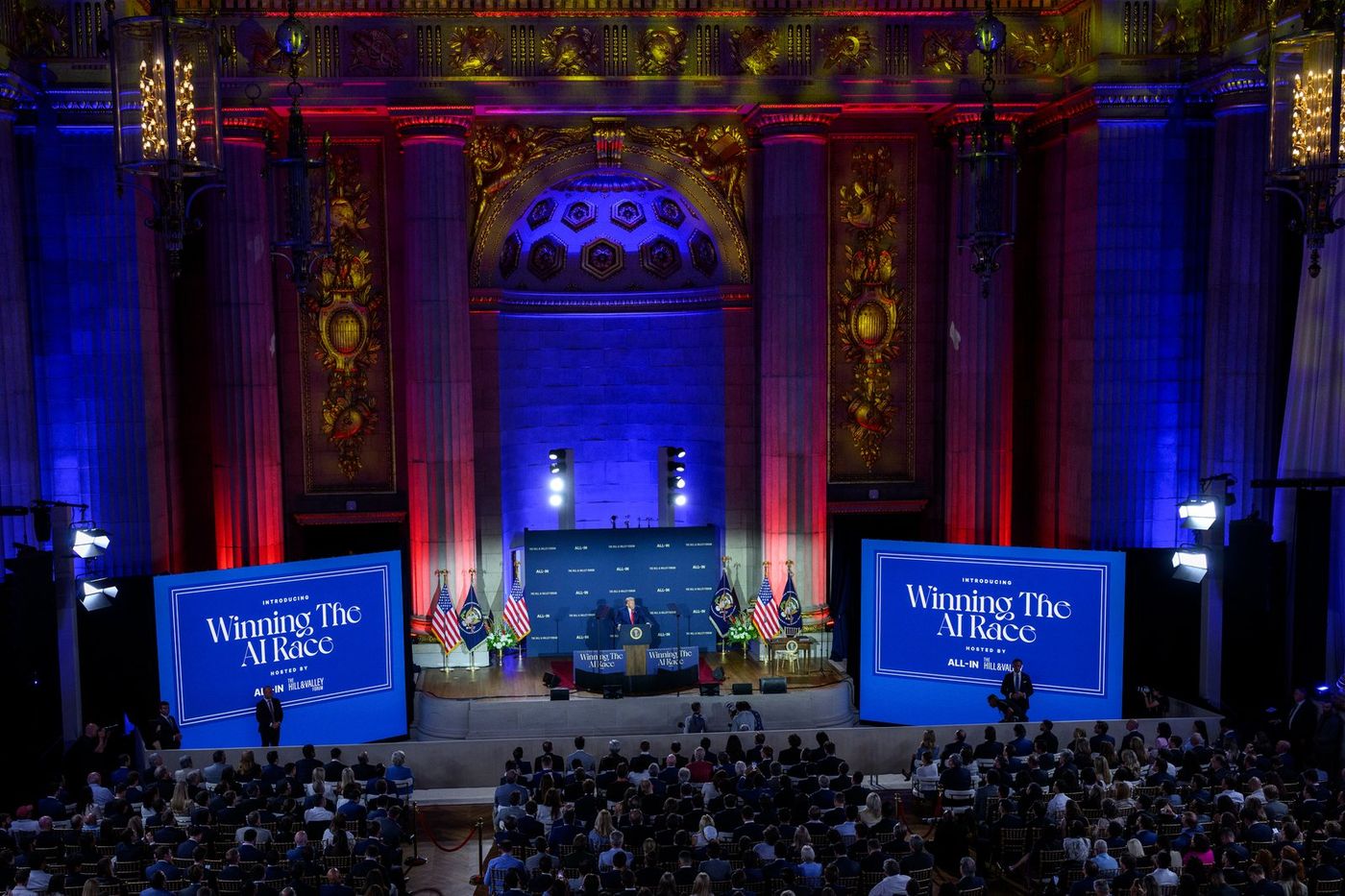
- July 23, 2025: Trump headlines a White House summit branded “Winning the AI Race,” a reminder of how recently the administration used the old term itself.
- September 29, 2026: Trump signs EO 14434.
- October 2: The order appears in the Federal Register.
- October 6: The Justice Department tells staff to use the new term, including in court filings “when appropriate,” according to Reuters, as cited by The Next Web.
- October 8: Trump posts that the White House considers anyone who says “Artificial Intelligence” instead of “Super Intelligence” to be “THE ENEMY.” He does not say what that would mean.
- Earlier in October: Treasury Under Secretary Erin Browne says Washington is talking with other International Monetary Fund shareholders about the term and wants it adopted by G20 partners, Daily Sabah reported, citing Reuters.
- October 27: The Truth Social post aimed at The Wall Street Journal.
Some business leaders have played along. Elon Musk said his company’s AI unit would become SpaceXSI, and Jeff Bezos told Fox News he likes “SI” because “artificial” is “not a very flattering thing.” Meanwhile, Slovenia’s domain registry saw a rush of sign-ups. Its country code, SI, happens to match the new label.
Why “Super Intelligence” means something else to researchers
The bigger problem is not legal but technical. In computer science, “superintelligence” already has a meaning. Philosopher Nick Bostrom popularized it to describe a hypothetical system that far exceeds human ability in almost every area. Companies such as Safe Superintelligence Inc. use the word as a goal. It is not a description of today’s chatbots.
That gap creates real confusion. A federal report that calls a basic image classifier “SI” claims a level of capability the system does not have. For that reason, Jean-Pierre Dubé, a marketing professor at the University of Chicago, told Newsweek that the existing meaning makes the new name unlikely to catch on soon.
Can the government ban a word?
For its own speech, largely yes. Under the government speech doctrine, agencies can choose their own vocabulary, just as they adopted “Gulf of America” in 2025. The First Amendment limits how government regulates private speech, not what it says itself.
Private speech is a different matter. In NRA v. Vullo (2024), the Supreme Court ruled unanimously that officials cannot coerce private parties into punishing or suppressing speech the government dislikes. In other words, a newspaper, a startup or a streamer can keep saying “AI” without legal risk. Still, the 2025 fight over press access after the AP kept “Gulf of Mexico” shows that naming disputes can carry practical costs.
What the Super Intelligence push means for tech companies and creators
For most people, nothing changes overnight. Product names, app settings and platform policies are set by the companies themselves. For example, the AI disclosure labels on music and video apps, like the ones we covered in our guide to YouTube Music’s AI labels, follow each platform’s own rules, not executive orders.
The effects will show up at the edges instead. Companies that sell to federal agencies will likely see “SI” in new agency documents and may mirror it in their pitches. And firms preparing filings or investor material, such as the AI labs heading toward the public markets in our Anthropic IPO explainer, still rely on legal definitions that say “artificial intelligence.”
For creators, the safest approach is simple. Use the words your audience searches for. Right now that is still “AI,” although tutorials and commentary about the rebrand itself may pick up search traffic for Super Intelligence.
The November 28 Super Intelligence deadline
The one concrete next step sits inside the order. Section 3(b) gives the president’s science adviser 60 days, which works out to November 28, to send proposed legislative language for a federal definition of “Super Intelligence.” That draft must say whether the new definition should replace the legal meaning of artificial intelligence. It must also list which laws would need amending.
Even then, only Congress can rewrite the law, and nothing so far shows lawmakers moving on it. Until a bill passes, the rebrand stays a style rule for federal agencies, while everyone else is free to keep saying “AI.” Lawmakers have been debating AI rules for months, including Senate talks on safety duties for advanced AI firms.