The Nscale IPO filing gives investors a rare look inside the economics of the artificial-intelligence infrastructure boom. The Nvidia-backed cloud company reported rapid revenue growth alongside a net loss exceeding $1 billion for the first half of 2026, according to its filing. The central question is whether long-term customer contracts and a large power pipeline can justify the capital, debt and concentration risks required to build AI data centres at global scale.
At a glance
- Nscale plans to list on the New York Stock Exchange under the ticker NSCL.
- First-half revenue reportedly reached $140.6 million, while the company recorded a $1.02 billion net loss.
- Its expansion case depends on converting contracted demand and planned power capacity into operating data centres.
What does the Nscale IPO filing reveal?
Reuters reported that Nscale’s first-half revenue rose 1,252% from a year earlier. That headline growth is striking, but it comes from a young company expanding from a relatively small base. The same period produced a much larger net loss, illustrating the gap between selling AI-compute capacity and financing the infrastructure needed to deliver it.
The company operates across 14 regions and describes a power pipeline of more than 10 gigawatts. It has also reported more than $103 billion in contracted value. Those figures are not equivalent to current revenue or completed capacity. Data centres must still secure sites, grid connections, chips, cooling equipment, construction financing and customer acceptance before planned projects become dependable cash-generating assets.
The IPO filing is available through the U.S. Securities and Exchange Commission’s EDGAR filing system. Nscale’s own company information describes its strategy as a vertically integrated AI infrastructure platform spanning data centres, compute and cloud services.
Why can AI-cloud revenue grow while losses widen?
AI infrastructure is unusually capital intensive. Operators may pay for land, power equipment, networking and advanced processors well before a customer begins using the capacity. Depreciation, financing costs and commitments to suppliers can therefore rise faster than recognised revenue during an expansion cycle.
Nscale has agreed to issue billions of dollars in convertible debt, including financing involving Nvidia. Convertible securities can reduce immediate cash-interest pressure compared with some borrowing, but they may dilute existing shareholders if converted into stock. The final prospectus will be essential for understanding maturities, conversion terms and project-level obligations.
Revenue concentration is another key risk. Reuters reported that Nscale’s largest customer represented 52% of first-half revenue. A large anchor customer can validate a new platform and help finance capacity. It also means that a delayed deployment, renegotiated contract or reduced order from one buyer could materially affect results.
What does the Nscale IPO mean for the AI data-centre market?
The offering will test whether public investors remain willing to fund rapid AI-infrastructure expansion after interest rates and power constraints increased scrutiny of the sector. Nscale competes with specialist providers and large cloud platforms while depending on many of the same scarce inputs: high-end accelerators, grid capacity and construction talent.
A successful listing could give other infrastructure companies a clearer route to public capital. A weak reception would suggest investors want more operating capacity, diversified revenue and visible cash flow before assigning premium valuations to future pipelines.
The Daily Vantage recently examined why AI data centres need power infrastructure. Nscale’s filing reinforces that connection: compute growth is constrained not only by chip supply, but also by electricity, transmission, cooling and financing.
Why it matters
Nscale is a useful case study because the AI boom is increasingly becoming an infrastructure and balance-sheet story. Model demand may be strong, but building enough physical capacity requires years of investment and creates risks that software companies do not face to the same degree.
The filing also helps separate three commonly blended measures: present revenue, contracted future business and planned infrastructure. All can be meaningful, but none guarantees the others. Investors should evaluate how quickly contracts become revenue, how much capital each project needs and who carries the risk if schedules change.
What happens next?
Nscale still needs to complete regulatory review, update its prospectus and set the number and price of shares. Prospective investors should watch customer concentration, capital spending, debt terms, active capacity and the proportion of contracted value backed by firm commitments. The proposed valuation will matter only when measured against those operating details.
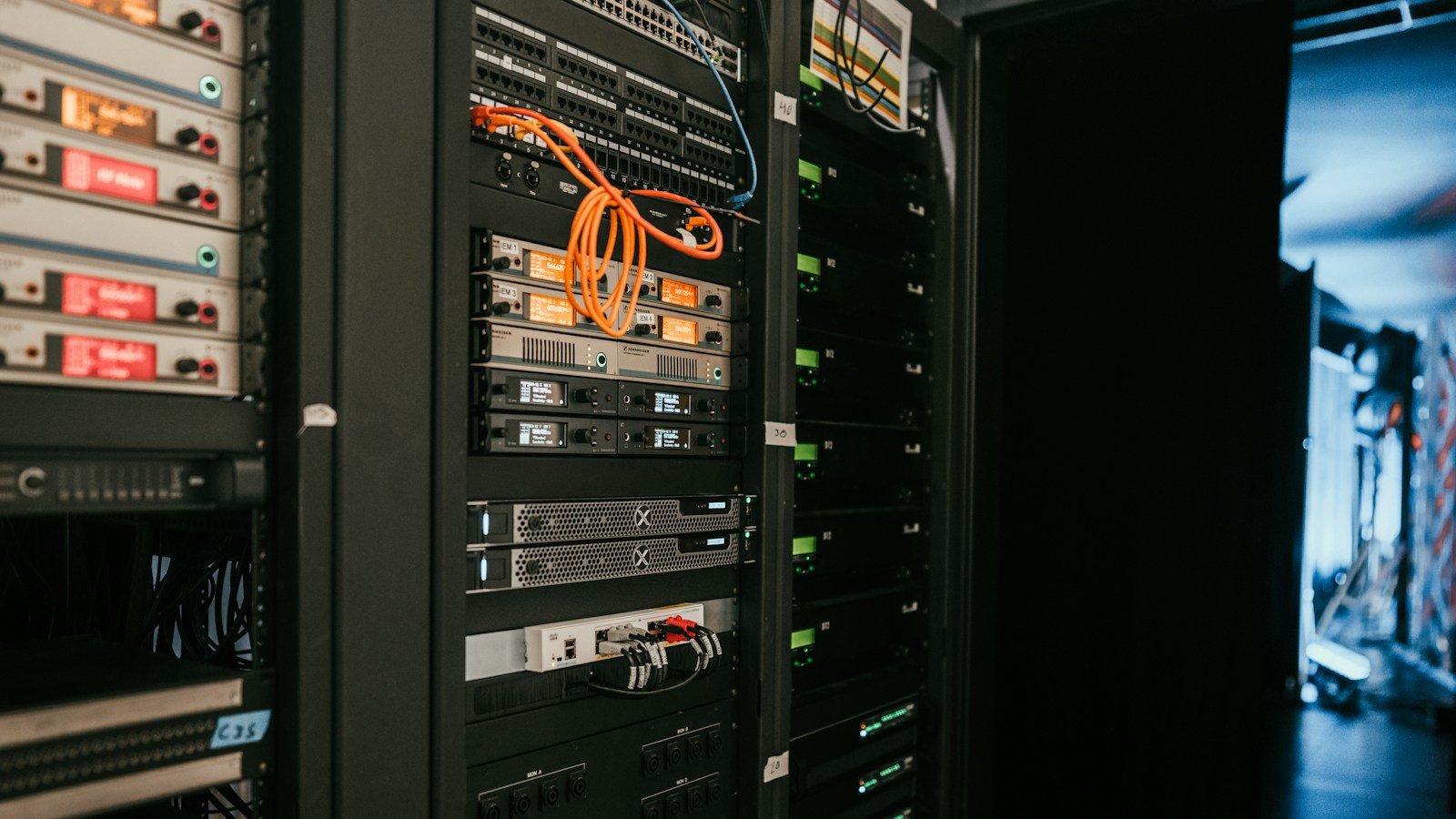
Featured image: Server racks illustrating AI-cloud infrastructure. Photo by Kevin Ache on Unsplash.