
The Philippine House of Representatives approved a bill on October 12, 2026 that would bar children under 13 from holding social-media accounts and require stronger protections for teenage users. The proposal is not yet law: the House and Senate have passed different versions, which must be reconciled before a final measure can go to President Ferdinand Marcos Jr.
The vote matters beyond the Philippines because the bill would place direct compliance duties on major services including TikTok, YouTube, Facebook and Instagram. It also covers online-gaming platforms, making it broader than a simple account-age rule.
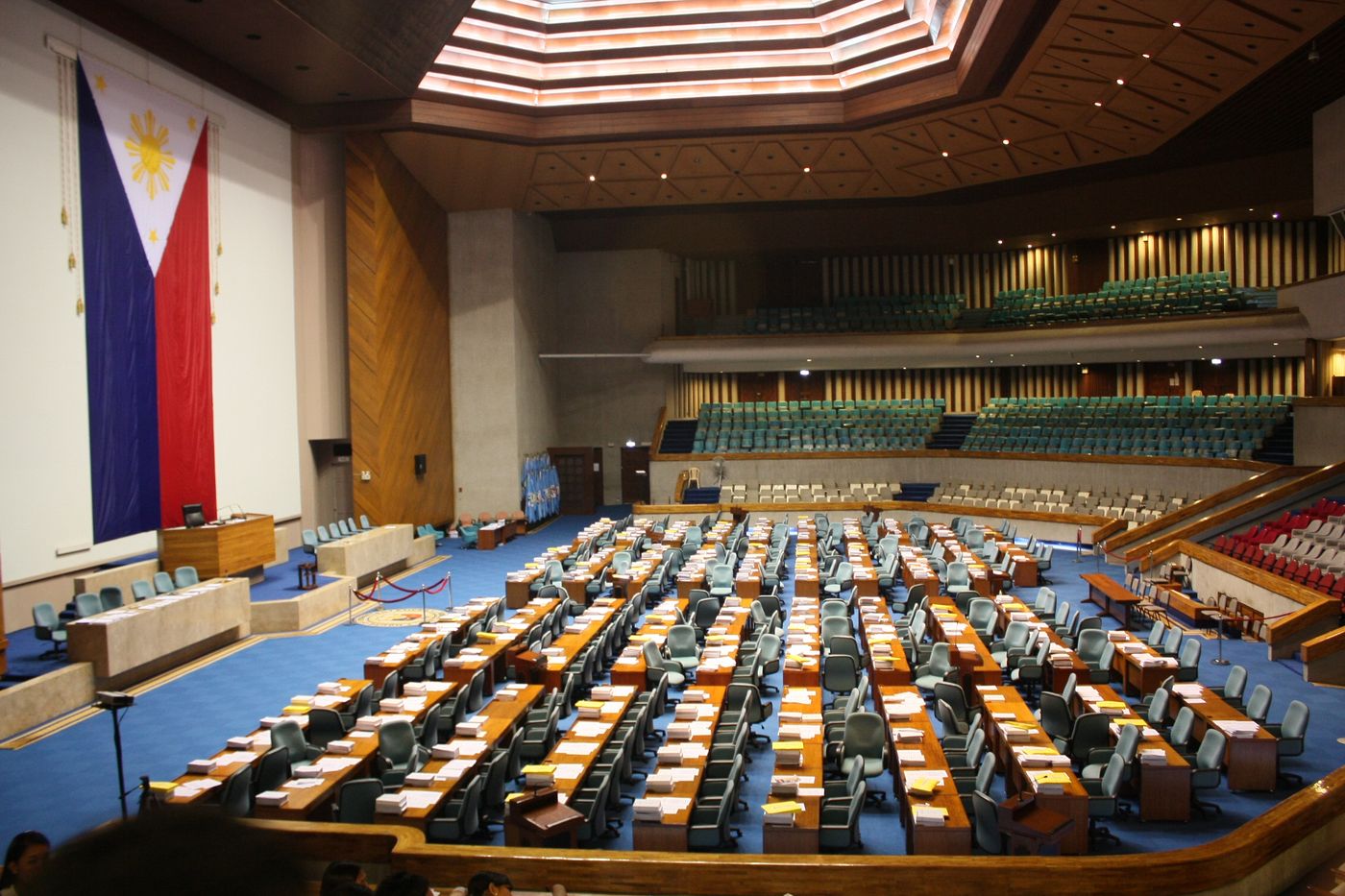
Featured image: Philippine House session hall at the Batasang Pambansa Complex, photographed September 18, 2008. Gerald Tejada/Wikimedia Commons, CC BY-SA 2.0. Source and licence details.
What the Philippines under-13 social media ban proposal would require
The House measure, identified in local coverage as House Bill No. 11566 and the Safe and Friendly Environment for Kids in Digital Spaces Act, sets 13 as the minimum age for a social-media account. Users from 13 through 17 could still use covered platforms, but with parental consent and added safeguards.
Radyo Pilipinas reported from the bill’s second-reading stage that its protections include age assurance, safety-by-design requirements, tighter handling of children’s personal data and stronger platform responsibility for risks such as grooming, sexual exploitation, cyberbullying and unsafe contact with strangers.
The bill also targets behavioral profiling and advertising directed at children. Those provisions could affect how platforms personalize feeds, recommend content and sell ads to younger users—not only whether a child can create an account.
The House vote does not create an immediate ban
The October 12 approval advances the proposal, but it does not switch off accounts or change platform rules immediately. Reuters reported on October 12 that the House and Senate must reconcile their different bills before a final text can be sent to the president.
There is also a reporting discrepancy over the Senate’s precise age threshold. Reuters described the Senate version as preventing under-18s from creating accounts, while GMA News reported on October 8 that Senate Bill No. 2424 uses an under-16 cutoff. Until the enrolled text is published after bicameral reconciliation, readers should not treat either threshold as the final national rule.
Marcos has also expressed reservations about a blanket ban. Reuters reported that he warned strict prohibition could push children to hide their online activity, potentially making grooming and abuse harder for parents to detect.
What platforms may have to change
If the House approach survives reconciliation, platforms would likely need a combination of age checks, parental-consent flows and child-specific product settings. The practical burden would be deciding how to verify age without collecting more sensitive data than necessary.
Safety-by-design rules could reach deeper into product architecture. Examples include default privacy settings, limits on contact from unknown adults, reduced profiling, restrictions on targeted advertising, and changes to recommendation systems for minors. The exact technical duties and enforcement timeline will depend on the final language and implementing regulations.
The measure arrives while platforms are already facing sharper scrutiny over youth safety and algorithmic design. The Daily Vantage recently examined New York’s allegations about TikTok’s recommendation system and Meta’s restrictions on ads linking to TikTok, two separate disputes showing how product design, advertising and competition increasingly overlap.
What parents and creators should know now
Parents do not need to make an immediate account change because the House vote alone does not establish an enforceable national ban. The next meaningful milestone is a reconciled bill that resolves the age threshold and defines how platforms must verify users.
Creators whose audiences include teenagers should watch the advertising and recommendation provisions. Restrictions on behavioral profiling or targeted promotion could change how youth-oriented videos are distributed or monetized in the Philippines. However, no platform-specific implementation plan has been announced, and TikTok, Alphabet and Meta had not responded to Reuters’ requests for comment when its report was published.
The confirmed development is therefore narrow but significant: the Philippine House has approved an under-13 account restriction paired with broader child-safety obligations. The final age rule, enforcement system and platform deadlines remain unsettled until the two chambers agree on one text and the president acts.
Sources: Philippine government broadcaster Radyo Pilipinas; Reuters; GMA News. This article distinguishes the approved House proposal from a final law and notes the conflicting public descriptions of the Senate version.



.jpg)