The U.S. Russia sanctions law signed on September 18, 2026, expands pressure on Moscow’s energy and defence sectors and gives the American president authority to impose tariffs of up to 100% on countries that keep buying Russian energy or help sanctions evasion. The law does not mean every eligible country will immediately face the maximum tariff. Its impact will depend on how the White House identifies targets, grants exceptions and times enforcement.
At a glance
- President Donald Trump signed H.R. 5334, the Lindsey O. Graham Sanctioning Russia and Iran Act of 2026.
- The measure targets Russian officials, banks, defence and energy interests, and networks linked to the so-called shadow tanker fleet.
- Its secondary-tariff powers could affect major Russian-energy buyers, including India and China, but application is not automatic.
What does the U.S. Russia sanctions law change?
The White House confirmed that Trump signed H.R. 5334 on September 18. The administration’s notice says the law authorises and expands sanctions, tariffs and prohibitions on Russia while extending existing Iran sanctions.
The law builds on years of financial restrictions imposed after Russia’s invasion of Ukraine. Its most consequential feature is a mechanism that can reach beyond Russian entities. According to Reuters and the Associated Press, it allows tariffs of up to 100% against leading purchasers of Russian oil or gas and parties that facilitate sanctions evasion.
The legislation also focuses on the networks that keep Russian commodities moving. That includes tankers operating through opaque ownership structures, intermediaries that disguise transactions and institutions connected to Russia’s defence economy. These provisions are intended to reduce revenue available to Moscow without relying only on restrictions imposed directly on Russian companies.
Why are the new tariff powers important?
Traditional sanctions generally block specified people, banks or transactions. Secondary measures create a different calculation: businesses and governments outside Russia may have to choose between continuing certain Russian trade and preserving access to the U.S. market.
That leverage can be powerful, but enforcement is complicated. Energy markets are interconnected, and a rapid disruption to Russian supply could lift global oil prices. The statute gives the president substantial discretion, so a legal power to impose a 100% tariff is not the same as an announcement that such a tariff begins immediately.
Countries may seek waivers, adjust purchasing patterns or argue that they are reducing dependence. Traders may also reorganise shipping, insurance and payment routes. The practical result will therefore emerge through implementing orders and Treasury guidance rather than from the signing ceremony alone.
What could the Russia sanctions tariffs mean for India?
India is a major buyer of Russian crude and is therefore central to the law’s global significance. That does not establish that Indian exports will automatically receive a 100% U.S. tariff. It does mean New Delhi, refiners and exporters must watch how Washington defines covered purchases and compliance.
For South Asia, the transmission channels are broader than bilateral diplomacy. Bangladesh and neighbouring economies are sensitive to global oil prices, shipping costs and the strength of the U.S. dollar. If enforcement removes supply from the market, fuel-import bills could rise. If discounted Russian crude continues through compliant channels, the effect may be smaller.
The region should therefore watch three signals: formal U.S. implementing rules, changes in Indian refinery purchasing and movements in global crude benchmarks. Those indicators will matter more than speculation about the maximum tariff rate.
Why it matters
The law links sanctions policy to global trade policy. It attempts to pressure Russia by raising costs for third-country buyers, but it also creates uncertainty for energy markets and trading partners. That combination makes implementation—not merely enactment—the next major story.
It also arrives as central banks are responding to renewed inflation pressure. The Daily Vantage’s explainer on the Bank of Japan’s 1.25% interest rate shows why energy-driven inflation can quickly affect monetary policy and currencies.
What happens next?
Investors and governments will look for Treasury designations, presidential tariff decisions and any waiver criteria. Russia and its trading partners may adapt before the strongest measures are used. Until implementing actions are published, claims that a particular country already faces the maximum tariff should be treated cautiously.
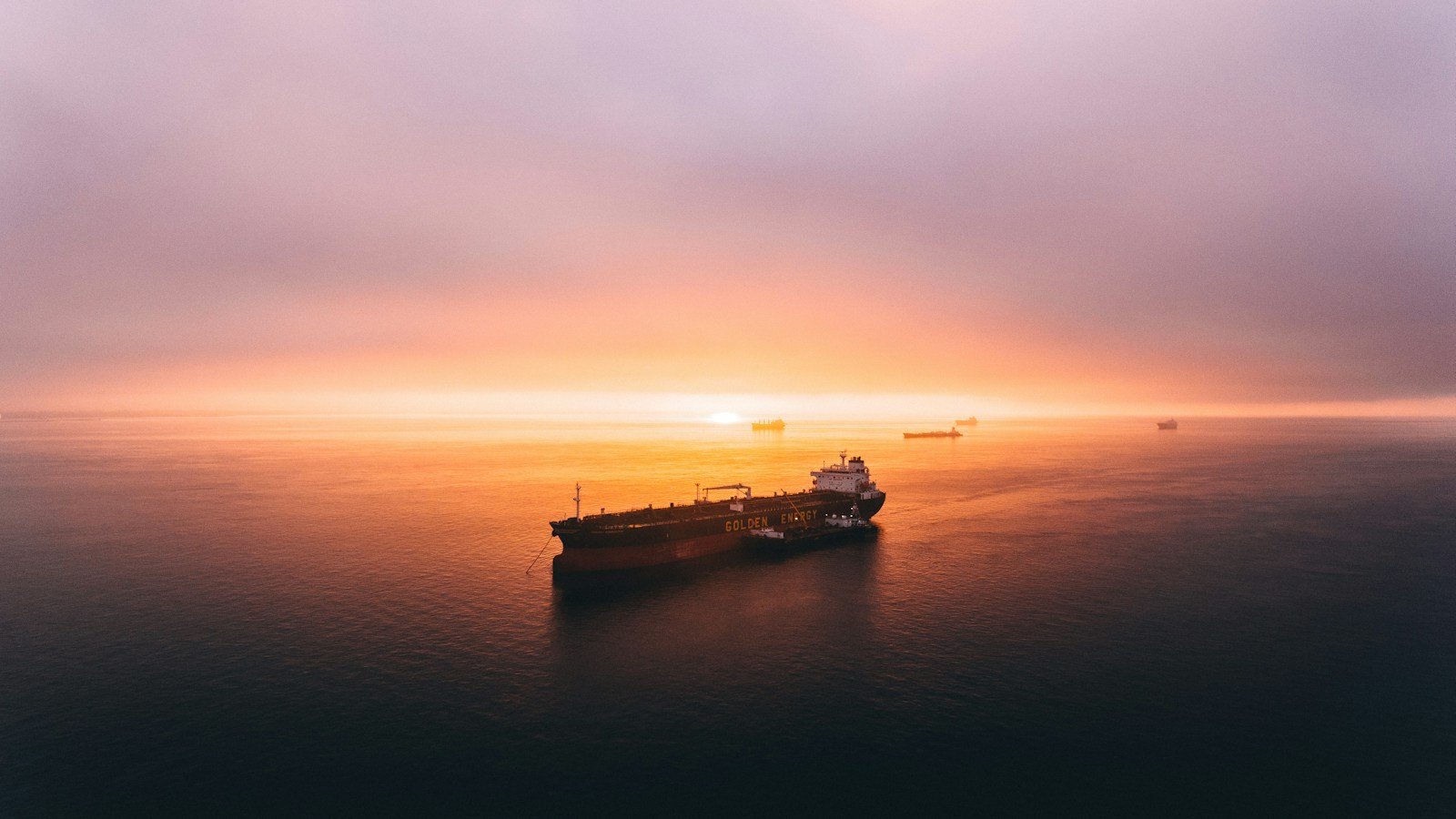
Featured image: Oil tanker at sea, illustrating energy trade. Photo by Ian Simmonds on Unsplash.