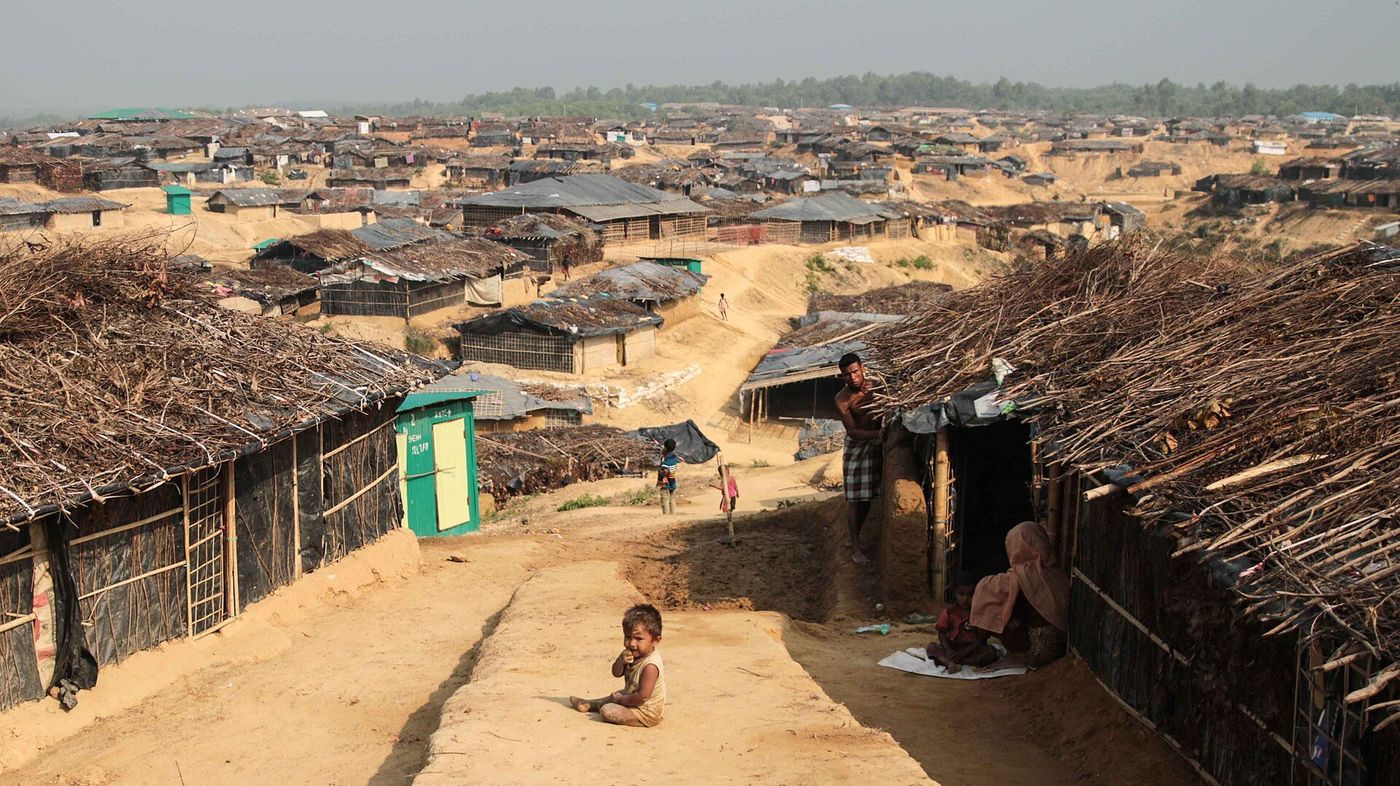
The International Court of Justice has done something it had never done before: it found a state guilty of committing genocide. However, the Rohingya genocide ruling delivered in The Hague on November 19 asks Myanmar to do things its government is in no position to do. The court ordered Myanmar to allow displaced Rohingya to return safely to their homes in northern Rakhine State. Yet most of that land is now held by the Arakan Army, an armed group fighting the same military that carried out the 2017 “clearance operations.”
That gap between the judgment and the map decides how much the verdict changes for the roughly 1.2 million Rohingya in Bangladesh. The rest of this analysis reads the 13 operative votes, the orders behind them and the deadlines they set, and asks which parts can realistically be met.
Where the judges agreed, and where they split
The headline finding passed by nine votes to six. According to UN News, the judges concluded that security forces killed an estimated 10,000 Rohingya. They also found that nearly 400 of the roughly 1,000 villages in three northern Rakhine townships suffered partial or total destruction. The majority held that an intent to destroy a substantial part of the group was “the only reasonable inference” from the evidence.
The dissent was serious, though. Vice-President Julia Sebutinde and five other judges argued that the majority used a lower standard of proof than earlier cases. They also said it leaned too heavily on UN fact-finding reports, as the American Society of International Law summarized. Meanwhile, the court cleared Myanmar of direct and public incitement by 14 votes to one.
The pattern in the remaining votes, listed in the court’s official press release, is the useful part. Orders that Myanmar’s government could carry out from a desk in Naypyitaw drew near-unanimous support. By contrast, orders that require control of territory split the bench almost as sharply as the genocide finding itself.
The Rohingya genocide ruling, order by order
| Order or finding | Vote | What compliance actually needs |
|---|---|---|
| Enact legislation giving full effect to the Genocide Convention | 14-1 | A law passed in Naypyitaw; the court found Myanmar’s 2021 law fell short |
| Investigate, prosecute and punish suspects | 13-2 | Prosecutors willing to charge the army’s own chain of command |
| Restitution, including safe return and family reunification | 10-5 | Physical access to northern Rakhine villages, now mostly held by the Arakan Army |
| Compensate harm that restitution cannot repair | 10-5 | Money, with amounts set in a later phase |
| Guarantees of non-repetition | 9-6 | A change in how security forces treat the Rohingya who remain |
| Finding: Myanmar breached the 2020 evidence order | 11-4 | Already broken, which weighs on trust in future compliance |
In other words, the judges behind the Rohingya genocide ruling largely agreed on duties that cost Naypyitaw paperwork and prosecutions. They split on the duties that require land, security and money. Notably, the bench did not order citizenship for all Rohingya, which The Gambia had requested. That leaves restitution as the main route back to rights on the ground.
Northern Rakhine is no longer the junta’s to hand back
Min Aung Hlaing commanded the army in 2017. He seized power in the February 2021 coup. Human Rights Watch says he installed himself as president through elections in December 2025 and January 2026 that it calls fraudulent. As a result, the man whose forces carried out the 2017 operations now heads the state that must comply.
Still, his government has lost the ground in question. The Arakan Army pushed the junta out of northern Rakhine in 2024 and now controls most of the state. Human Rights Watch says the group has also tightened repression of the Rohingya who remain. That includes forced labor and arbitrary detention. A November analysis in The Diplomat cites satellite work attributing about 8,500 burned structures across some 50 Rohingya villages in Buthidaung township to the group in 2024. It also reports non-Rohingya settlers in 11 former Rohingya villages.
Because the Arakan Army is not a state, the Rohingya genocide ruling does not bind it. Therefore any return to Maungdaw or Buthidaung would need a deal with the group that holds those townships, not just a decree from Naypyitaw.
A two-year clock that runs to November 2028
The Rohingya genocide ruling left compensation for a later phase. Myanmar must send the judges a report on its restitution measures and proposed compensation within two years, which puts the deadline in November 2028. Interestingly, President Yuji Iwasawa voted against that reparations step. He backed the genocide finding but argued The Gambia lacked standing to claim compensation.
The calendar tells its own story. The killings took place in 2017, The Gambia filed in November 2019, and provisional measures followed on January 23, 2020. The court confirmed jurisdiction in 2022 and ruled on the merits in 2026. A compensation phase could therefore keep the case open well into the 2030s. Moreover, the court found Myanmar had already breached its 2020 order to preserve evidence, which hardly suggests smooth compliance.
The Security Council route has never been used
Like every ICJ judgment, the Rohingya genocide ruling is final and cannot be appealed. Yet the court has no enforcement arm. If Myanmar ignores the orders, The Gambia can turn to the Security Council under Article 94 of the UN Charter. Human Rights Watch notes that the council has never acted on that power.
That record matters here because China and Russia hold vetoes, and both keep close ties with Myanmar’s military government. For context, our report on allies seeking a Security Council referral over Iran’s nuclear file showed how slowly that chamber moves when a permanent member objects. Beijing also spent this week hosting leaders at the APEC summit in Shenzhen, as we noted in our piece on China’s partial easing of its Korean culture ban.
Bilateral pressure looks more likely. For example, Radio Free Asia reported that Britain will expel Myanmar’s defense attache and ask the council to take up the judgment. Richard Horsey of the International Crisis Group told RFA that governments welcoming Min Aung Hlaing “will now be doing so for the head of a state found responsible for genocide.”
What the Rohingya genocide ruling means in Cox’s Bazar
Bangladesh’s foreign ministry welcomed the verdict and said Myanmar is “now legally bound to comply fully,” according to The Business Standard. It repeated that repatriation “remains the only viable solution.” Even so, Dhaka’s own refugee commissioner was blunt. “Repatriation will not begin immediately as a direct result of the ruling,” Mohammed Mizanur Rahman told Anadolu Agency.
For the camps, the near-term effect is more about leverage and aid than about buses home. RFA notes that funding cuts have already shrunk food rations. A guilty verdict gives Dhaka a stronger case when it asks donors to keep paying, and when it presses regional neighbors to stop treating the crisis as a bilateral problem.
Courts after this one
The precedent set by the Rohingya genocide ruling reaches beyond Myanmar. Before this case, the court had only found Serbia responsible for failing to prevent the 1995 Srebrenica genocide, in 2007, and it rejected both claims in Croatia v. Serbia in 2015. Now a state has been held to have committed the crime itself. Human Rights Watch expects the reasoning on intent to shape South Africa’s pending case against Israel.
In addition, 11 states intervened in The Gambia’s case, including Canada, the UK, France, Germany and the Maldives. The court’s reading of the convention on those points now binds them as well. Much like Norway’s Supreme Court ruling on new oil fields, the immediate legal finding may matter less than the test it sets for future cases.
Four tests of whether the Rohingya genocide ruling bites
- The legislation order: amending the 2021 law to match the convention is the cheapest step on the list, so a refusal would say a lot.
- Any charges: an investigation that names officers from the units deployed in 2017 would be the first sign the prosecution order means something.
- A channel to the Arakan Army: talks between Dhaka or UN agencies and the group on returns to Maungdaw and Buthidaung would matter more than any statement from Naypyitaw.
- The November 2028 report: whether Myanmar files it at all, and what compensation it proposes, will show whether it plans to engage with the next phase.
None of these tests will be settled quickly. But the verdict has turned a long-running human rights argument into a legal finding with dates attached, and the first of those dates is now less than two years away.